A signature built to carry authority
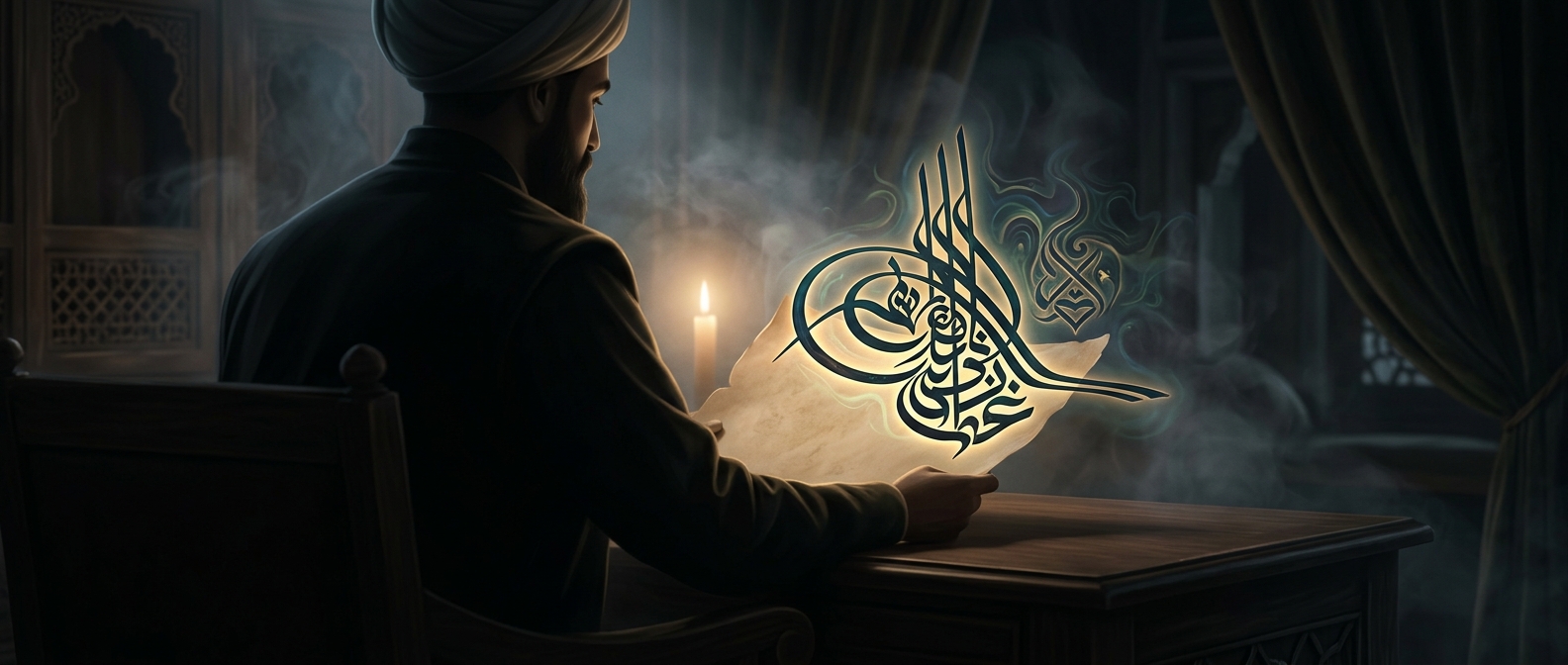
An Ottoman decree did more than communicate an order: it had to show that the order came from the sultan. The tughra served as a formal signature and a mark of imperial authority, usually placed where readers could see it immediately. Its elaborate design turned a ruler’s identity into a recognizable emblem rather than an ordinary handwritten name.
That distinction mattered in a government that issued documents across a large empire. Officials and recipients needed to judge whether a paper was genuinely authorized. A tughra’s compact, carefully composed lines gave them a visual feature to inspect, while its association with the reigning sultan made it difficult for an outsider to reproduce convincingly.
Precision made imitation risky
The design was not simply decorative flourishes added at random. Specialized court calligraphers arranged the name and other elements into a controlled composition, balancing loops and upright strokes according to established proportions. A small change could disrupt that balance or make the mark look unlike the recognized version. Producing a plausible copy therefore required more than knowing the ruler’s name: it demanded skill in a distinctive court style.
The tughra could not make forgery literally impossible. Its force came from combining visual complexity with institutional recognition: a mark that looked wrong could raise suspicion, while a proper one signaled whose authority stood behind the document. In that way, calligraphy became part of the machinery of rule—an order’s legitimacy could begin with the shape of its first mark.