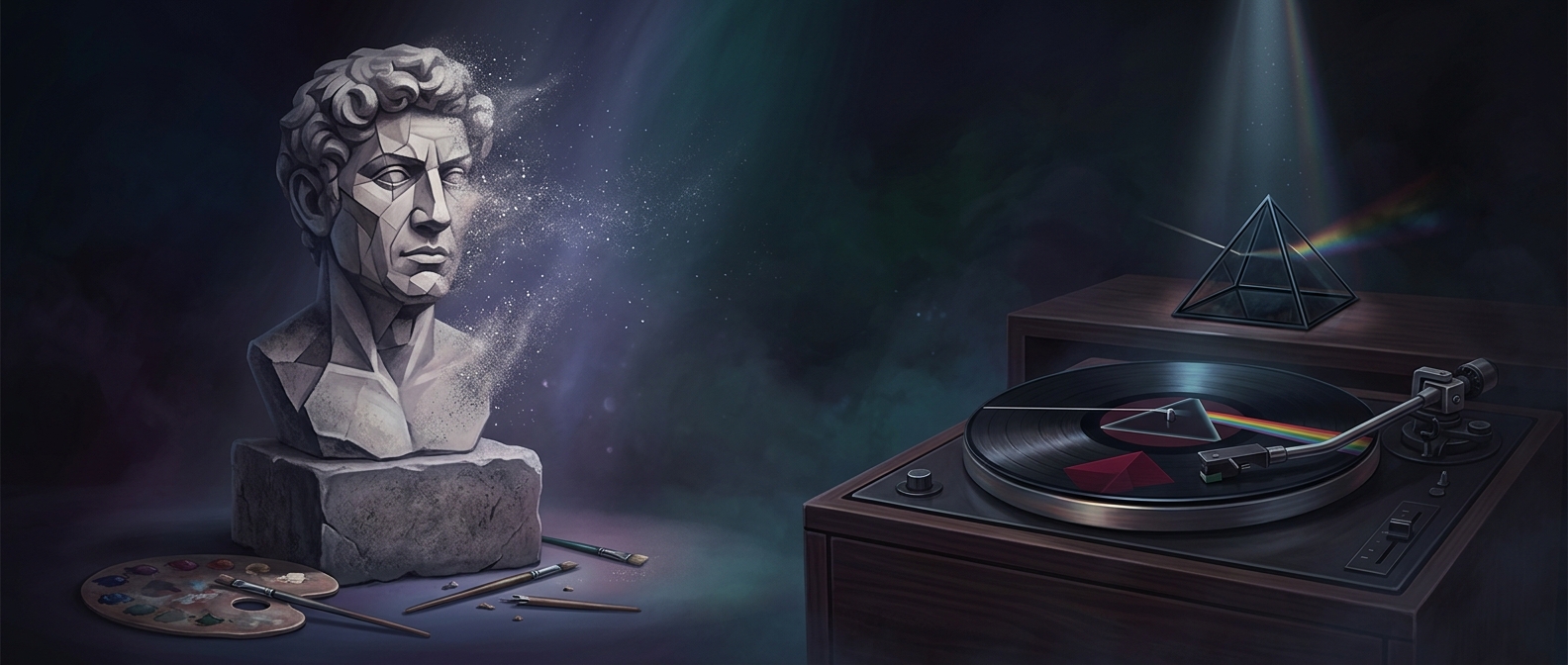
One spring, two cultural eras
The overlap is striking because Picasso and Pink Floyd belong to histories usually told in separate chapters. Picasso helped remake painting in the early 20th century; by the time Pink Floyd was building a landmark of studio-era rock, he was an elderly artist nearing the end of his life. The calendar did not place them in successive generations. It placed them in the same present, briefly.
A lifetime of change, compressed
Picasso was born in 1881, before recorded sound became an everyday medium. He lived through the rise of radio, cinema and popular music, as well as transformations in painting that made his own work seem radically new. Pink Floyd, meanwhile, worked in a world where a rock album could be constructed in a recording studio from layered performances and sound effects—not simply captured as a band playing in a room.
That contrast is not a claim that Picasso heard or responded to the album. It is a reminder of how much cultural and technological change can fit inside one long life. A person born in the 19th century was still alive when an album associated with the modern rock era entered the world. The past, in this case, was not very far away: it was still breathing while the future was being recorded.