The pressure of Beethoven’s shadow
For a composer in Brahms’s generation, Beethoven was more than a celebrated predecessor: his symphonies and chamber music had set a standard against which new work was measured. Brahms felt that pressure especially sharply. He was praised as a major heir to Beethoven’s musical tradition, making unfinished or imperfect pieces seem risky—not merely as private experiments, but as possible evidence that he could not meet the comparison.
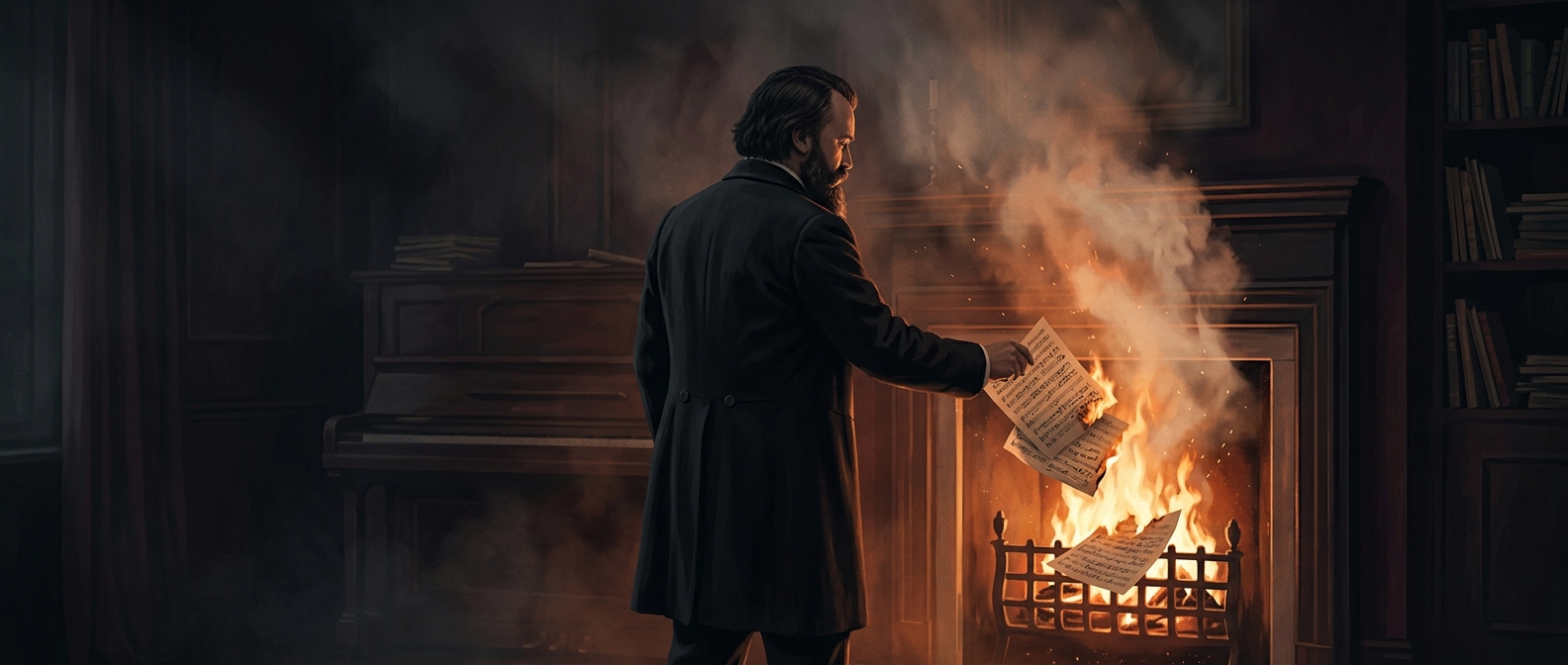
Brahms responded by treating composition as a process of severe selection. He destroyed dozens of early works, including string quartets, rather than letting them become part of his public record. The loss was deliberate: he could control what listeners heard, but not how they might judge music once it circulated.
What the missing quartets reveal
Brahms did not publish his first two string quartets until 1873, when he was about 40. That long delay helps show why the destroyed pieces matter. They were not simply forgotten juvenilia; they belonged to a genre in which Beethoven’s achievements made comparison particularly daunting. The surviving quartets therefore present the result of years of composing, revising, and discarding—not a transparent record of every step along the way.
The destruction also shaped Brahms’s reputation. Later listeners inherited a carefully narrowed body of work, with many of his early attempts unavailable for comparison. His legacy was built partly by deciding which music would not survive.