Composing without an instrument at home
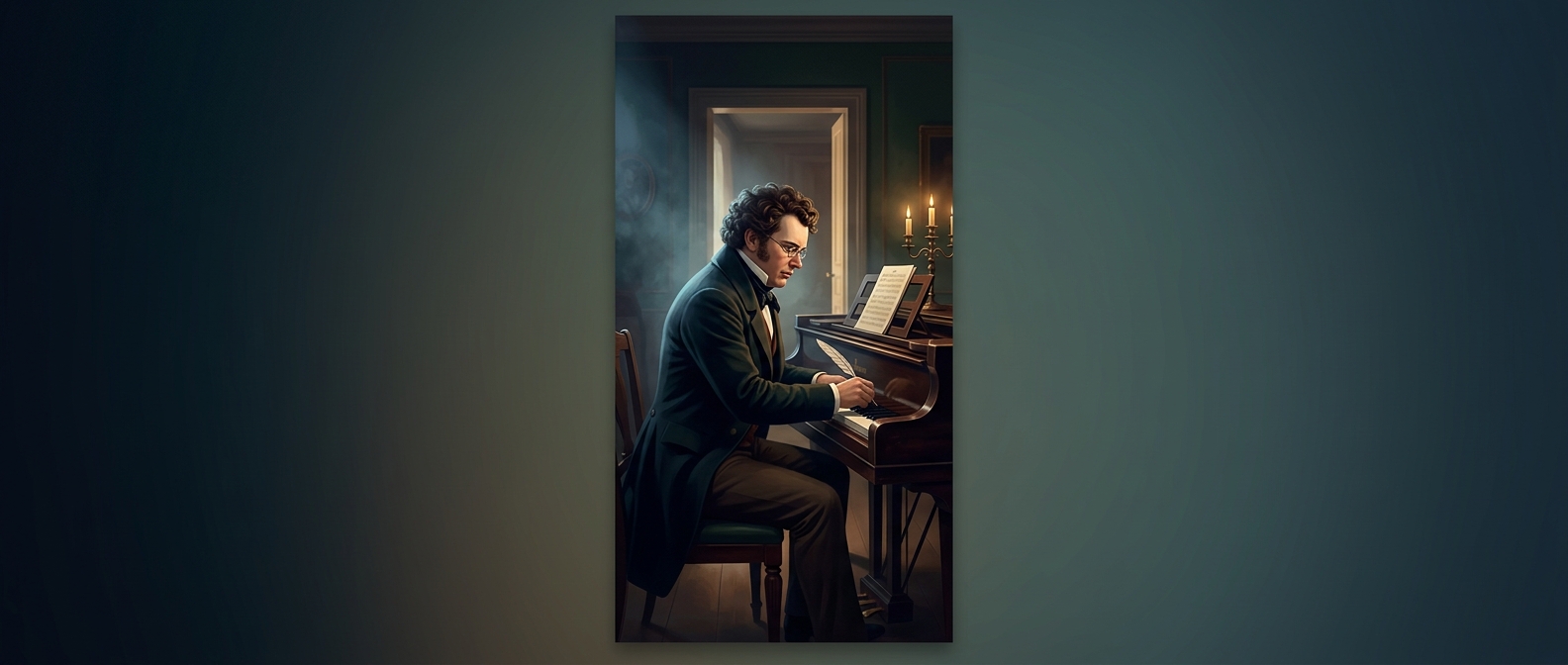
Franz Schubert could write music without sitting at a keyboard because he carried much of its sound in his mind. A trained musician, he could imagine how a melody and its harmonies would fit together, then set them down in musical notation. A piano was useful for testing an idea, but it was not the only way to create one.
That mattered in Vienna, where Schubert often had little money and did not own a piano. He could compose at a borrowed instrument when one was available—or work away from a keyboard, relying on musical memory and judgment. The distinction is important: he was not cut off from pianos altogether; he simply could not count on having one in his own rooms.
What the piano could—and could not—do
At a keyboard, a composer can hear chords immediately, try alternatives, and catch awkward passages by playing them. Without one, Schubert had to hold the musical idea in his head while translating it into notation. That demanded a strong grasp of how notes would sound together, but it did not make the work effortless: an instrument could still help him check and refine what he had written.
The result is a striking contrast between material circumstances and musical reach. Schubert’s work was not limited to songs that could be sketched quickly; he also composed large-scale instrumental music. His lack of a personal piano did not mean he lacked access to music—it meant that, at times, the first performance of a new passage took place in his imagination.