A right-handed guitar, turned into a left-handed instrument
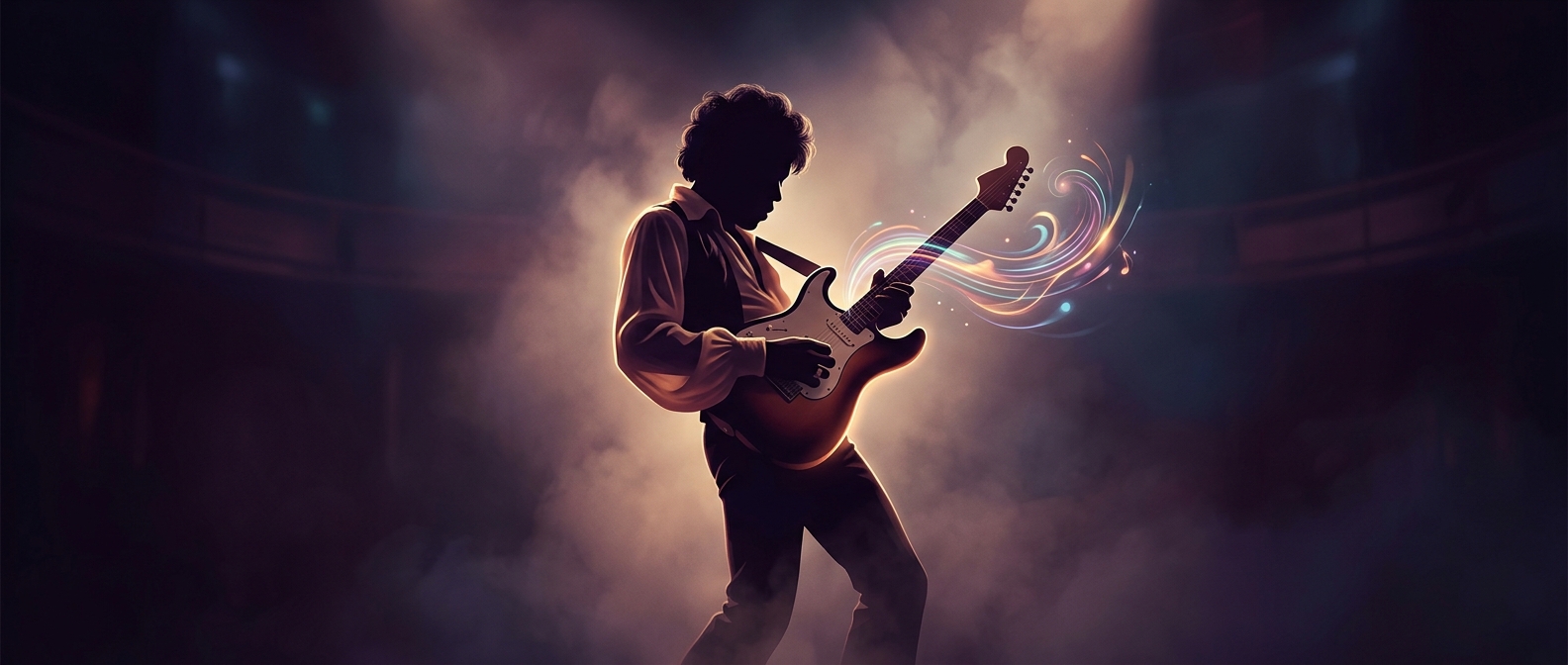
Jimi Hendrix was left-handed, but the Fender Stratocaster he became closely associated with was built for right-handed players. Turning one over let him fret with his right hand and pick with his left. To make the strings run in the familiar low-to-high order for a left-handed player, the guitar could be restrung rather than simply played with the original string order.
That swap was not a perfect mirror image. A Stratocaster’s controls, bridge and body contours were arranged for a right-handed player, so turning the instrument around shifted those features to unfamiliar positions. The guitar still worked, but its layout changed how Hendrix’s hands met the controls and hardware.
The workaround became part of the sound and image
The flipped layout did more than make a guitar available. It gave Hendrix a practical setup he could play with extraordinary fluency, while leaving visible clues that the instrument was being used in an unconventional way. His picking hand could also reach the strings and controls from a different angle than a right-handed player’s would.
Because the Stratocaster was so recognizable, audiences could see the difference immediately: the familiar shape appeared reversed in Hendrix’s hands. A response to limited instrument choices thus became part of his stage identity—a standard guitar made unmistakably his by the way he adapted it.