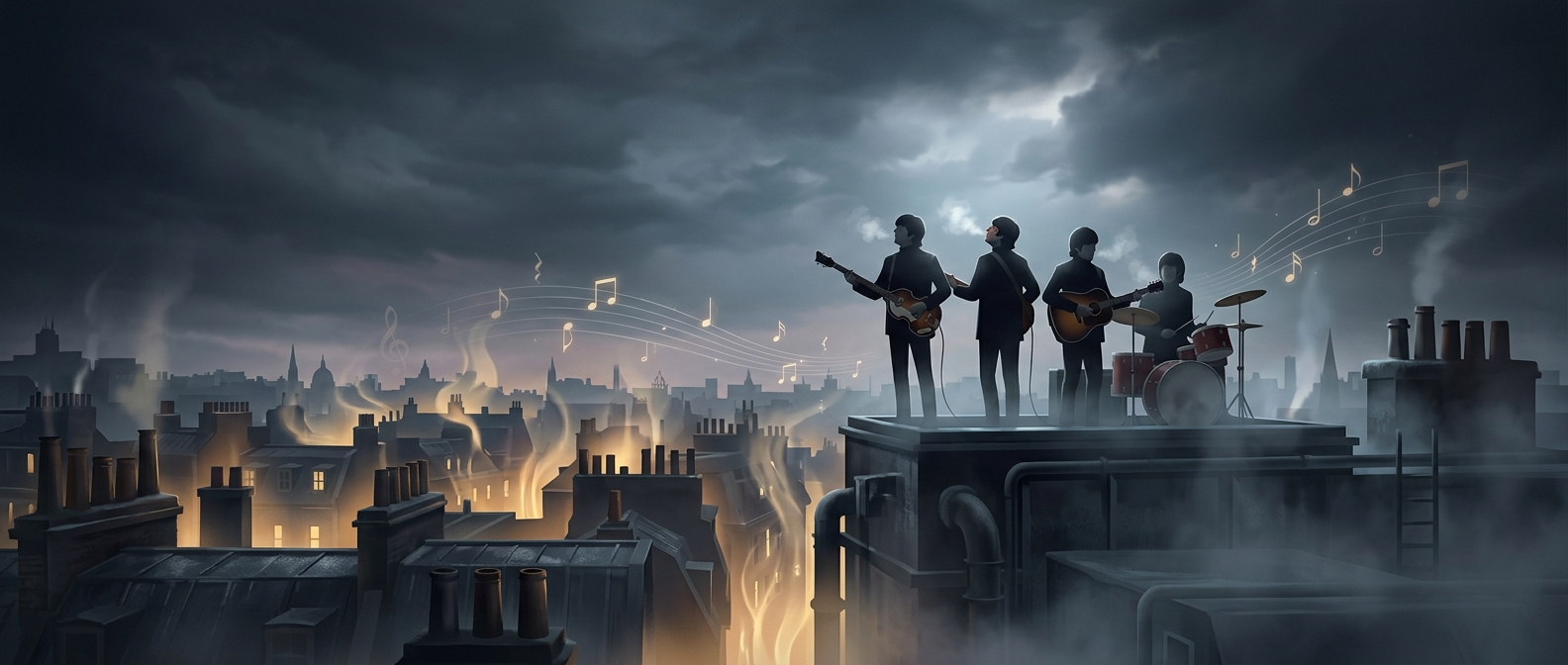
A concert above the street
On January 30, 1969, the Beatles set up on the roof of their Apple Corps headquarters at 3 Savile Row in central London. Below them, office workers and passersby heard a band playing overhead; many on the street could not see where the music was coming from. The lunchtime performance was unannounced, so the rooftop became both stage and surprise.
A practical ending to a difficult project
The set grew out of the sessions that became the Let It Be album and film. The Beatles had been filming themselves rehearsing and discussing a live performance, but plans for a conventional concert elsewhere did not come together. Their own building offered a way to play for a crowd without arranging a venue or traveling: the audience gathered naturally on the surrounding streets, while cameras captured the band at work.
The location also made the performance unmistakably different from a normal concert. There was no ticketed crowd or purpose-built stage—just the four musicians, their equipment, and a roof above a busy London neighborhood. The band played several songs before complaints about the noise brought police to the building. The performance ended when the music was stopped.
Why the rooftop set mattered
It was the Beatles’ final public performance as a group. That distinction matters: the set was not a planned farewell tour or a formal announcement that the band was finished. It became the ending because the group never played another public concert together. A routine workday in central London had briefly turned into an open-air Beatles show—and the police interruption supplied an abrupt last scene for a band whose public concerts had once filled stadiums.