Why the human voice suited medieval worship
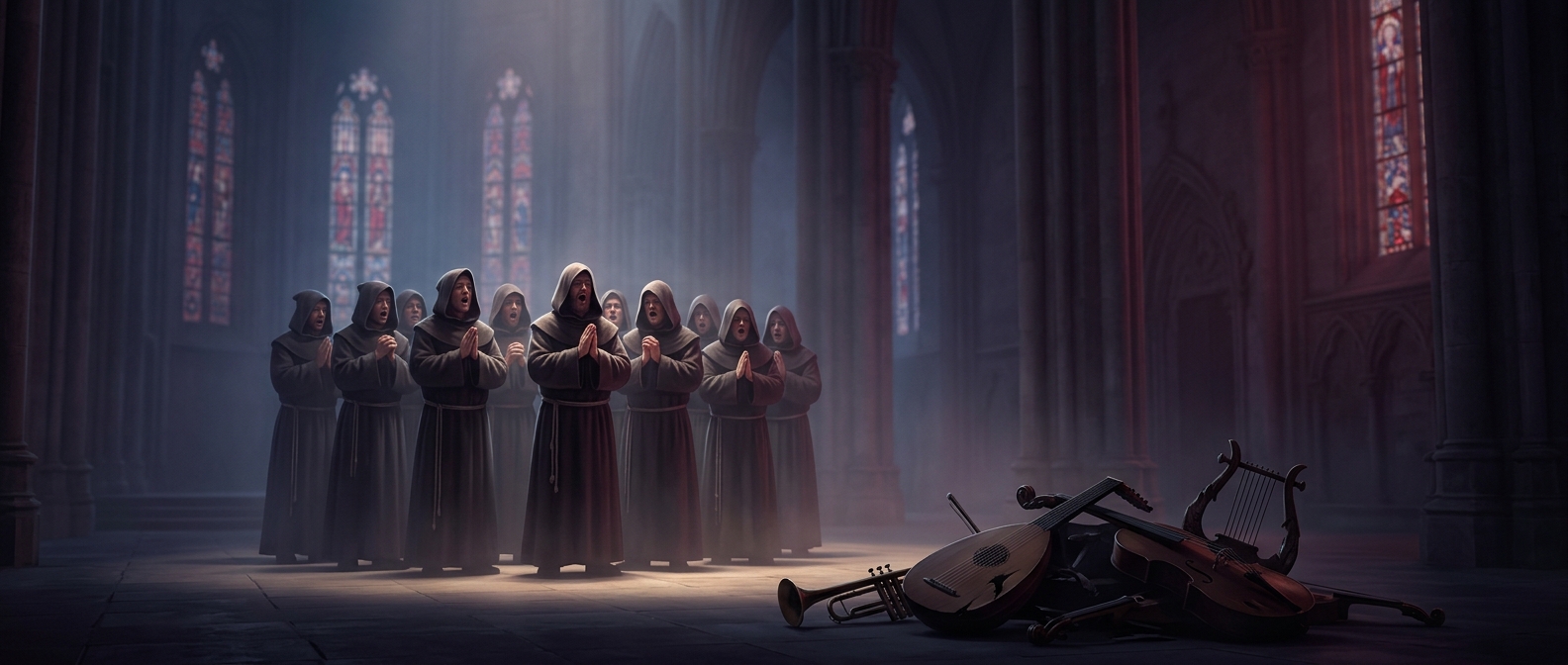
In many medieval church services, the central musical sound was chant: sacred text sung by voices, often in a single melodic line rather than in harmony. That made the words—not an instrumental accompaniment—the focus. For clergy who worried that instruments might draw attention away from prayer, a choir singing the liturgy offered a direct way to keep music tied to worshippers’ attention and to the text itself.
This did not mean that every medieval church banned every instrument. Practices varied by place and occasion. But unaccompanied singing became a defining sound of many church services, in part because voices could deliver the words of the service without competing musical parts.
Stone turned singing into part of the architecture
Churches were often large, stone buildings with hard surfaces that reflected sound. When singers held a note, the sound lingered and blended with its echoes, making a small group seem to fill the room. The building supplied resonance without an instrument: the choir’s voices set the space ringing.
That same acoustics shaped how the music worked. A long echo could blur quick syllables, so measured, sustained singing suited the room better than rapid, elaborate passages. The result was music that unfolded slowly, allowing the sound to travel through the church as worshippers listened or joined in.
The choice was therefore both devotional and practical. Voices carried the sacred words, while stone walls gave those voices depth and duration—turning the church itself into the accompaniment.