The triangle had a second voice
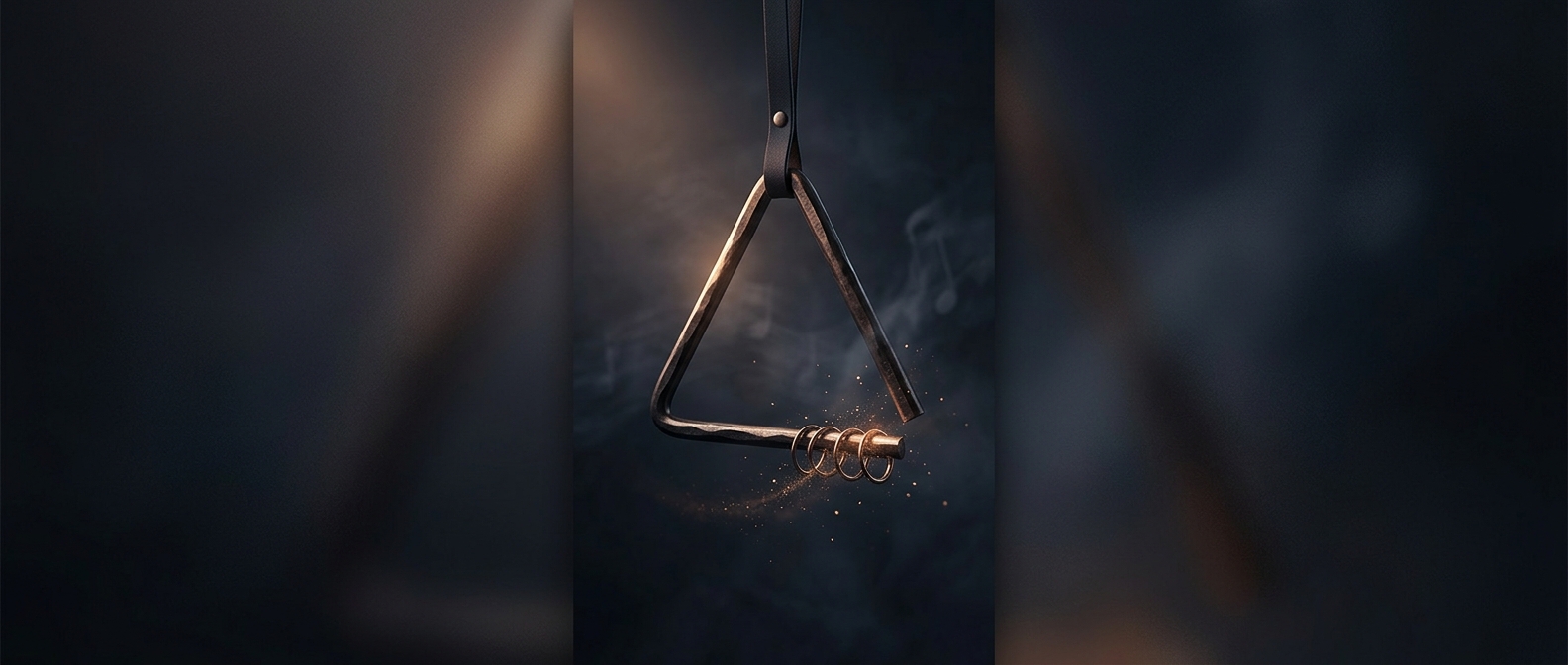
A triangle’s bright ring comes from the metal bar vibrating after a beater hits it. On some versions, loose metal rings hung from the instrument as well, adding a rougher sound to that clear tone.
How the clatter was made
The impact set the triangle vibrating; that movement could jostle the dangling rings against the frame or one another. Their small, uneven collisions produced a rattle alongside the triangle’s more sustained pitch. Unlike a separate percussion part, this extra noise was built into the instrument and followed each strike.
A different kind of emphasis
The rings changed the texture, not just the volume: a clean metallic note arrived with a brief, busy clatter around it. That made each blow sound more emphatic and less sharply defined. The same design also meant the player could not make the triangle ring without setting its loose attachments in motion—the added noise was part of the instrument’s character.