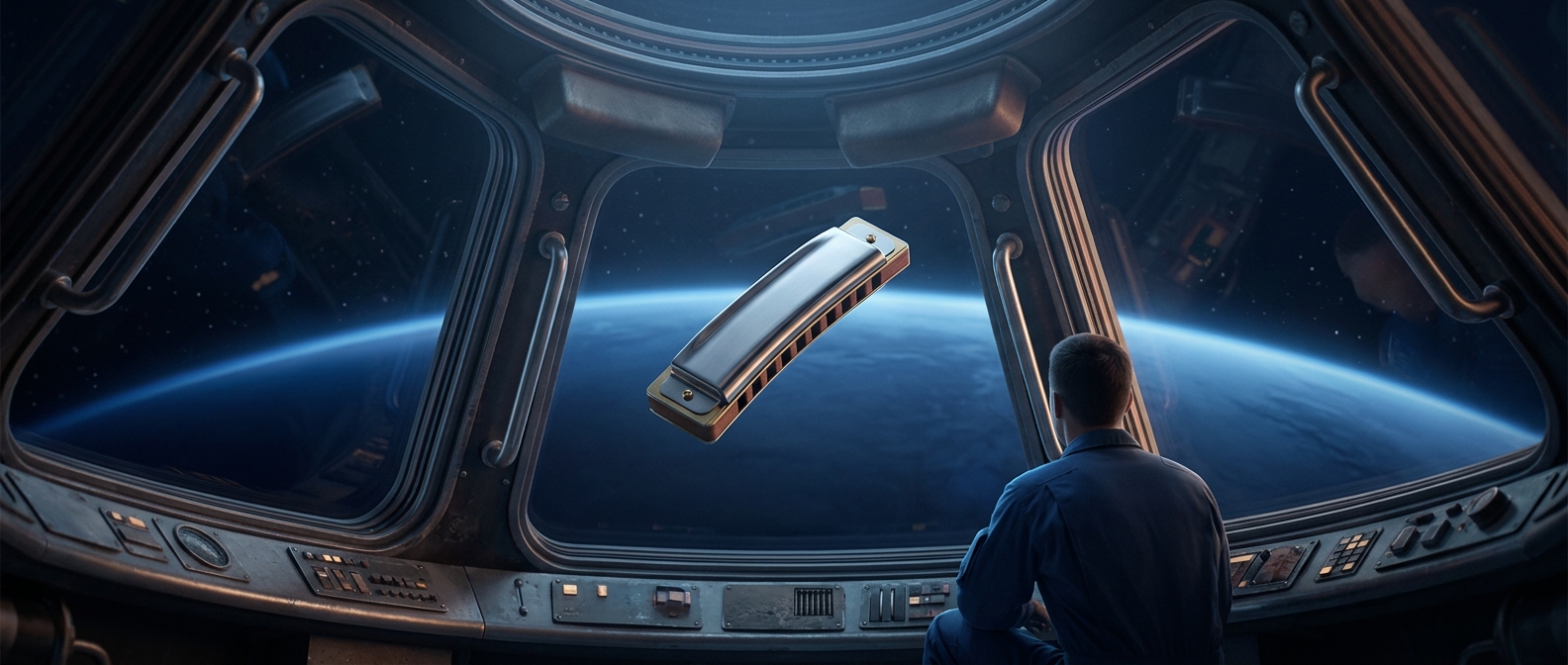
A tiny harmonica turned a radio check into a joke
On December 16, 1965, Gemini 6A astronauts Wally Schirra and Thomas Stafford were returning to Earth after a spaceflight that included a rendezvous with Gemini 7. During a radio exchange with mission control, they suddenly reported seeing an unidentified object approaching their spacecraft, apparently piloted by someone wearing a red suit.
The “sighting” was a setup. Schirra had brought a small harmonica aboard, and Stafford had a set of miniature sleigh bells. After letting the control room wonder what was happening, the astronauts played “Jingle Bells”—a familiar holiday tune delivered from orbit.
A small stunt with a practical constraint
The instruments were pocket-sized because anything carried into a spacecraft had to fit within tight limits on space and weight. In microgravity, even a lightweight object could drift away unless secured, so playing them also meant handling them carefully inside the capsule. The harmonica needed breath; the bells needed only a shake, making the instruments workable in a cramped cabin.
The performance is widely remembered as the first music played in space. Its appeal was not technical virtuosity but the contrast: a routine communication channel, normally used for mission information, briefly carried a bit of theatrical mischief. Mission control had expected a report about an approaching object; instead, the astronauts supplied a holiday song—and made a working spacecraft feel, for a moment, like a very small stage.