Why the Oboe Gives the Orchestra Its A
The oboe’s role is less about being the orchestra’s most accurate instrument than about being a useful one to hear. Its bright, focused sound carries clearly across a room, so musicians can pick it out even while many instruments are sounding. And unlike instruments whose pitch can be adjusted with a quick turn of a tuning peg or slide, an oboe is relatively difficult to retune on the spot. That makes its player a practical source for one clear reference note.
One Note, Many Small Adjustments
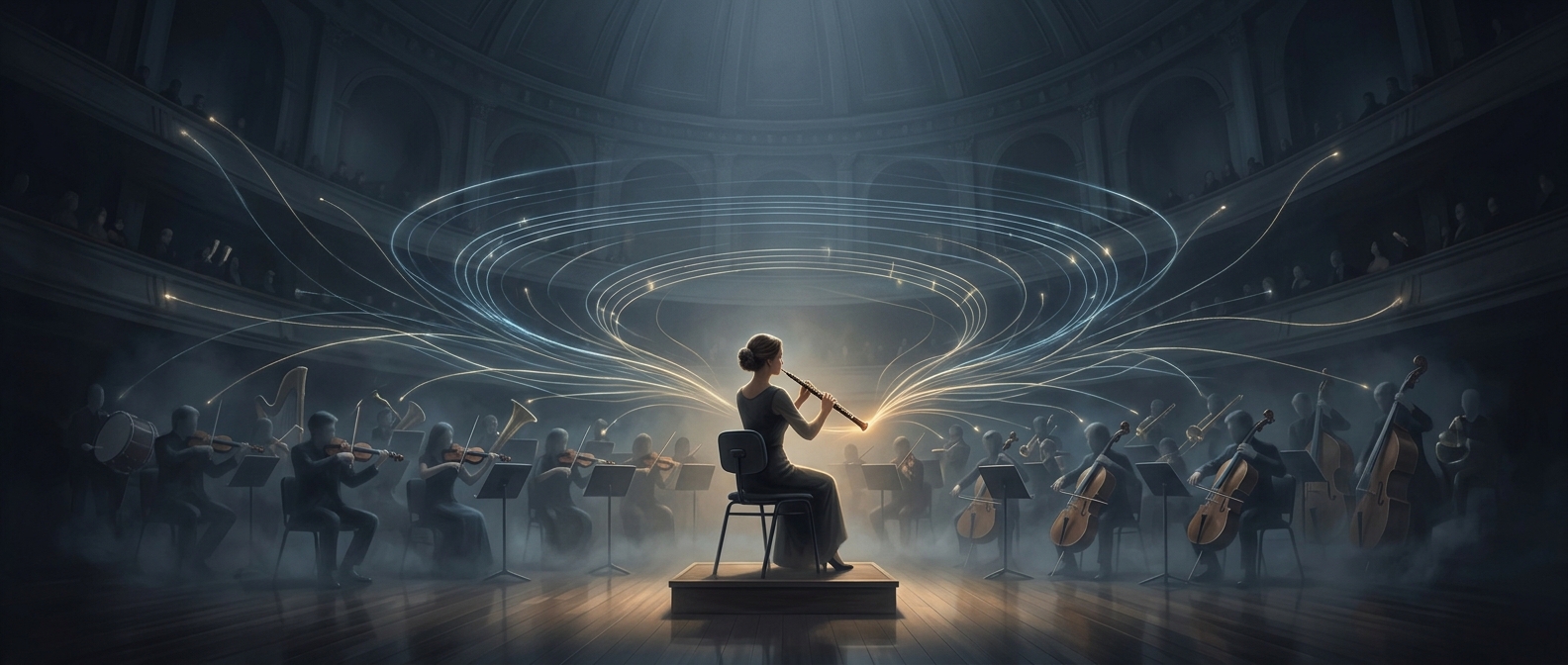
The oboist plays the orchestra’s chosen tuning pitch—often an A—and the other players match it. String players compare the note with their open strings, then adjust each string’s tension; wind and brass players make smaller changes with their instruments or playing technique. The goal is not to make every instrument sound identical, but to bring their pitches into alignment so chords and melodies do not clash.
The oboe’s note is a starting point, not a guarantee that the orchestra is perfectly in tune. Instruments can respond differently to temperature, and pitch can shift as players warm up. Musicians listen and adjust throughout rehearsal and performance.
A Tradition Made Practical
The custom persists because it solves a coordination problem efficiently: one audible note gives a large group a shared target before the music begins. The exact tuning pitch can vary among ensembles, but the oboe remains a reliable signal. Its first note in the tuning ritual may be brief; the adjustments it sets in motion reach every section of the orchestra.