A composer who chose momentum over retrieval
The story of Rossini replacing a fallen page rather than reaching for it is funny because the “shortcut” sounds extravagantly wasteful. But it points to a recognizable creative tradeoff: once an idea is moving, stopping to recover a sheet may feel more disruptive than starting again.
A page of a musical score can hold several parts at once, showing how different instruments or voices fit together. Replacing one therefore meant recreating written work—not merely jotting down a spare note. The anecdote makes Rossini’s confidence in his own ability to keep composing part of the punchline.
Speed had practical value in opera
Rossini worked in an opera culture where composers were expected to produce new music for the stage, often on demanding schedules. The work involved more than inventing melodies: music had to be written for singers and instruments and shaped into scenes that could be rehearsed and performed. A composer who could move quickly had a practical advantage.
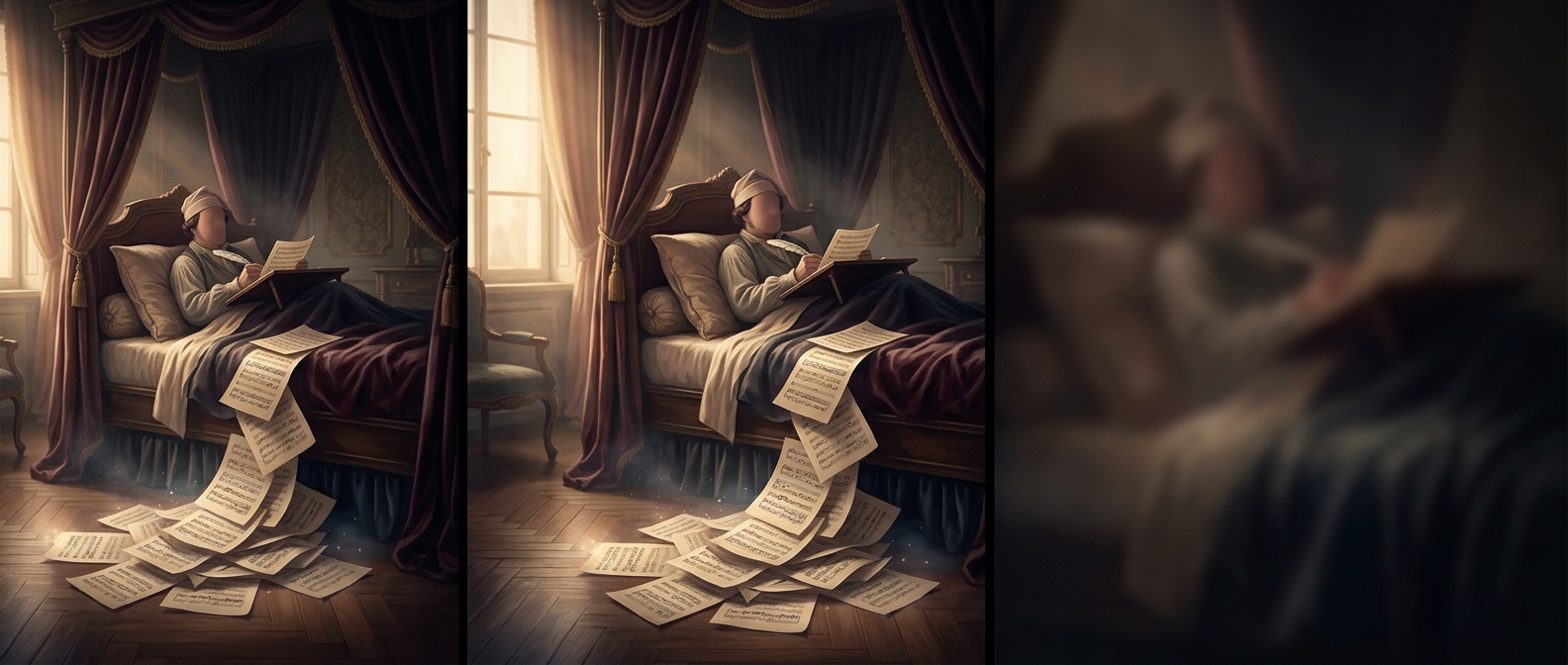
The bed-and-page image turns that pressure into a small domestic scene. Instead of treating the lost sheet as a reason to pause, Rossini supposedly treated it as an invitation to continue. Whether the moment was typical or simply memorable, its lasting appeal lies in that reversal: the page was replaceable; the flow of composition was not.