A playback machine, not a performance tool
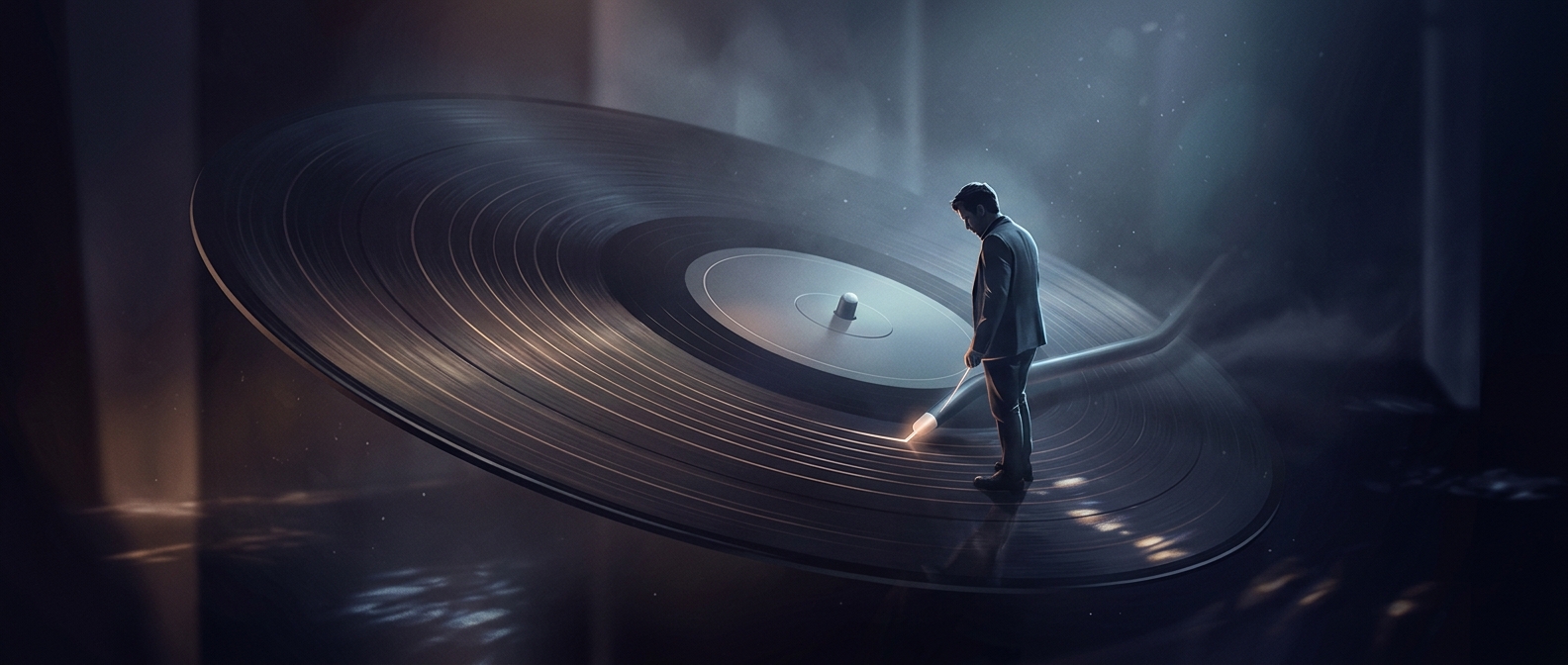
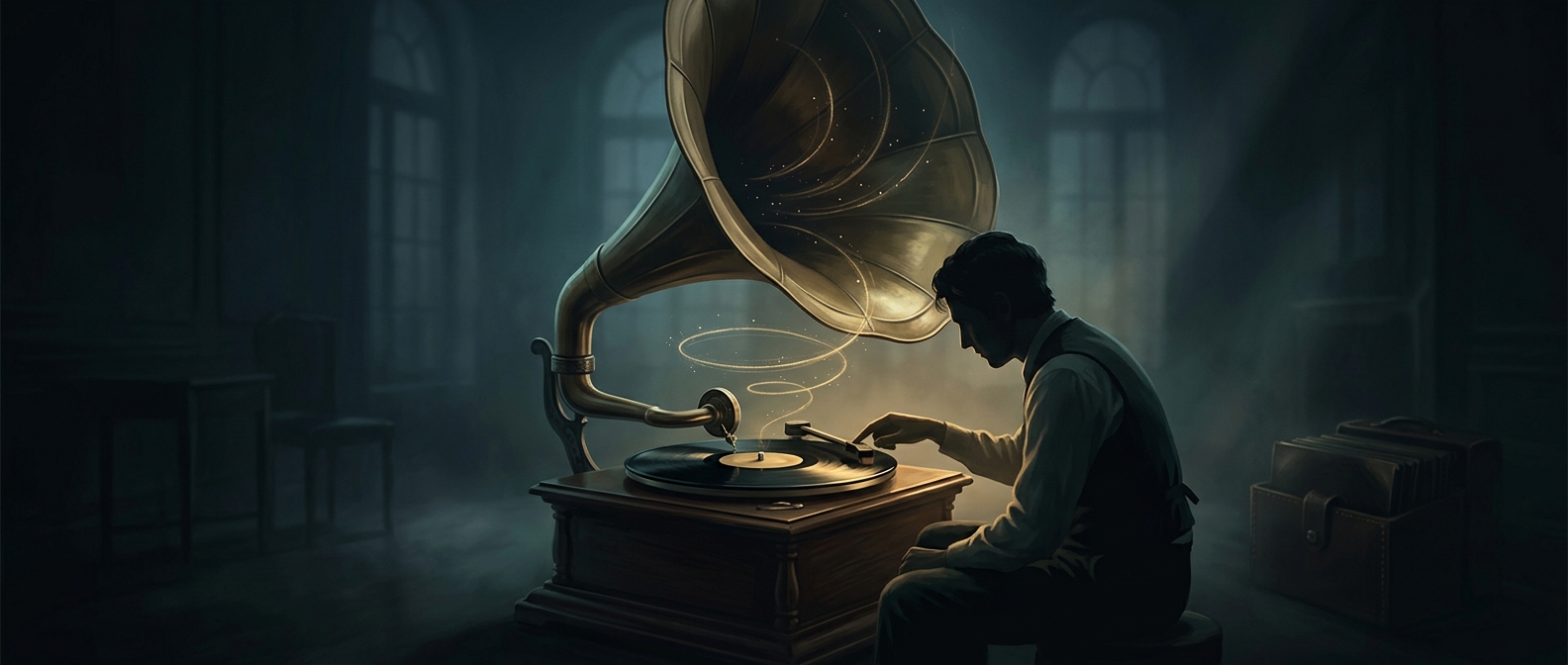
A record player’s original job was to move a record steadily beneath a needle. The needle, or stylus, rides in the groove; its tiny movements become an electrical signal that speakers turn into sound. The machine was designed to keep that motion smooth and the record’s surface safe—not to make the groove jump, reverse, or repeat on command.
That distinction matters because a record is both a sound carrier and a delicate physical surface. Dragging a record by hand while the platter turns can strain the stylus and wear the groove. Early players also were not built for quick, repeated starts and stops. To their designers, those actions were misuse, not musical technique.
DJs found music in the machine’s limits
A DJ could nevertheless hold a record in place, move it back and forth beneath the needle, and release it at a chosen moment. With a mixer, two turntables made it possible to switch between records or keep a brief passage going while one disc was prepared. The result was not simply playing a recording: the DJ shaped its timing and texture in real time.
This approach grew from practical performance needs. Dancers responded to particular rhythmic passages, and DJs wanted to keep those moments going rather than let a record run straight through. Repeating a section across records turned a playback setup into a live instrument, even though the physical handling could be rough on equipment and vinyl.
The change was also a change in what counted as musicianship. A turntable had been judged by how faithfully it reproduced a record; in DJ performance, timing, touch, and the ability to make a groove behave differently became part of the music. The instrument was not designed so much as discovered in the gap between what the machine could do and what its makers intended.