From regional ensemble to a bigger sound
Mariachi did not begin as a fixed lineup. In western Mexico, especially Jalisco, ensembles developed around string instruments such as violins, guitars, and the guitarrón, a large bass instrument. Their parts could carry a tune, mark a dance rhythm, and provide a low pulse without modern amplification.
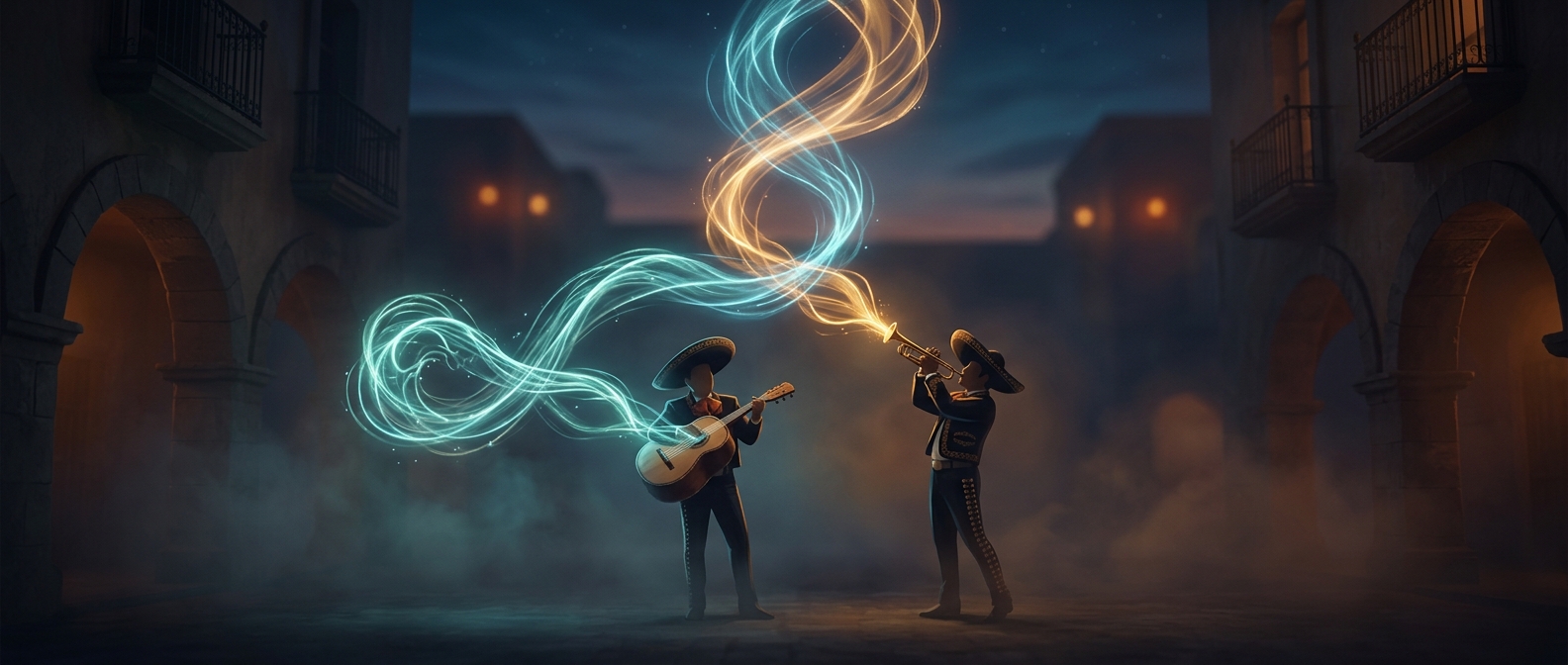
Trumpets joined mariachi ensembles in the 20th century, changing how the music carried. Their bright, sustained notes could rise above strings and voices in open-air performances, while violins kept the melody nimble and the guitars and bass held the rhythmic foundation. The result was not simply “louder”: brass could add forceful entrances and harmonies that made a group sound more dramatic.
A regional style becomes widely recognizable
As mariachi reached larger audiences through recording, radio, and film, the brass-and-string combination became closely associated with the style. The expanded sound worked especially well for performances meant to command attention, while still leaving room for the intricate playing and dance rhythms rooted in its regional traditions.
The contrast is the key: strings give mariachi much of its motion and detail; trumpets give its melodies a bold reach. Together, they let a relatively small ensemble sound festive and commanding without losing the rhythmic backbone of its folk roots.