A break turned into the performance
A violinist normally has four strings, each tuned to a different pitch. When one snaps, the instrument does not go silent: the other three still work, and many notes can be played on more than one string. But the break changes the player’s options. Some passages become awkward or impossible as written, and the musician must find another way through them.
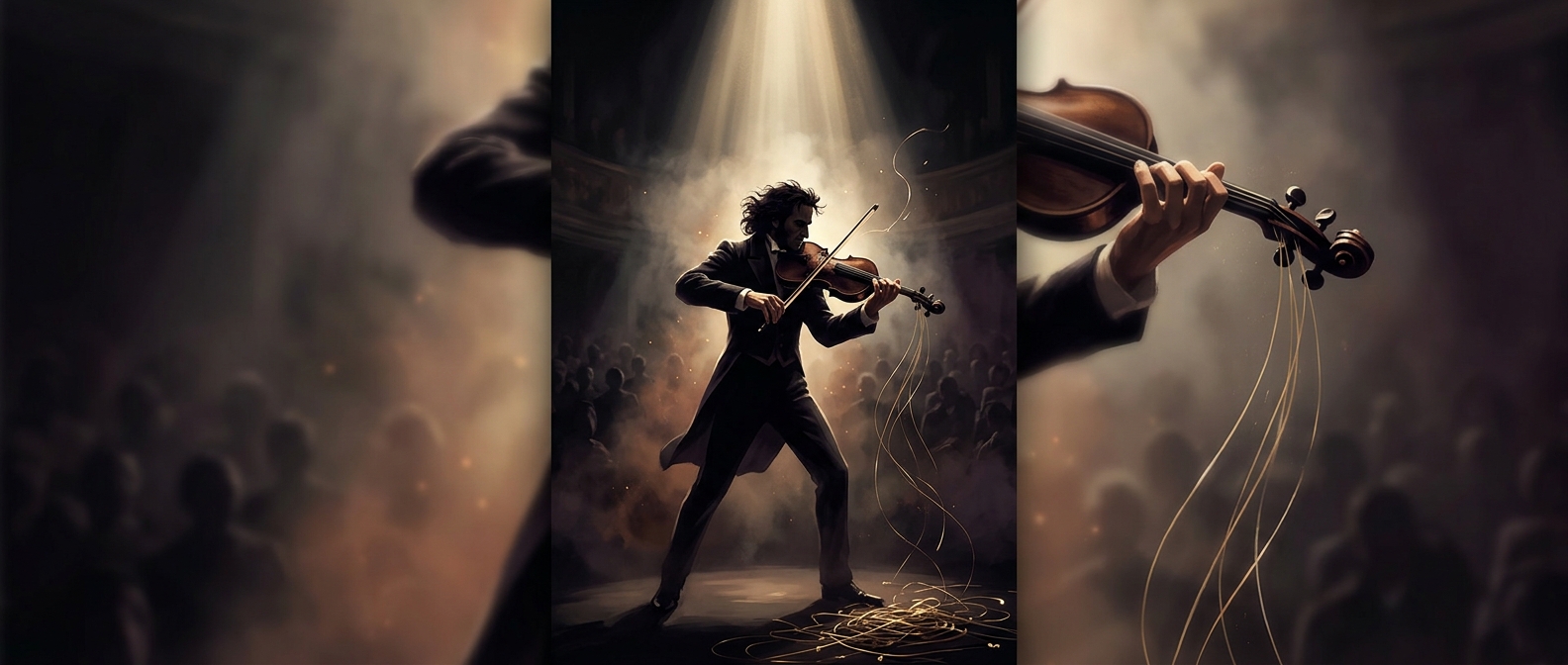
Paganini made that limitation part of the drama. By weakening a string so it would break during a concert, he could transform a mishap the audience might otherwise fear into a planned test of his skill. The surprise mattered: listeners saw a familiar instrument suddenly lose one of its parts, then watched him continue.
The constraint was the point
Finishing the piece on the remaining strings was not simply a matter of playing louder or faster. It meant working around the missing string, choosing from the notes and fingerings still available. The feat made technical command visible: the audience could hear the music continue while seeing exactly what had gone wrong.
That is why the broken string could function as more than a stunt. It turned virtuosity—an ability that can be difficult to judge from the audience—into a concrete problem solved in real time. The spectacle was not just that a string snapped; it was that the performance carried on anyway.