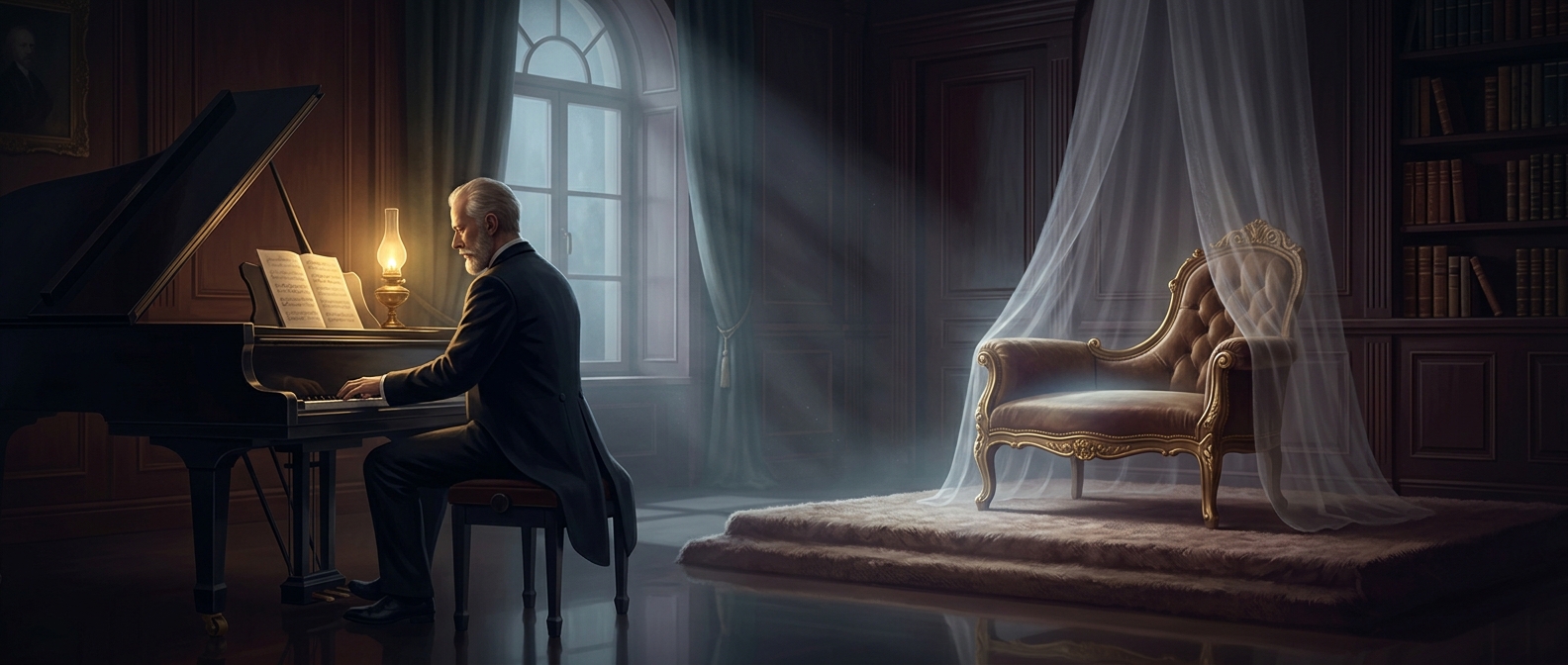
A musical partnership conducted by letter
Nadezhda von Meck’s support gave Pyotr Ilyich Tchaikovsky something more useful than a single commission: dependable money over many years. Instead of having to rely entirely on teaching or on payment for each new work, he could spend more time composing. The arrangement lasted 13 years, with one unusual boundary: patron and composer would not meet.
That boundary did not make the relationship impersonal. They corresponded, and their letters became a way to exchange thoughts about music and private life without the demands of face-to-face companionship. Von Meck could support an artist whose work mattered to her while preserving the distance she wanted; Tchaikovsky could accept help without turning the relationship into a conventional household or business partnership.
What distance changed—and what it did not
Patronage usually means that someone with money helps sustain an artist. It need not mean directing every piece or dictating what the artist creates. In this case, the support was an allowance rather than a stated order to produce particular compositions. That distinction matters: the arrangement could provide financial room to work while leaving Tchaikovsky’s artistic decisions his own.
The no-meeting condition also shaped how the partnership endured. Its intimacy was built through written exchange, not shared rooms or public appearances. For 13 years, money traveled one way and letters carried the human connection the arrangement allowed. The result was a striking form of artistic support: close enough to influence a composer’s working life, yet deliberately kept at a distance.