A conductor’s gesture shaped by a private fear
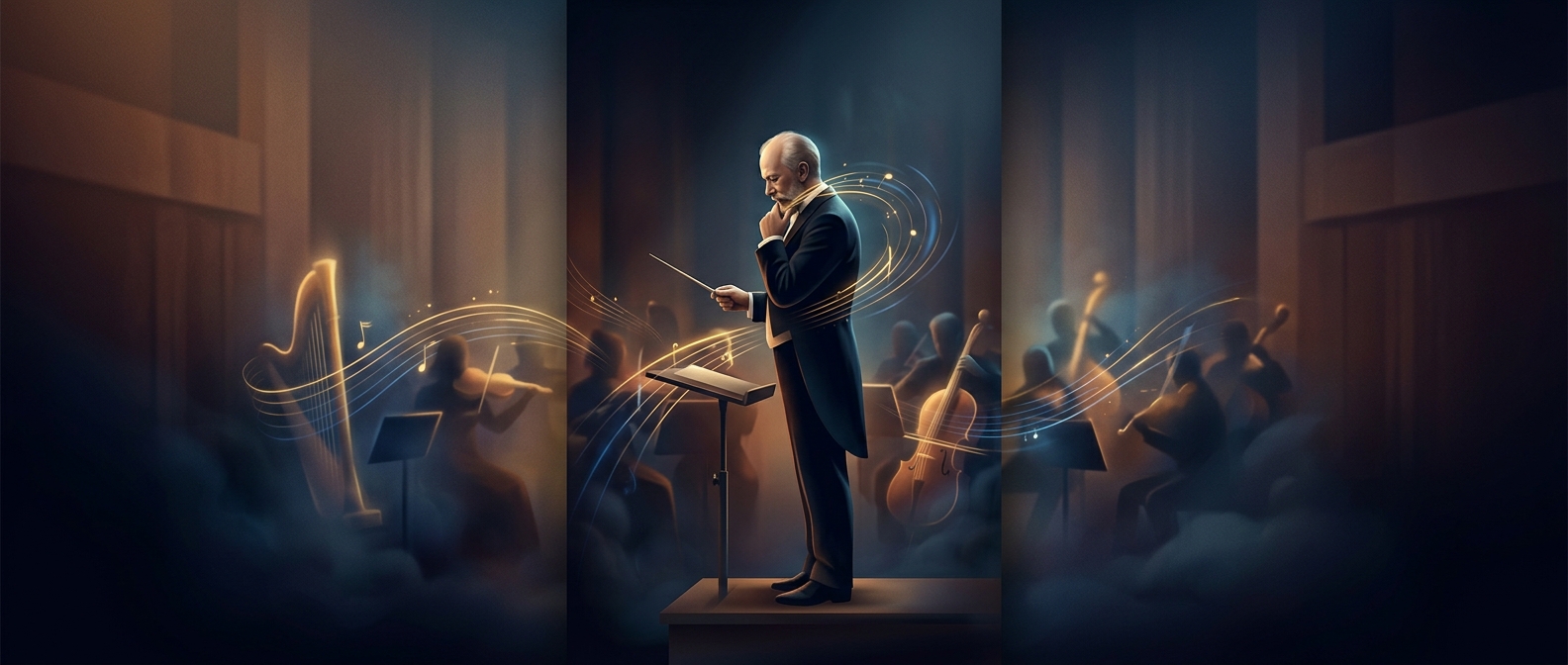
Conducting asks the body to make music visible: a beat, a change in pace, or a swell in volume has to become a movement performers can follow. Tchaikovsky’s hand beneath his chin was an unusual counter-movement—while one part of him directed the music, the other steadied his head during vigorous gestures.
When expression needed restraint
A conductor’s movements can be broad and forceful, but they are not simply theatrical. They help musicians coordinate and shape a performance. For Tchaikovsky, the fear that his head might come off put a personal limit on that physical freedom. Holding his chin gave him a way to continue conducting while guarding against the danger he imagined.
The detail makes the act of conducting feel less abstract: even a celebrated composer’s performance could involve managing a very specific bodily fear, one hand at a time.