Why Dong Ho Paper Catches the Light
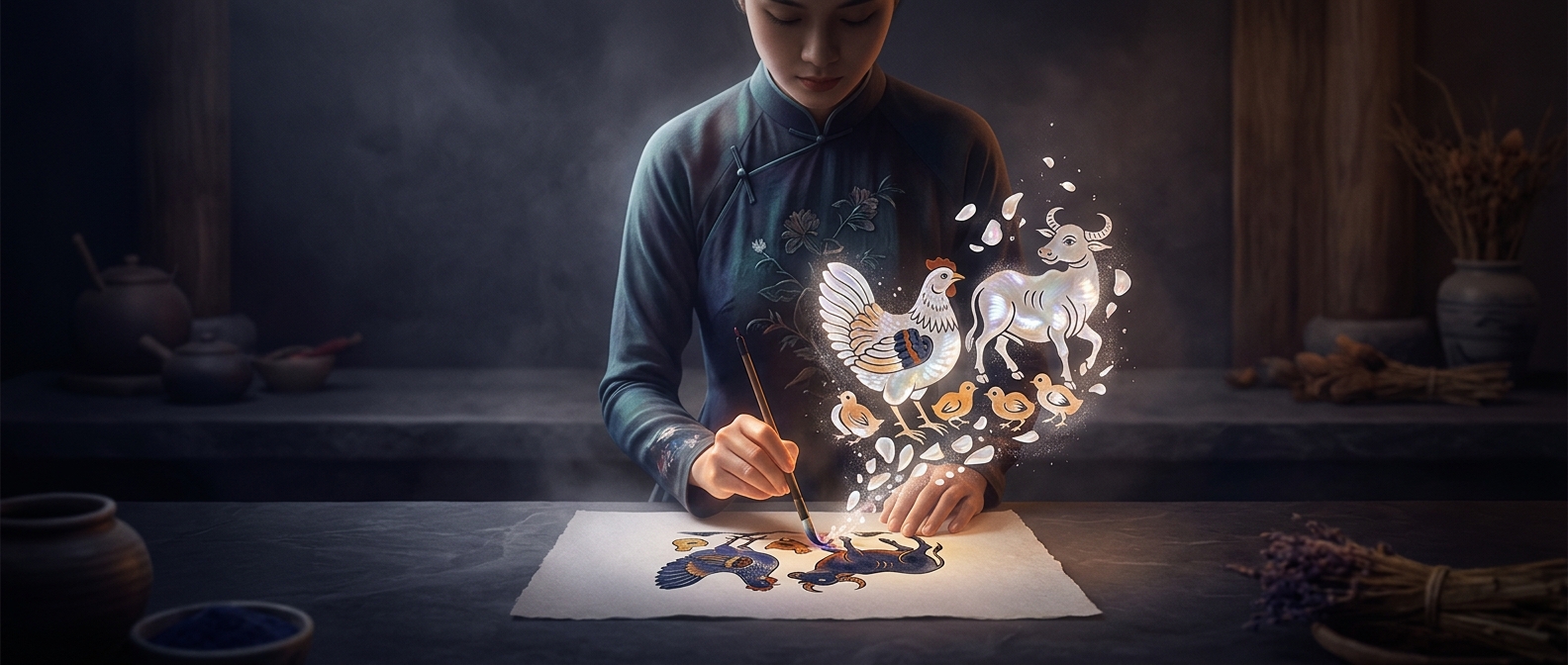
In traditional Dong Ho prints, the paper is part of the image, not just a surface beneath it. Crushed scallop shells are mixed with the pulp of tree bark to make a coating that reflects light and feels slightly textured. The result, often called điệp paper, gives the print a soft shimmer that changes as the viewer or the light moves.
That pale, reflective ground also affects how the colors read. Bold areas of ink—printed from carved wooden blocks—stand out clearly against it. The shell coating does not create the colors; it gives them a distinctive setting, making a simple patch of pigment look brighter and more vivid.
A Handmade Surface for a Printed Image
Dong Ho pictures are made by pressing paper against carved blocks, with different blocks used to print different colors. The paper’s texture matters in that process: it becomes part of the finished picture, visible around and between the printed forms rather than disappearing beneath them.
The combination links two kinds of craft: preparing a natural-fiber sheet and cutting a design into wood for printing. The shimmer is a material effect built into the image, not a later decoration. Even a plain background can therefore contribute to the character of the print, giving its direct shapes and strong colors a surface that is unmistakably its own.