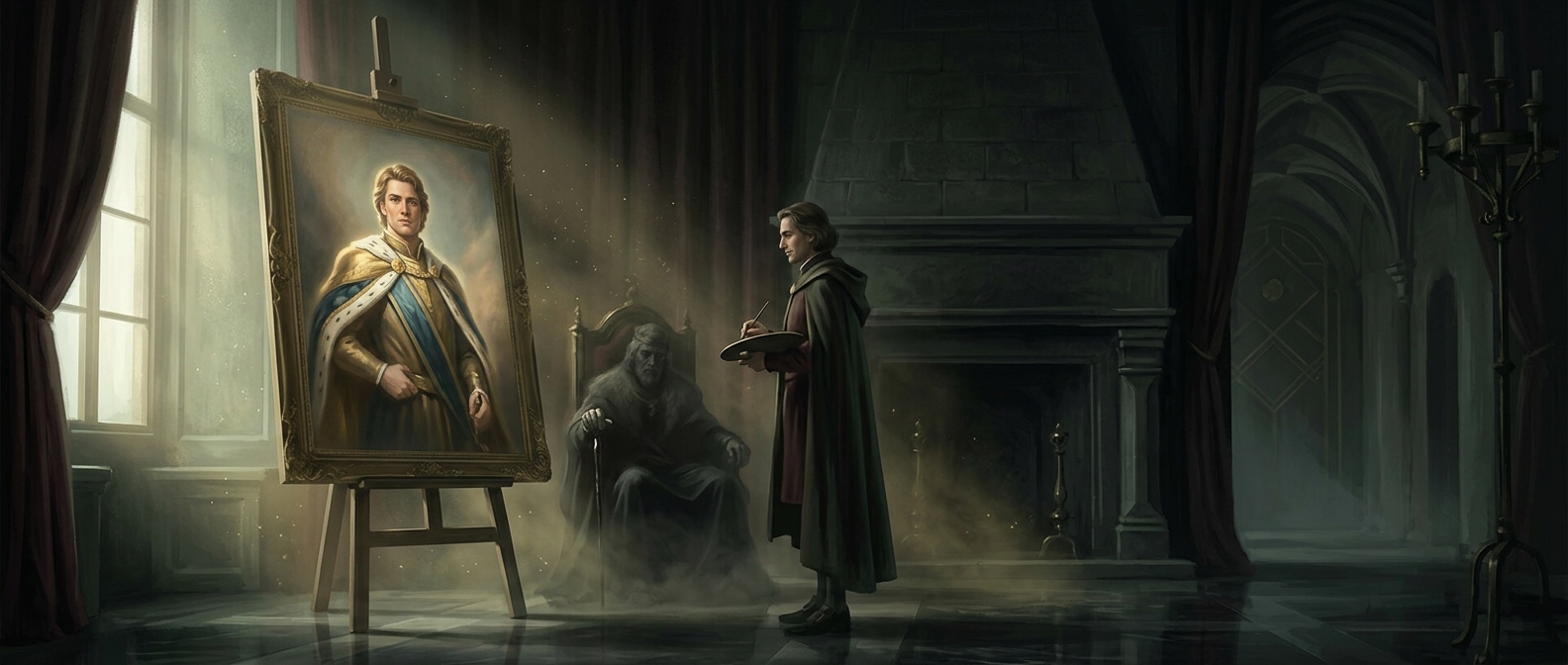
Akbar’s workshop made painting a coordinated craft
The Tasvir Khana—literally, a “picture house”—was the Mughal court’s royal painting workshop. Under Emperor Akbar, manuscript illustration became a collaborative enterprise: several artists could contribute to one page, with different hands specializing in drawing, figures, foliage, color, or finishing. The workshop could bring together more than a hundred painters, though not every page required the whole team.
That division of labor changed what a manuscript could achieve. A painter did not have to complete every stage alone. Specialists could concentrate on their strongest skills, while a supervisor coordinated the work so the separate contributions formed a coherent scene. It was something like a production line, but one dependent on trained judgment rather than interchangeable parts: a face, a landscape, and a border each demanded different kinds of control.
Costly materials served the image—and the court
The pigments helped make the pages distinctive. Lapis lazuli, a blue stone ground into powder, could yield a vivid blue; gold added reflective highlights and decoration. These materials required labor to prepare and apply, and their brilliance made the finished manuscript an unmistakable display of resources. Gold was not merely a color: it caught the light differently from ordinary paint.
The scale of the operation also made elaborate books possible. When artists divided the work, the court could commission manuscripts with many densely illustrated pages, each packed with small figures, patterned surfaces, and carefully rendered details. The result joined individual expertise to imperial organization: a page could look like the vision of a single master while embodying the work of an entire workshop.