How Snow White Became a Feature-Length Gamble
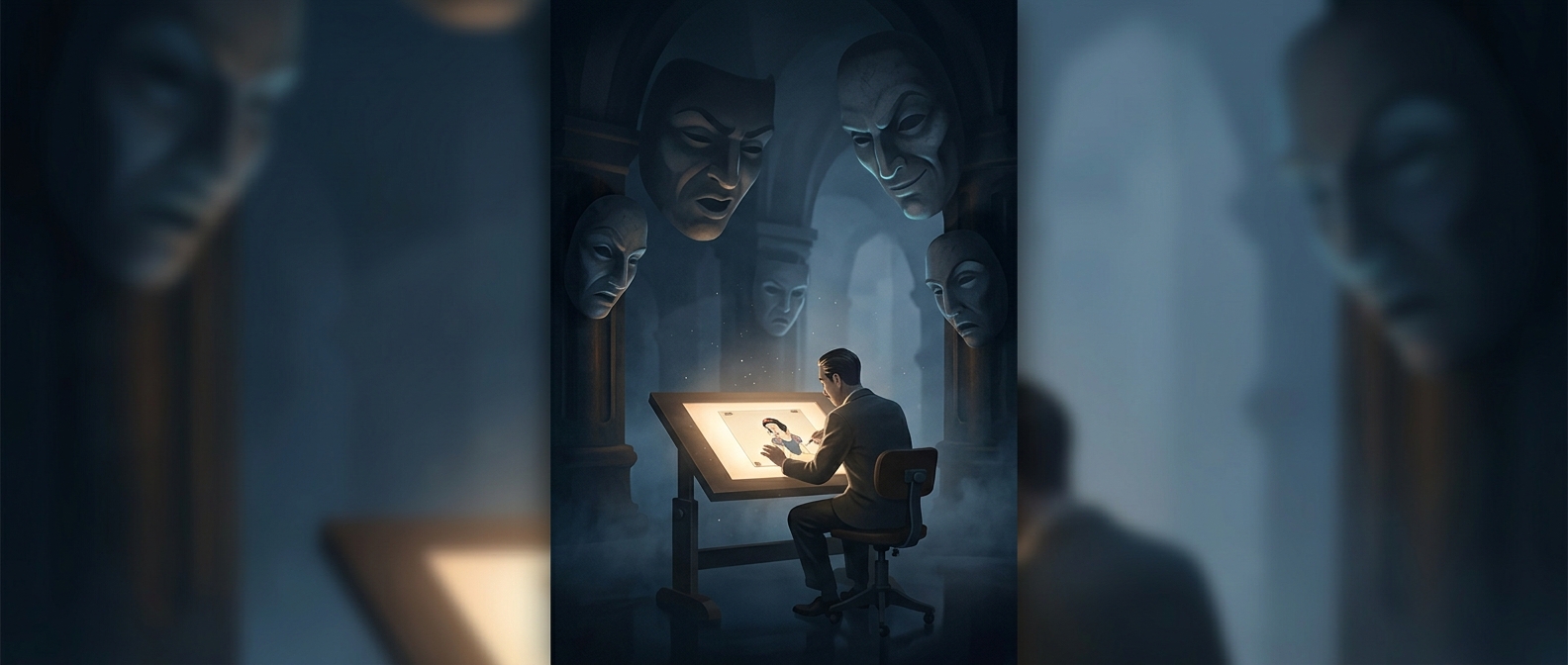
Before Snow White and the Seven Dwarfs, animated cartoons were usually short films shown alongside live-action features. Walt Disney’s plan asked audiences to stay with drawn characters for an entire movie—a much larger artistic and financial commitment than making another short. Skeptics nicknamed the project “Disney’s Folly,” reflecting doubts that animation could hold viewers’ attention for so long.
A New Kind of Production
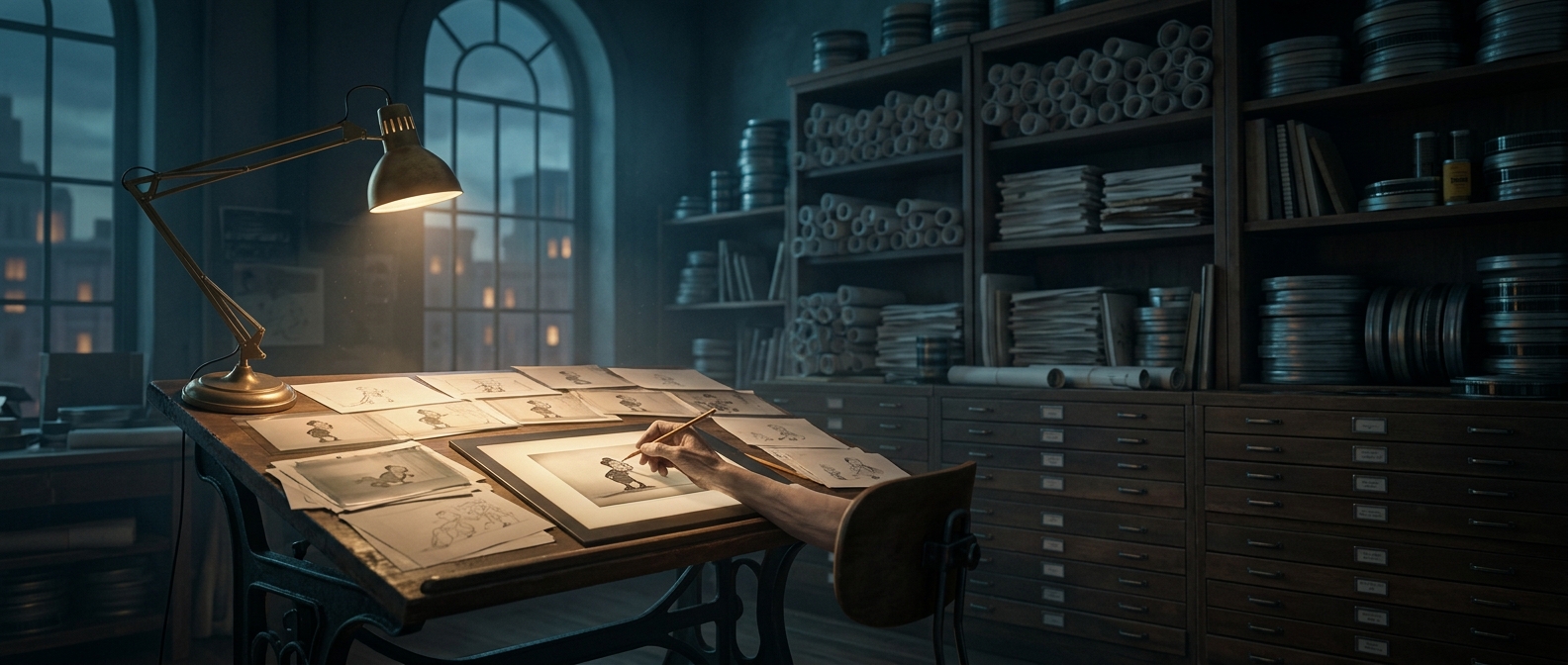
The three-year effort required more than drawing a longer story. Artists had to sustain the characters’ appearance and movement across scene after scene, while the production combined many specialized tasks: designing backgrounds, animating action, painting images onto transparent sheets, and photographing those sheets against painted settings. The film’s scale also demanded coordination that a short cartoon did not.
Disney’s team used techniques such as the multiplane camera, which photographed layers of artwork at different distances to create an impression of depth. That let a hand-drawn world feel more spacious and cinematic, while the characters remained the focus. The goal was not simply to make a cartoon last longer, but to make its visual storytelling carry the emotional weight of a feature.
The Consequence of the Bet
When Snow White succeeded with audiences, it demonstrated that animation could support a full-length theatrical story, not just provide a brief interlude. The result changed what studios could reasonably attempt: a feature cartoon became a viable kind of movie, even though it still required years of labor and a large, coordinated workforce.
The lasting significance was therefore industrial as well as artistic. Snow White helped turn feature animation from a risky experiment into a model filmmakers could build on—one carefully drawn scene at a time.