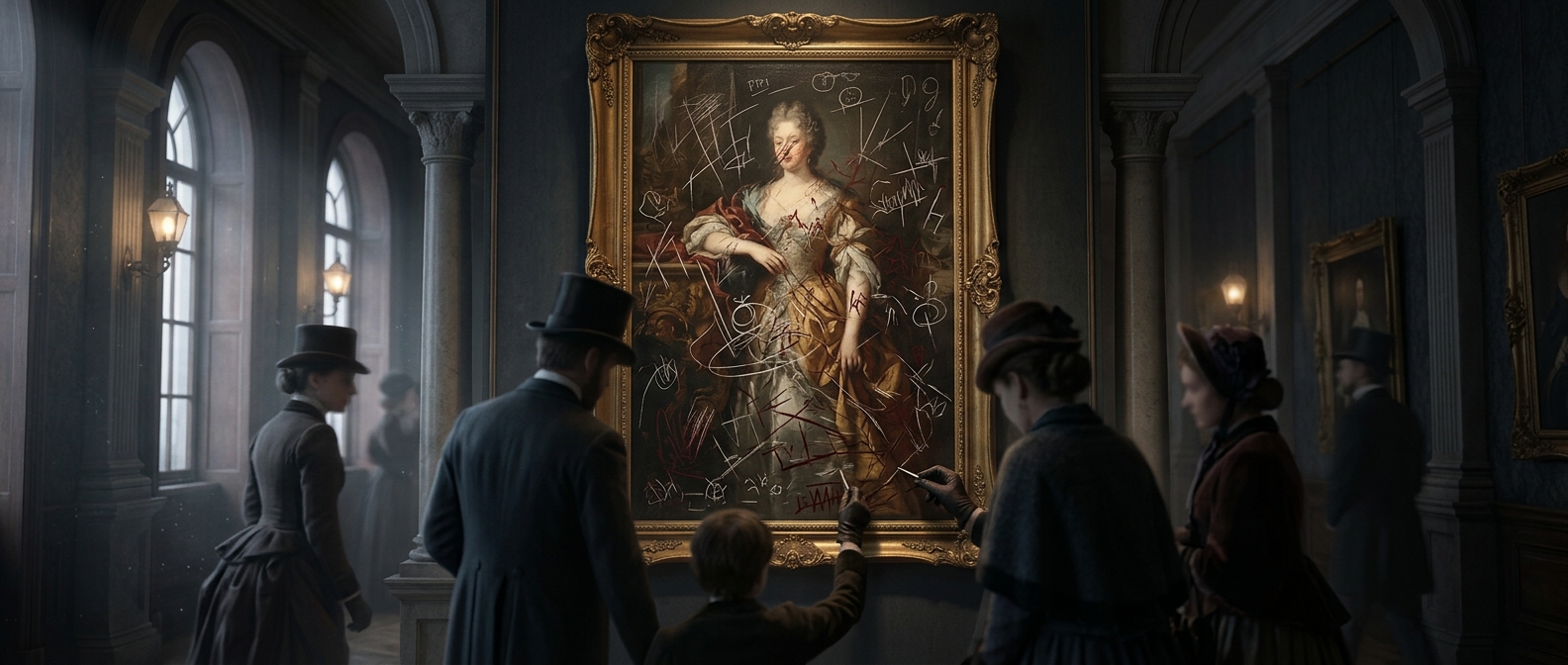
When Looking Turned Into Taking
Victorian museums faced a problem built into their success: the more people came to see collections, the harder it became to keep those collections safe. Visitors did not always treat paintings and sculptures as untouchable objects. Some poked canvases with umbrella tips or chipped fragments from statues to keep as souvenirs.
The damage was small in scale but lasting in effect. A hole in a canvas or a missing chip could not be undone simply by asking the next visitor to behave better. And a gallery display put objects within reach of crowds, often without the barriers or viewing distances that modern visitors may expect.
The Cost of an Open Gallery
Hiring extra guards was a practical response to a problem that ordinary supervision could not solve from a distance. A guard could watch how people moved around the exhibits, intervene before a hand or umbrella made contact, and help make clear that a collection was not a source of keepsakes.
That effort exposed a tension at the heart of public museums: they invited people to encounter art and history directly, while also needing to preserve objects for everyone who would come afterward. The visitor who took a fragment turned a shared collection into a private souvenir—and left less for the next person to see.