A baster changed how paint reached the canvas
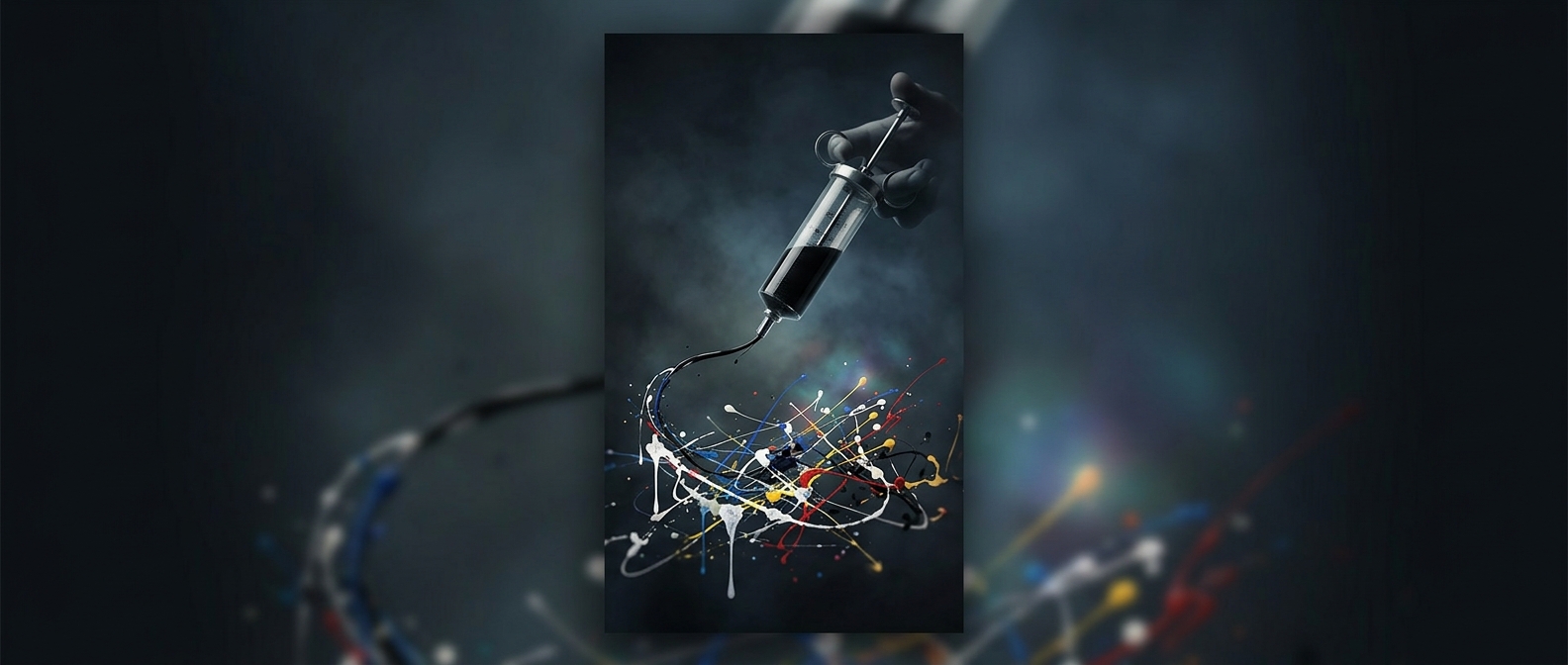
A turkey baster does more than hold paint: squeeze its bulb and it releases a stream; ease the pressure and the flow can thin or stop. That gave Jackson Pollock a way to place paint without dragging a brush across the surface. He could let it fall, sweep the utensil over the canvas, or change the stream as he moved.
The result depended on several forces at once. Paint’s thickness affected how quickly it flowed; the height and speed of the baster affected where it landed and how it spread. A line could remain narrow or break into droplets. The tool offered less fine control than a brush, but it made motion itself part of the mark.
Why the canvas was on the floor
Working on a canvas laid flat meant Pollock could approach it from different sides and reach across it, rather than composing only from one fixed viewpoint. Paint could land anywhere on the surface, building a network of lines instead of a central scene with a clear foreground and background. Sticks and worn brushes offered other ways to guide or release paint; the baster added a squeezable, steady stream.
This was not simply a matter of replacing one utensil with another. Each tool shaped the pace and character of the marks, while Pollock’s movements connected them across the canvas. The kitchen baster helped turn painting from a sequence of brushstrokes into a physical process unfolding over the whole surface.