Why Giacometti Kept Starting Over
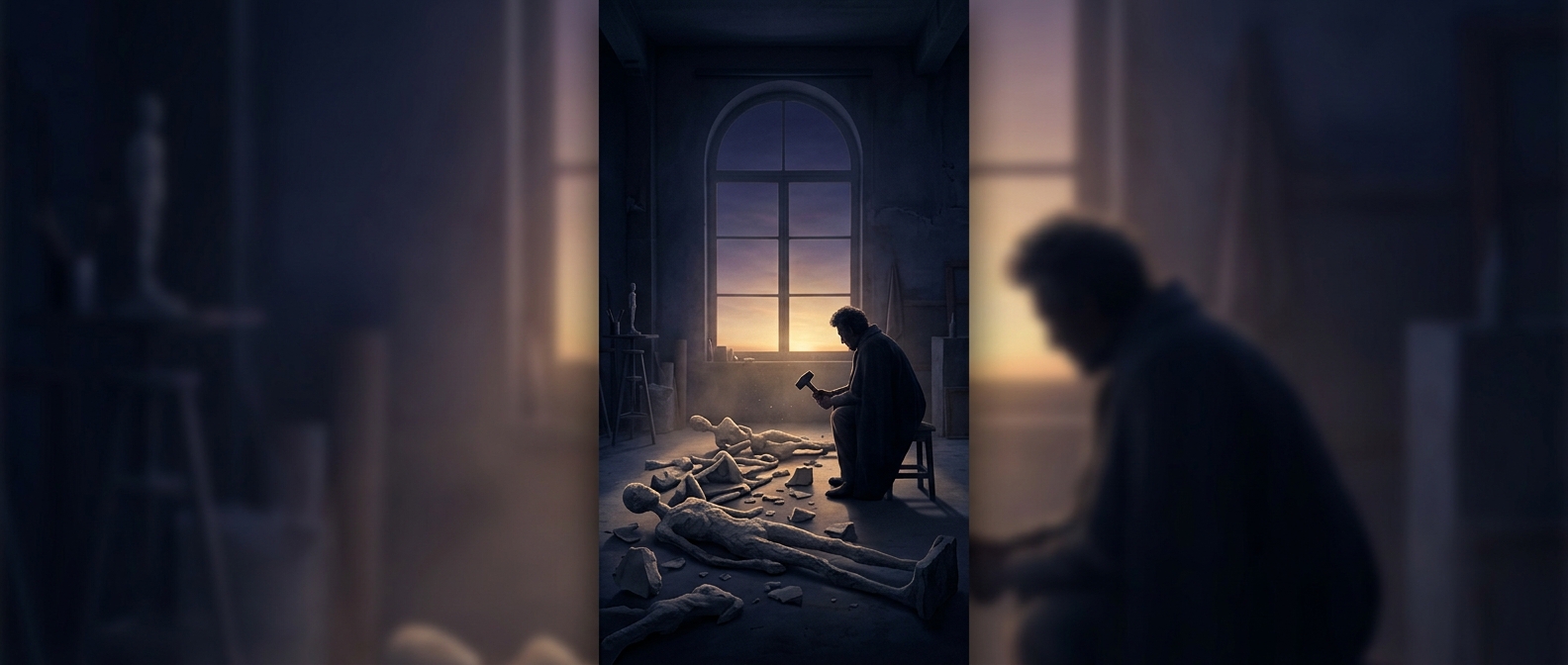
For Alberto Giacometti, a sculpture was not simply a figure to finish and keep. He was trying to make a person’s presence feel convincing in three dimensions—a goal that could remain out of reach even after hours of work. A clay figure might seem too solid, too bulky, or somehow unlike the person he was trying to capture. Rather than accept a version that felt wrong, he could crush it and begin again.
That cycle mattered to the work itself. Giacometti’s attenuated figures—the famously narrow, elongated forms—can look as if they have been pared down to almost nothing. Their thinness was not just a decorative style: it made the body seem vulnerable and distant, while leaving its stance and outline intensely legible. Reworking a figure meant repeatedly deciding what could be removed, reshaped, or preserved.
From Temporary Clay to Lasting Bronze
Clay was especially suited to this process because it could be pushed, scraped, and rebuilt. But a clay model was also temporary. When Giacometti judged a figure unsuccessful, destroying it cleared the way for another attempt; when a model did satisfy him, it could serve as the basis for a more durable bronze sculpture.
The contrast is striking: the works now treated as permanent landmarks emerged from a practice that allowed many versions to disappear. The destruction was not an incidental outburst so much as part of the method—each discarded figure marking another attempt to make a human presence hold together in space.