A performance with a real hazard
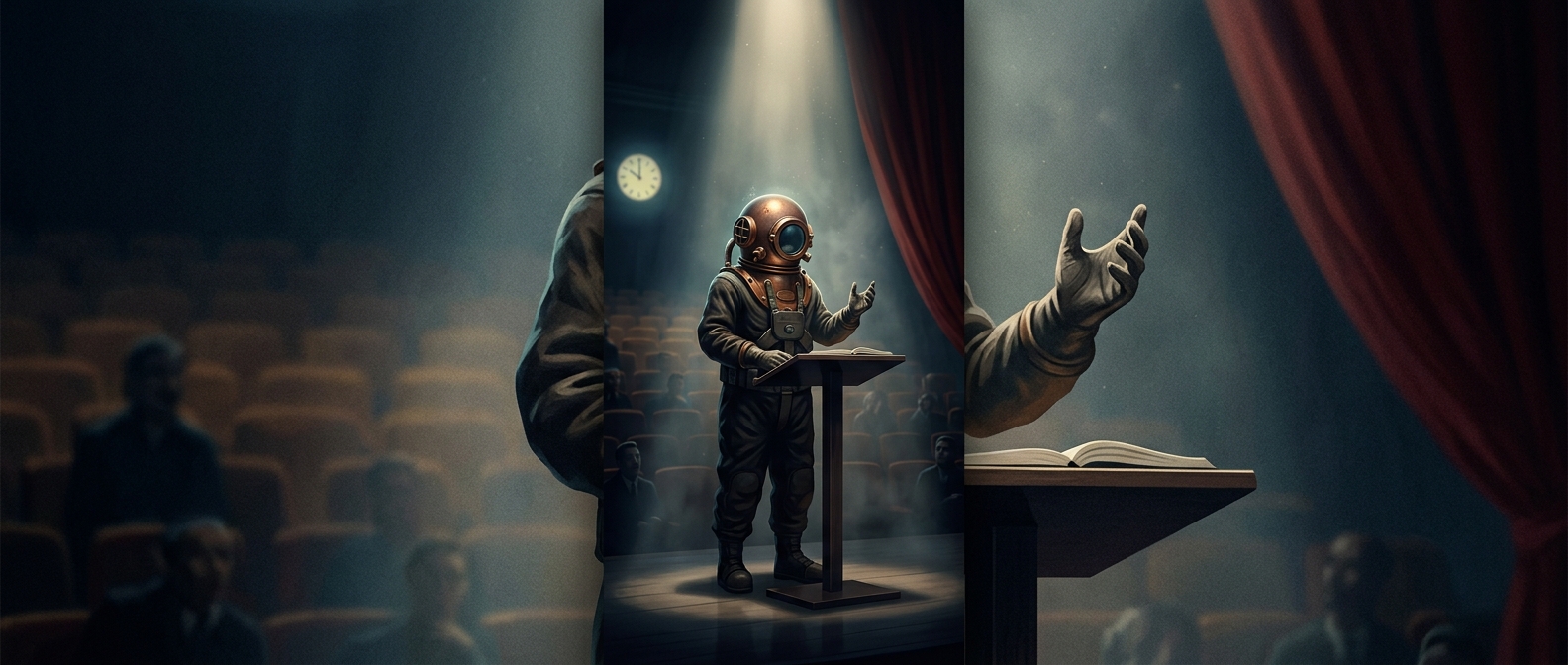
Dalí’s diving helmet was meant to make an idea physical: entering the depths of the subconscious, a central surrealist image. But the costume brought the practical risks of deep-sea equipment onto a stage. A traditional hard-hat diving suit depends on a continuous supply of air to the helmet; it is not simply a sealed outfit a wearer can breathe in indefinitely.
That made the scene difficult to read from the outside. The heavy helmet concealed Dalí’s face and distress, while the unusual costume made his appearance look like part of the act. As he began to lose the ability to breathe normally, the audience interpreted the danger as theatrical behavior and laughed.
When the image overtook the performer
The incident shows how surrealist performance could blur the line between a staged provocation and an actual emergency. Dalí had chosen equipment that carried a vivid symbolic meaning, but its physical demands did not disappear just because it was being used as art. The crowd saw a striking image; inside the helmet, the performer faced a bodily limit.
The memorable contrast is also the point: a costume intended to dramatize a journey into the mind nearly stopped its wearer from getting enough air.