How a landscape could carry a second message
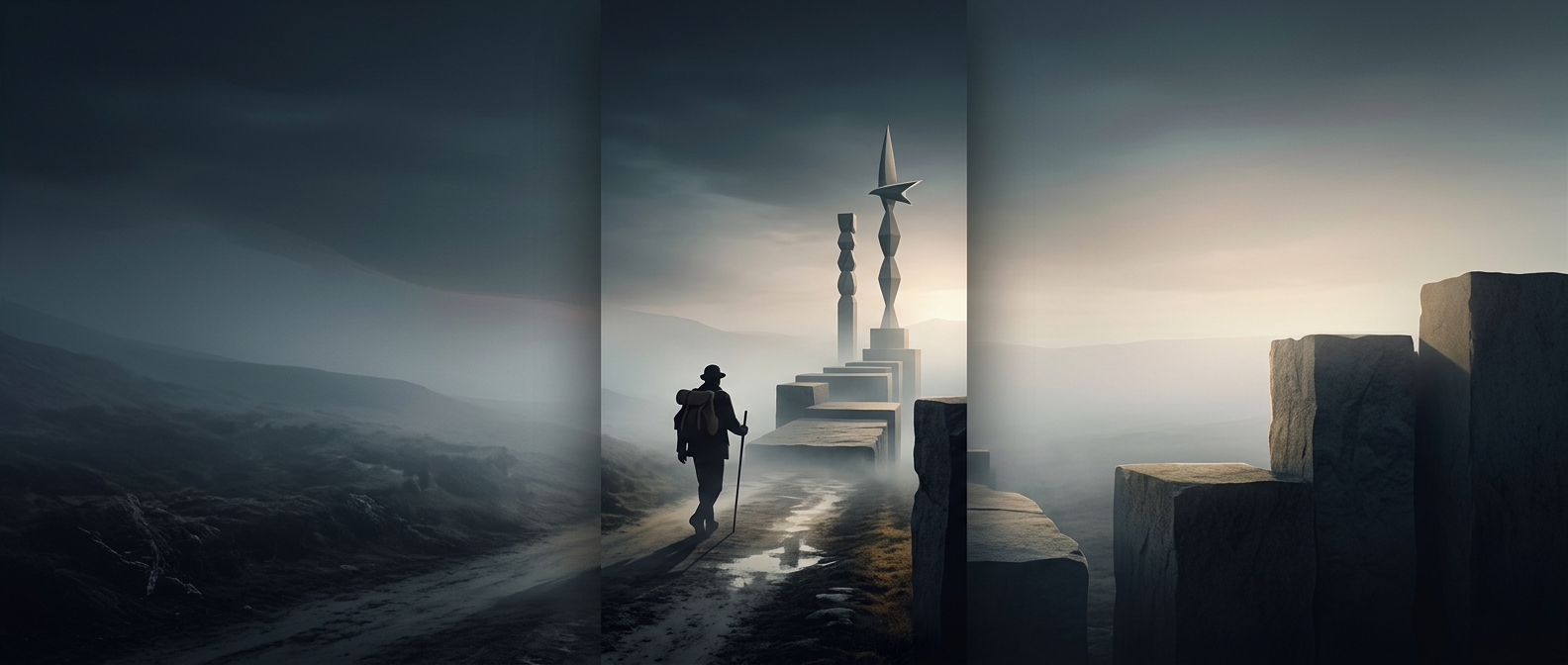
A resistance painting could be read on two levels. To an ordinary viewer, it showed familiar scenery; to someone who knew what to look for, selected details could point to a route or signal an instruction. The landscape provided cover because rivers, roads, buildings, and changes in brushwork belonged naturally in a picture. A hidden message did not need to look like writing if its intended reader already understood the visual code.
That distinction mattered under occupation. A plainly marked map or written order could be recognized as evidence of resistance. A painting, by contrast, could appear to be only decoration—even when its arrangement of details had another purpose. The danger was not eliminated: the code had to be understood by its recipient but remain unremarkable to a suspicious observer.
Concealment depended on shared knowledge
A coded image was useful only if sender and recipient could interpret it consistently. A streak or symbol meant little by itself; its meaning depended on an agreed convention or on recognizable features of the place being depicted. That made the painting less like a secret note that anyone could read and more like a map whose clues made sense to a particular viewer.
The method also imposed a limit: the more conspicuous the clues, the easier they were to notice, while clues made too subtle could fail to communicate. Its power lay in turning an ordinary object into a quiet channel. A landscape on a wall could invite an occupier to see scenery while giving a resistance contact a reason to look more closely.