How a Small Unit Made Itself Look Larger
The U.S. Army’s 23rd Headquarters Special Troops—later known as the Ghost Army—was built around a basic military problem: a real formation could not be everywhere at once. Instead of adding soldiers, the unit tried to make German commanders believe additional American units were nearby, moving, or preparing to attack.
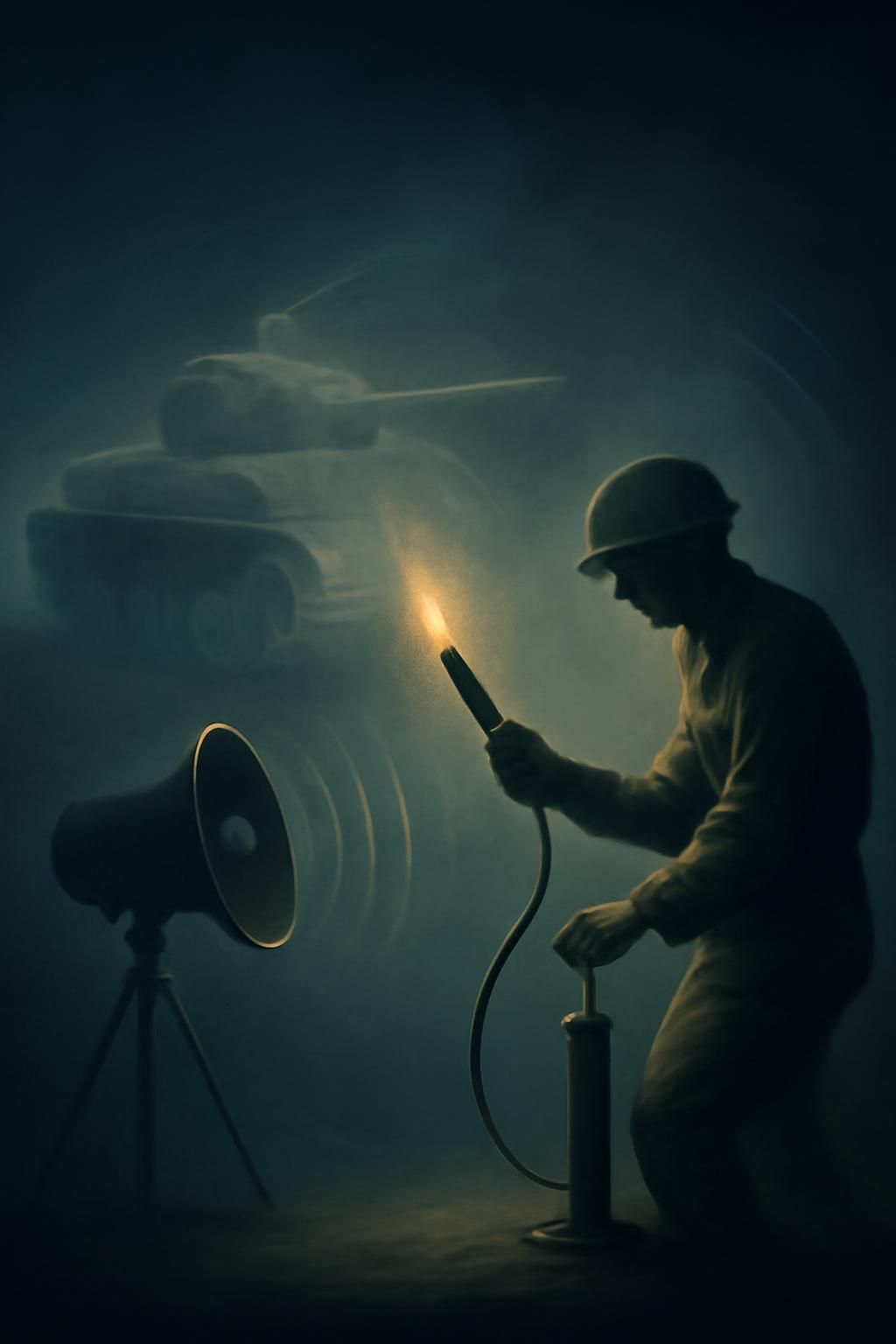
Its deception worked by presenting several kinds of evidence that seemed to confirm one another. Inflatable vehicles and other decoys suggested a force when viewed from a distance or from the air. Radio operators copied the distinctive patterns of other units’ communications, so intercepted traffic seemed to come from formations that were not actually there. Sound trucks broadcast recordings of engines, construction, and troop activity, making a quiet area seem busy.
The Performance Had to Hold Together
A fake tank alone might be dismissed as a decoy. The Ghost Army’s trick was to build a fuller scene around it. Soldiers could wear another unit’s insignia, appear in public as its staff, or act out the routines of a larger formation. Meanwhile, radio messages and amplified sounds reinforced the same story through different channels.
That coordination mattered because military intelligence rarely depends on one clue. If a visible vehicle, a radio signal, and reports of troop activity all pointed to the same supposed force, an enemy commander had more reason to take the threat seriously. The goal was not simply to fool a passing observer; it was to shape decisions made under uncertainty.
Deception Could Change Where the Enemy Looked
The Ghost Army operated in Europe late in the war, creating the impression of units that could draw German attention away from real movements or make a position appear more strongly defended. Its equipment was theatrical, but the intended effect was practical: encourage the enemy to watch, prepare, or deploy against a force that existed only as a performance.
The method’s power lay in turning limited manpower into apparent presence. A few convincing signs could make an opponent spend time and resources responding to a threat—and leave less attention for the real one.