The battlefield became a source of teeth
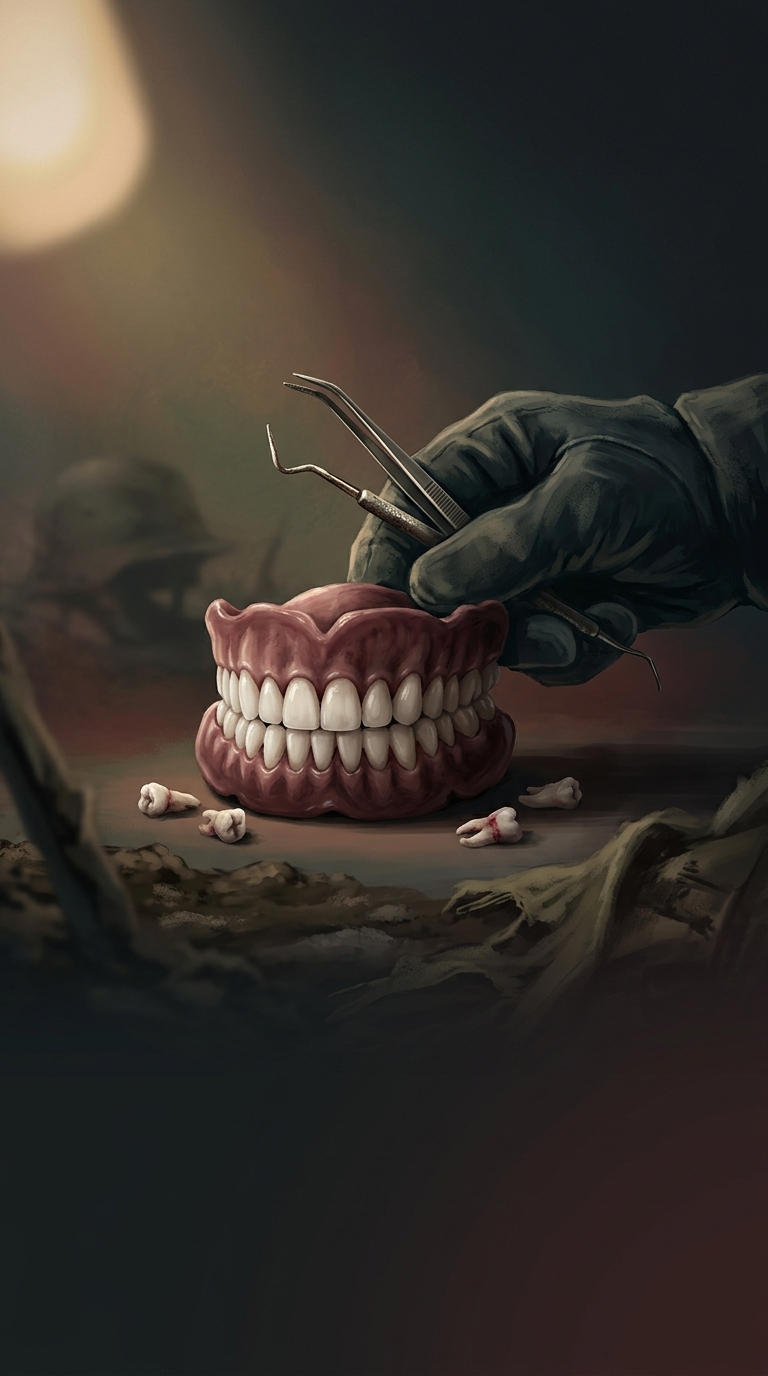
After Waterloo, the bodies left on the battlefield were not only a grim consequence of the fighting; for some scavengers, they were a source of valuable dental material. They pulled teeth from the dead, gathered them for sale, and supplied a trade already serving people who needed replacements. The teeth were often sorted and sold in sets, then fitted by dentists or denture makers.
The practice was not invented at Waterloo, and the teeth did not come only from that battlefield. Soldiers killed in other European conflicts also became part of the supply. “Waterloo teeth” became a memorable name for human teeth taken from battle dead and used in dentures.
Why real teeth were in demand
Before modern dentistry, replacing a missing tooth was difficult. Dentures could be made with teeth carved from ivory or other materials, but human teeth looked more natural and could be shaped to fit. They were set into a base—often ivory—and secured in the wearer’s mouth. A good fit mattered: an uncomfortable or unstable denture could make eating and speaking harder.
That demand created an ugly market. Teeth taken from the dead were cleaned and prepared before sale, but their origin could be impossible for a buyer to know. The trade turned battlefield casualties into commodities, while offering people with money a more lifelike alternative to artificial teeth.
A label that outlasted the battle
Waterloo’s name stuck because the battle was enormous and its aftermath supplied a vivid story about the trade. But it is misleading to imagine British dentists organizing a single collection from the field or relying on Waterloo alone. Teeth circulated through scavengers and dealers, and the broader market drew on multiple sources. The phrase captures the unsettling connection between a famous victory and the everyday, intimate problem of trying to eat and smile with missing teeth.