The supply chain behind a natural-looking smile
For much of the 19th century, wealthy denture buyers could choose teeth that had once belonged to other people. Dentists and specialist makers fitted these human teeth into dentures, often using ivory for the base. Compared with early porcelain alternatives, real teeth could look more convincing, making them a prized option despite their grim origin.
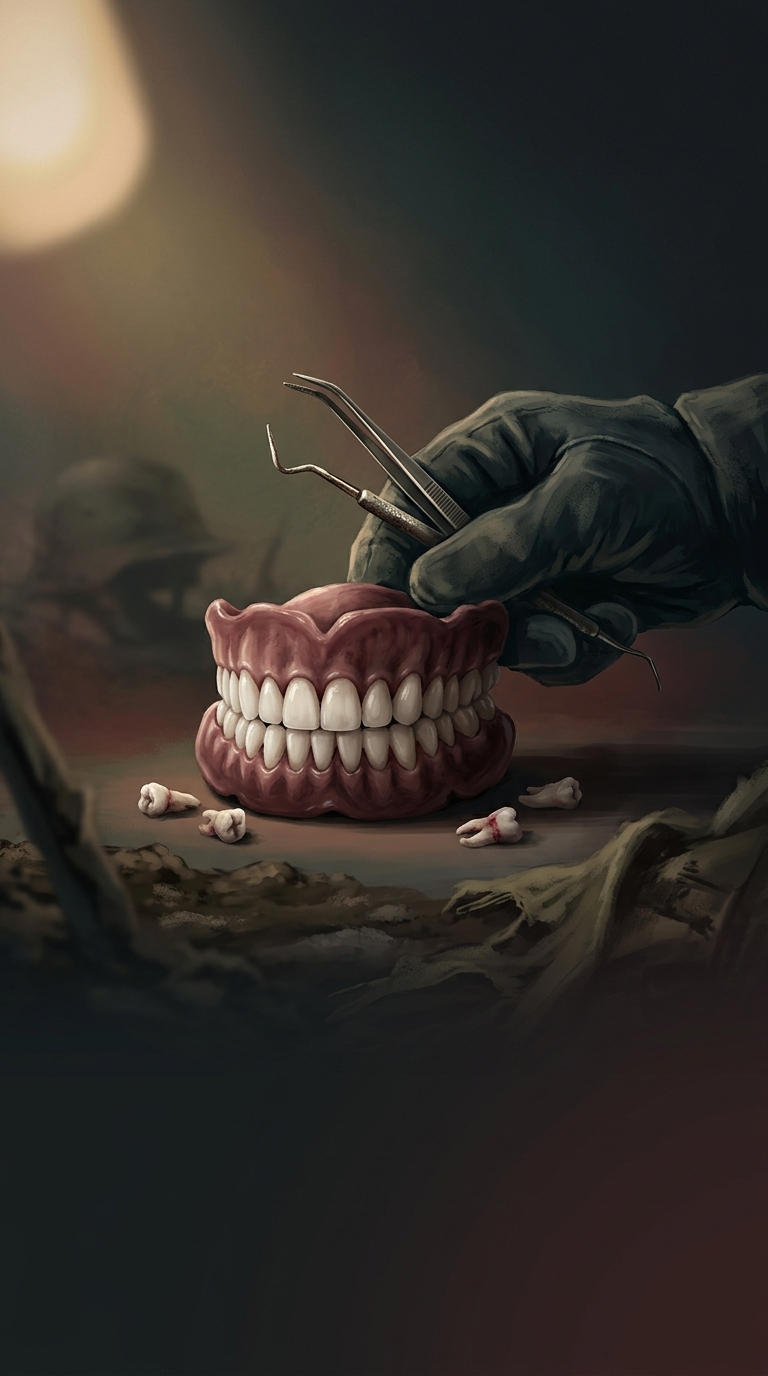
The teeth came from several sources. Some were taken from the dead after battles; others were stolen from graves or bought from people willing to sell teeth. The trade linked the dental chair to battlefields, burial grounds and poor communities, where a tooth could become a commodity for someone else’s comfort and appearance.
Why “Waterloo teeth” became famous
After the Battle of Waterloo in 1815, the dead left behind a vast supply of teeth that could be collected and sold. “Waterloo teeth” became a memorable name for dentures made with teeth from battlefields, though the label should not be taken to mean every set came from that one battle. Human teeth continued to circulate through other channels as well.
A maker would select teeth for size and appearance, then attach them to a base shaped to fit the wearer’s mouth. The finished denture could be expensive and carefully made, but its polished surface concealed a supply chain with little connection to the person wearing it—or regard for the person whose teeth it contained.
A luxury built on anonymity
The arrangement made a disturbing contrast: the wealthy could pay for a lifelike smile, while the source of its most visible parts remained anonymous. As manufactured materials improved, dentures no longer had to depend so heavily on human teeth. But for generations, a premium replacement smile could literally be assembled from the remains of strangers.