Why trench foot turned routine care into a military necessity
Trench foot was a nonfreezing cold injury: prolonged exposure to cold and damp could harm feet even when they never froze solid. In waterlogged trenches, boots and socks might stay wet for hours. The skin softened, while cold narrowed blood vessels and reduced circulation. Together, these conditions made tissue vulnerable to damage; once skin was compromised, infection could take hold.
The danger was not merely discomfort. A soldier whose feet could no longer bear weight might be unable to move with his unit or perform his duties. Severe injury could lead to lasting damage and, in some cases, amputation. Prevention therefore mattered to commanders as well as to the men trying to keep their feet intact.
A small routine against a battlefield-sized problem
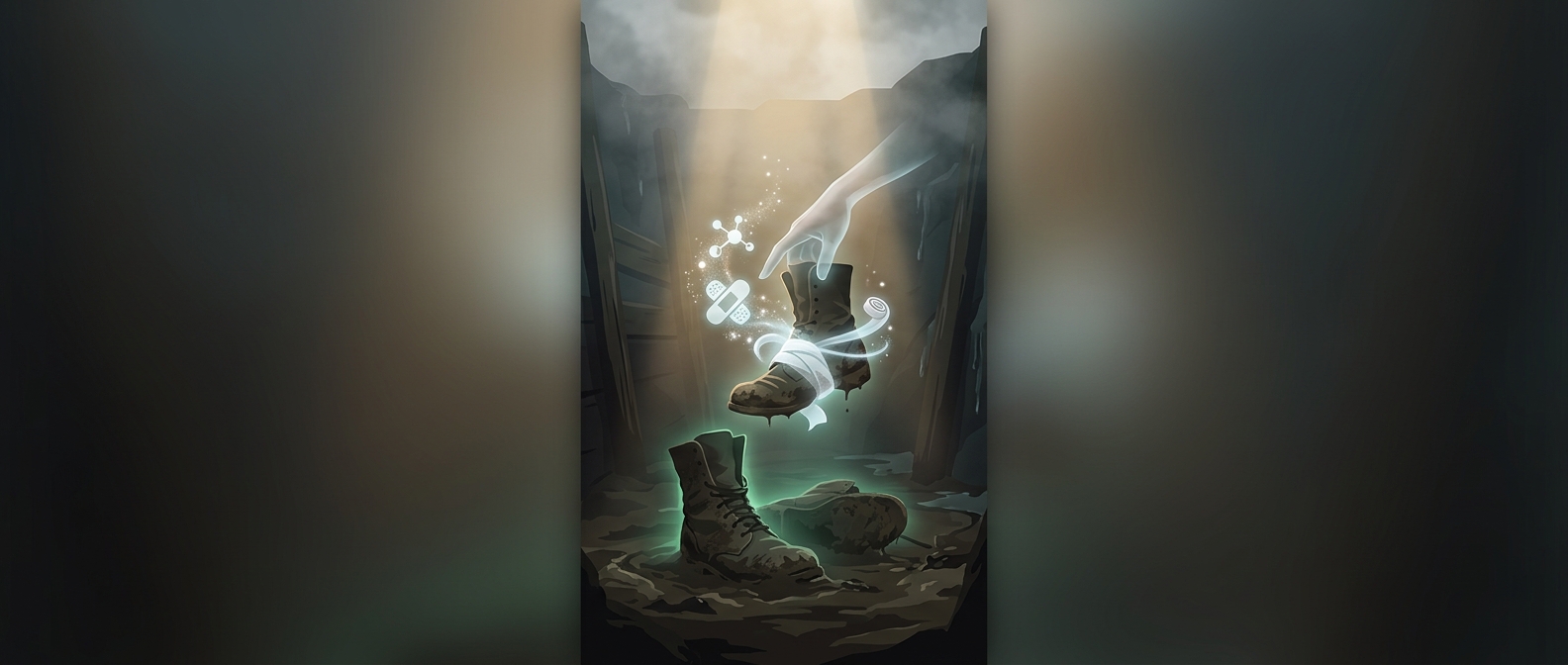
Orders to dry feet twice a day, apply grease, and change or rotate socks addressed different parts of the problem. Drying reduced the time skin spent wet. Grease was used as a protective coating, while fresh, dry socks kept damp fabric from remaining against the feet. Rotating pairs made that change possible when one set had become soaked.
None of these steps could make a flooded trench dry, and keeping to the routine required time, spare socks, and somewhere to tend to one’s feet. That made foot care a practical logistics problem: supplies and opportunities to dry out were part of keeping soldiers fit to remain on duty.
Prevention depended on attention before pain became disabling
The routine also turned foot checks into a repeated act of discipline. Twice-daily care meant soldiers had a chance to notice trouble before damaged feet became impossible to ignore. In a place where wet boots were an ordinary feature of service, the difference between tolerable exposure and serious injury could depend on whether men had the time and materials to interrupt it.
That is the striking consequence of trench foot: a seemingly minor hygiene task became essential military maintenance, because a soldier’s ability to keep moving could hinge on the condition of his feet.