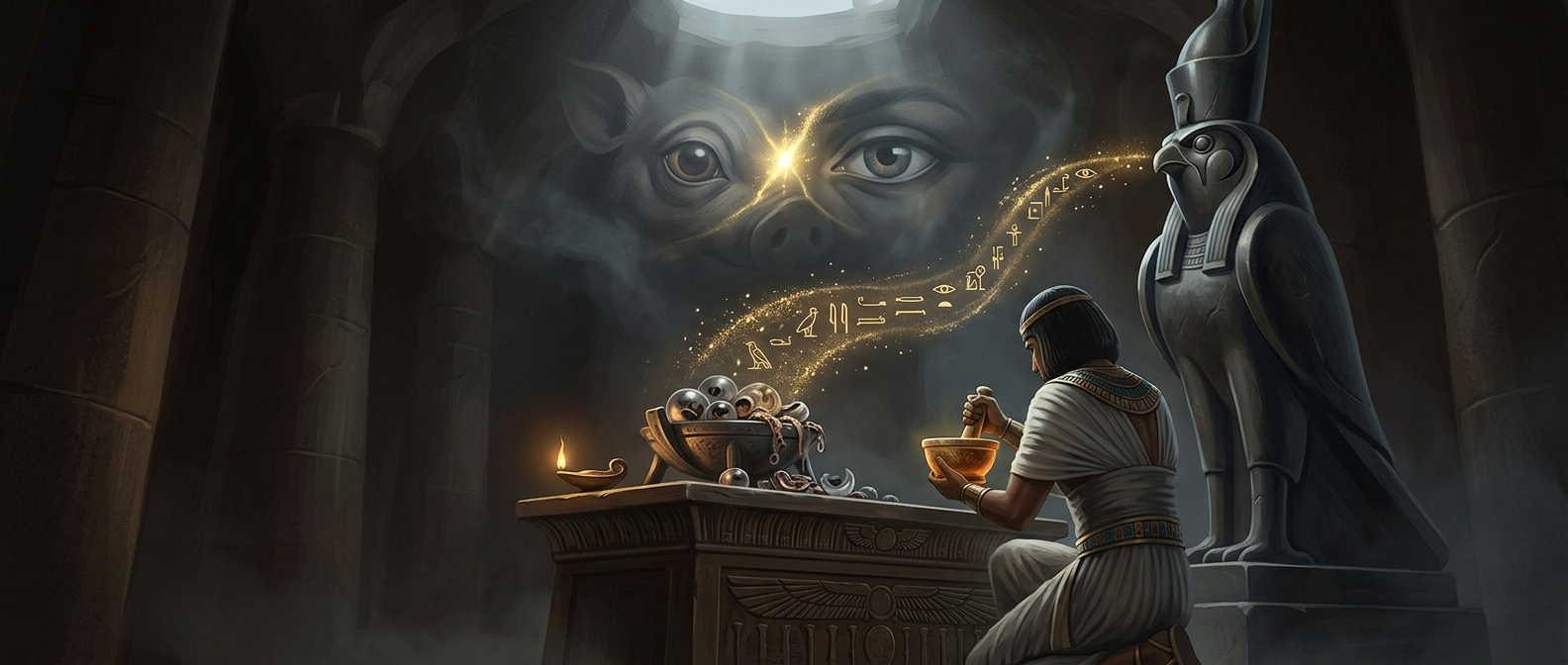
A remedy built on a mistaken route
The treatment’s logic depended on more than the idea that a pig’s eye might contain something useful. It also assumed that medicine poured into the ear could travel inward to affect the brain—and, through it, sight. In a world without a reliable map of nerves, organs, and bodily connections, that kind of route could seem plausible.
But the ear is not an open passage to the brain. The ear canal ends at the eardrum. Beyond it, the middle ear connects to the back of the throat through a narrow pressure-equalizing tube; it does not provide a channel for a dose to reach the brain or eyes.
Why the route mattered
Blindness can result from problems in different parts of the eye or visual system. Putting material in the ear would not repair those structures. Even if the crushed eye supplied some substance with biological activity, the body would not deliver it to the source of the blindness by this path.
The method also carried a practical risk: animal tissue placed in the ear could irritate or infect it. A treatment could therefore be based on a recognizable attempt to intervene in illness while still failing because its model of the body—and its chosen route—was wrong.
The striking detail is not simply that an ancient remedy sounds bizarre. It is that a treatment’s ingredients and its imagined pathway both had to be right; here, the pathway was the fundamental obstacle.