A Bite Became an Observation
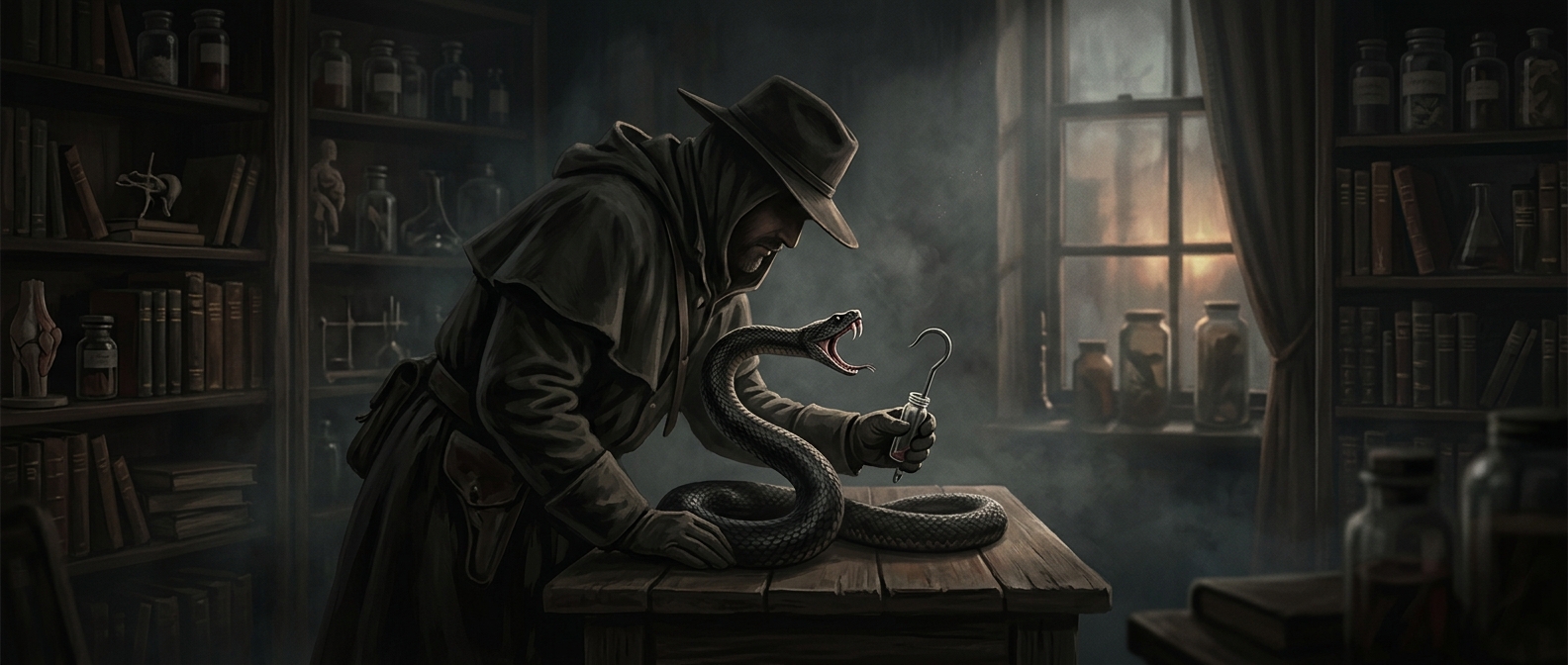
Before venom could be studied through modern laboratory tests, its effects were often known through what happened after a bite. Some naturalists turned that dangerous accident into a deliberate test: they let a viper bite them and recorded the changes in their own bodies.
The visible sequence could be striking. Swelling spread around the wound as venom injured tissue; in severe cases, the damaged area died. Such notes gave later readers a firsthand account of how rapidly a bite could alter the body, rather than merely identifying the snake as dangerous.
What the Notes Could—and Could Not—Show
A human bite test offered immediacy, but little control. The amount of venom delivered could vary, as could the bite’s location and the person’s response. The observations therefore documented real injury, but could not by themselves establish a reliable dose or predict what would happen in every bite.
That tension is part of their historical importance: a naturalist’s body became both the subject and the measuring instrument. The resulting record could make venom’s consequences vivid, but producing it meant risking lasting damage for evidence that safer, more controlled methods would eventually be better suited to obtain.