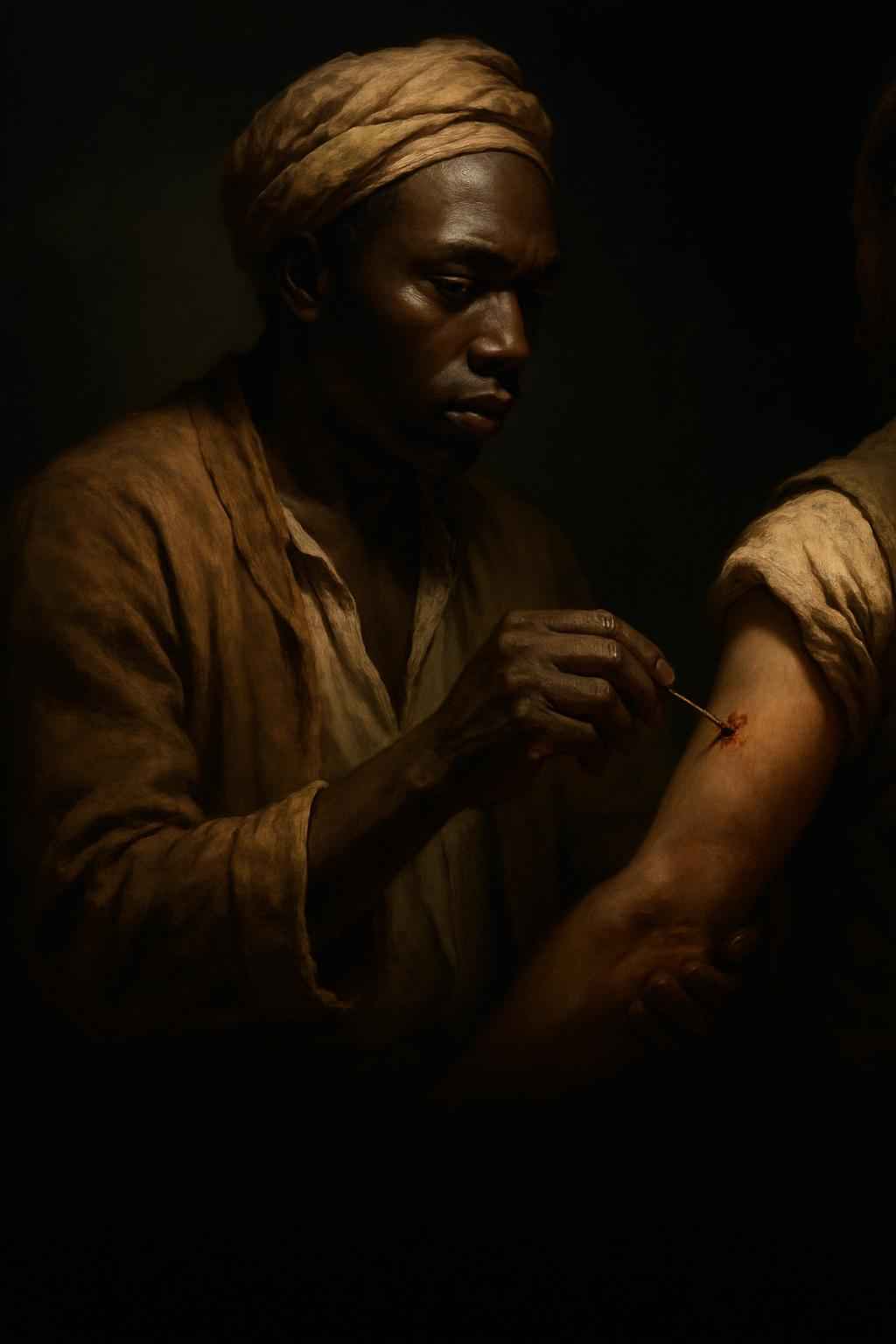
A dangerous lesson carried into Boston
In 1721, smallpox spread through Boston, where people had little protection against a disease that could kill or leave survivors scarred. Cotton Mather, a minister who had heard about inoculation from Onesimus, an enslaved man in his household, urged doctors to try it. Onesimus had described a practice he knew from Africa: expose a healthy person to material from a smallpox sore so the person would contract a controlled, usually milder infection and gain protection against later disease.
This procedure, called variolation, was not vaccination. It deliberately used the smallpox virus itself, often by placing infectious material into a small cut. The hope was to provoke illness without the full force of a naturally acquired infection. But the outcome was not guaranteed: an inoculated person could become seriously ill or die, and could spread smallpox to others.
From testimony to a public test
Mather’s account of Onesimus’s experience helped turn an unfamiliar practice into a proposed response to Boston’s epidemic. Physician Zabdiel Boylston carried out inoculations despite fierce opposition. The procedure’s risks made the dispute more than a clash between new and old ideas: it asked whether deliberately exposing people to smallpox could be safer than waiting for exposure to happen by chance.
During the outbreak, deaths among inoculated people were reported at a much lower rate than among those who caught smallpox naturally—about one-ninth as high. That comparison helped make the case for inoculation, though it did not make the procedure harmless or settle the controversy overnight.
Who gets credit for medical knowledge?
Onesimus’s role matters because the knowledge did not originate with Mather or Boston’s physicians. It traveled through a conversation shaped by slavery: an enslaved person shared expertise, while a powerful white minister helped bring it into public view. The episode shows how medical practice can depend on knowledge carried across cultures—and how the people who provide that knowledge may not receive equal recognition. In Boston, one such account helped put deliberate prevention, with all its risks, on the table during an epidemic.