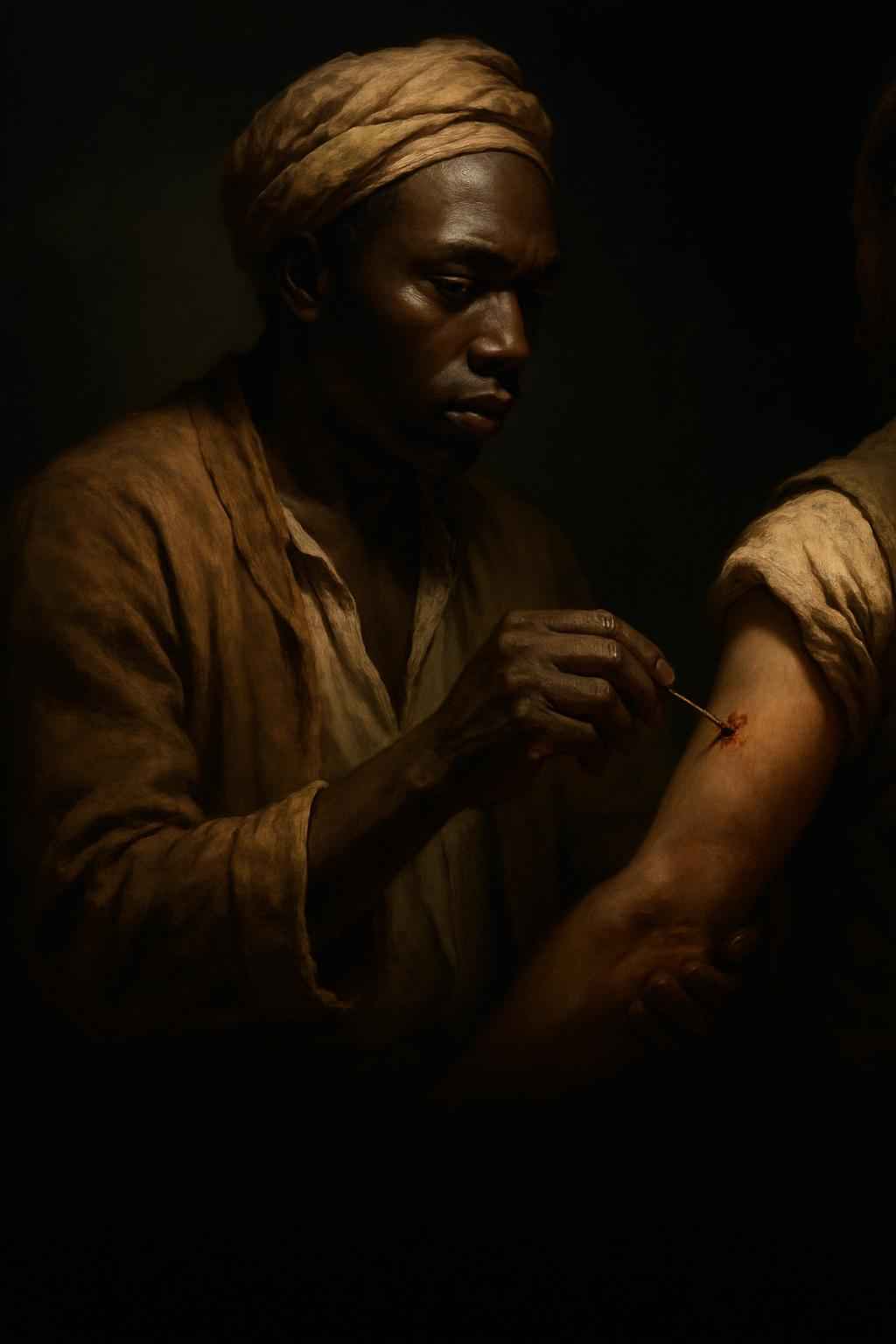
Why cowpox offered a safer gamble
Before vaccination, some people tried to prevent smallpox through variolation: deliberately exposing someone to material from a smallpox sore. It could produce a milder case than catching the disease naturally, but it still meant giving the person smallpox—and could cause severe illness or spread infection to others.
Edward Jenner pursued a different possibility. He noticed the belief that people who had caught cowpox, often through work with cattle, were less likely to get smallpox. Cowpox could cause painful blisters, but it was generally much milder than smallpox. If exposure to one infection prepared the body to resist the other, it might offer protection without the same danger.
From observation to procedure
In 1796, Jenner tested the idea by placing material from a cowpox blister into cuts in the skin of a boy, James Phipps. After the boy recovered, Jenner exposed him to smallpox material and observed that he did not develop smallpox. By modern standards, this was not a safe or carefully controlled clinical trial. But it helped establish the principle that exposure to a related, less dangerous infection could protect against a deadly one.
The protection comes from the immune system’s ability to recognize features shared by related viruses. After responding to cowpox, the body can respond more quickly to smallpox, limiting the disease before it takes hold. The viruses are related, but not identical; that difference helped make the first exposure far less dangerous.
A name that preserves the origin
Jenner’s method became known as vaccination, from vacca, the Latin word for cow. Its importance was not that cowpox was harmless, but that it offered a more tolerable way to train the body’s defenses than deliberately giving people smallpox. That change in strategy helped turn prevention from a gamble with the deadly disease itself into a route toward its eventual elimination.