Why Old Surgical Tools Still Feel Familiar
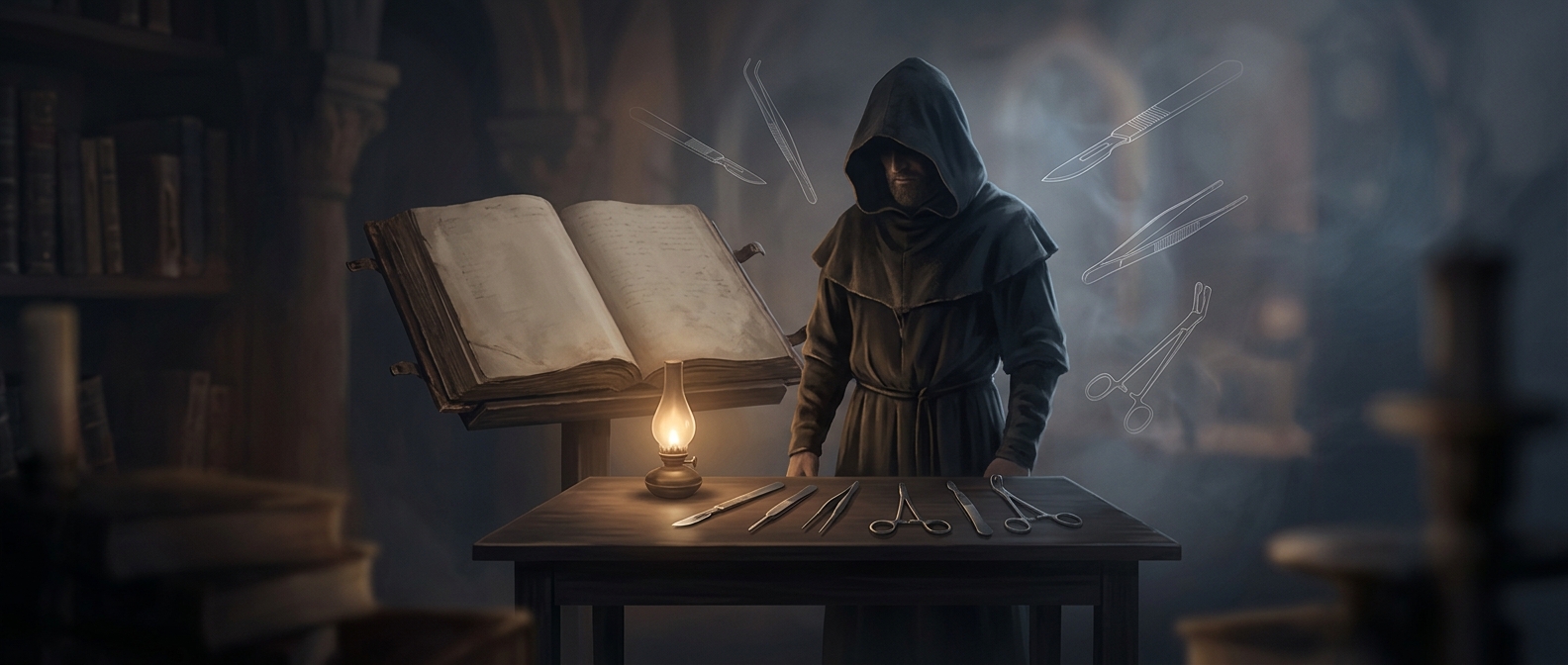
A scalpel, a pair of forceps, and a suturing needle look simple because their jobs are tightly defined: make a controlled cut, grip tissue, and pass thread through it. The basic shapes solve practical problems that have not changed much, even as surgery itself has become far more advanced.
That continuity is why an earlier surgeon’s instrument designs can survive without the designer’s name remaining familiar. A useful tool does not need to be reinvented if it reliably fits the hand, reaches the working area, and performs its task with control. Later versions can improve the materials, balance, or details while keeping the underlying form.
From the Operating Hand to the Instrument
Surgical instruments are extensions of the movements a procedure demands. A blade must let the surgeon direct a cut; forceps need jaws that hold without slipping; a needle must be shaped to pass through tissue while carrying thread. Small changes in a tool can affect how precisely those movements can be made.
Surgeons who refined instruments were therefore doing more than sketching new shapes. They were translating experience at the operating table into equipment that could make a difficult action more repeatable. Once a design proved practical, other makers could reproduce or adapt it, allowing the idea to outlast its originator.
A Legacy Hidden in Plain Sight
Modern instruments are not unchanged antiques: manufacturing, materials, and surgical techniques have all developed. But the persistence of familiar forms shows how strongly a tool’s basic geometry can be shaped by the human task it serves. The designer may disappear from memory while the solution remains in every operating room.