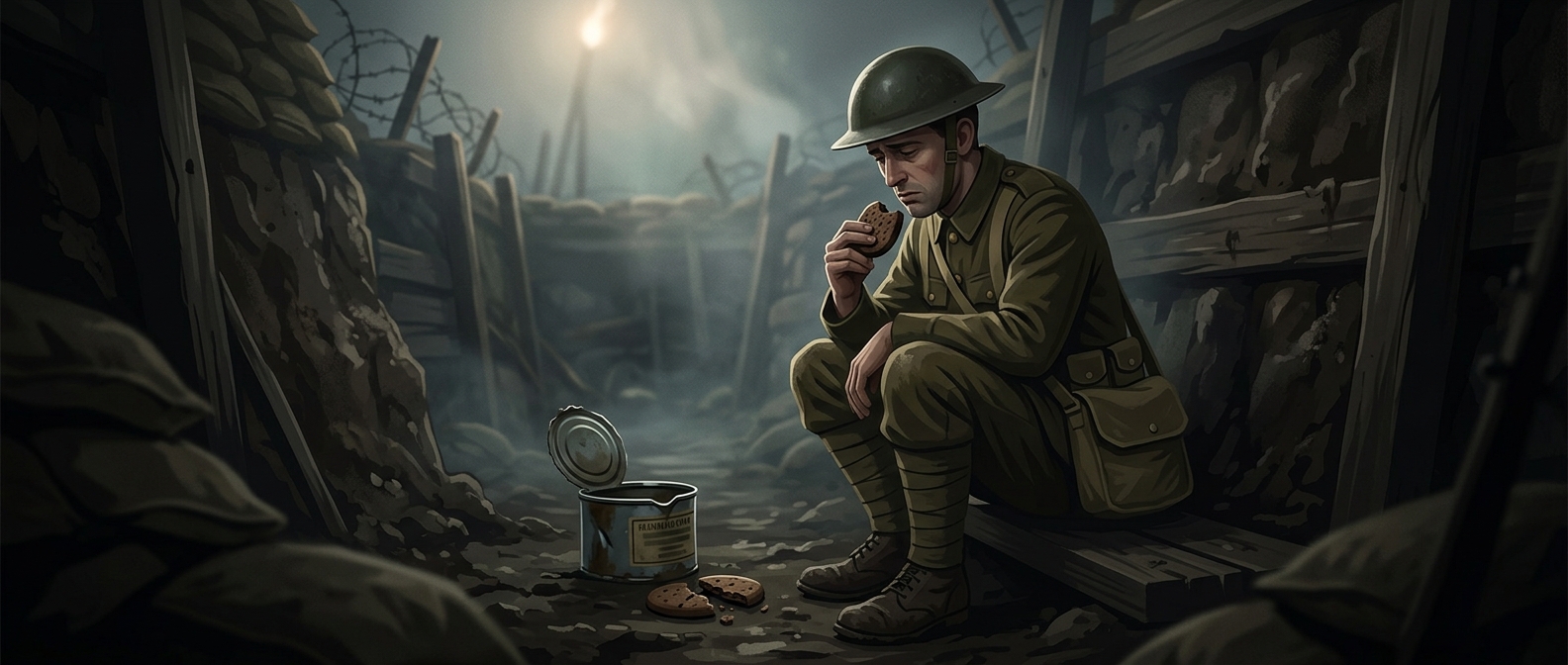
Why armies wanted a biscuit that would not soften
For soldiers in the field, food had to survive a journey through crowded depots, wagons, and wet conditions before anyone could eat it. Fresh bread went stale quickly and could become moldy; a dry biscuit was less appetizing, but it was far less vulnerable to spoilage. Its hardness was part of its usefulness: with little moisture inside, there was less to encourage mold or make the food go soft.
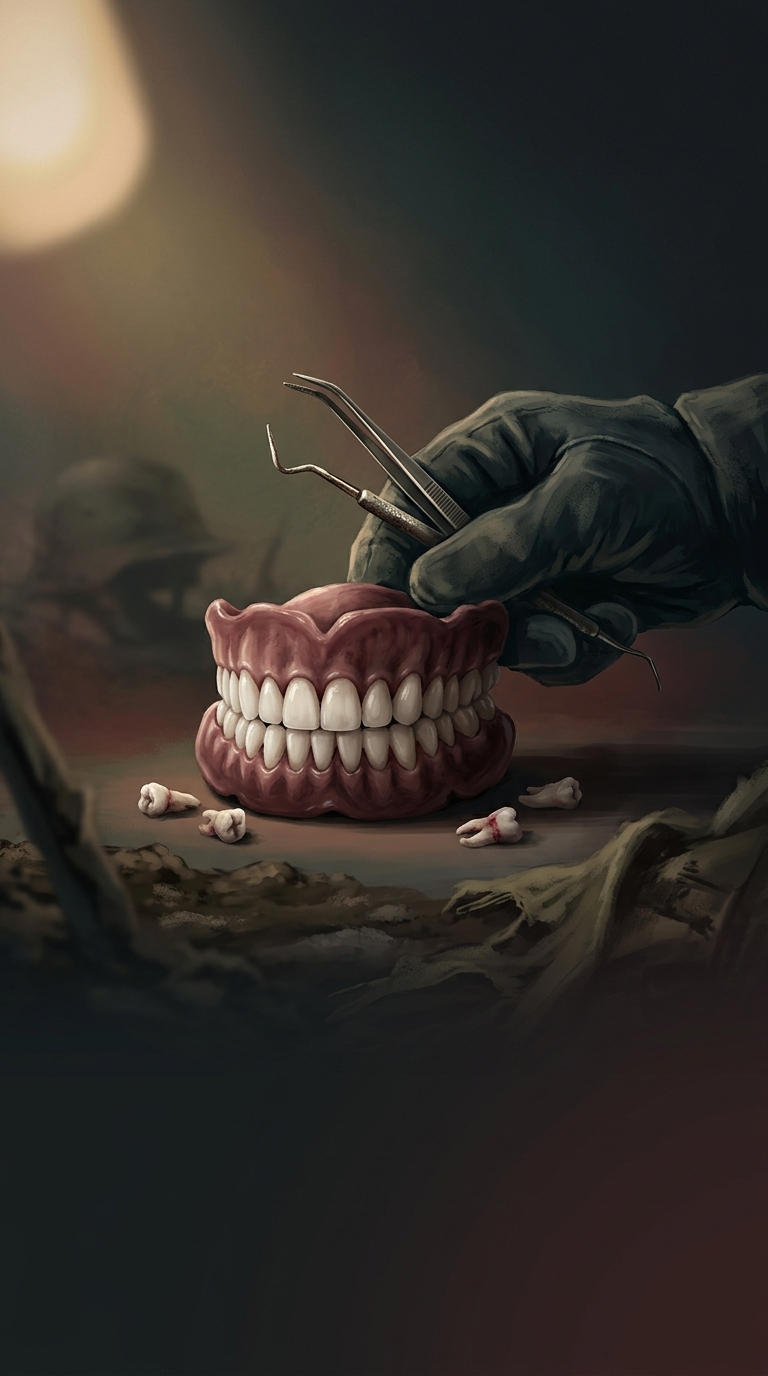
The tradeoff was paid at the teeth
These army biscuits were closer to durable rations than to the tender biscuits familiar today. A plain dough baked until dry could keep for a long time, but it also became stubbornly hard. Soldiers might nibble at one, break it into smaller pieces, or soak it in water or another available liquid to make it easier to chew. That took time—and depended on having liquid to spare.
The biscuit’s toughness reflected a supply problem, not a cook’s attempt to make a pleasant snack. Food that could endure damp transport was more dependable than food that tasted good only when freshly made. But a ration designed to outlast mud and rain could be difficult to eat when a soldier finally needed it. That gap between durability and comfort is what made the biscuits such ready material for jokes: they seemed better suited to survive the war than to serve as dinner.