A street-side art market with a sharp eye
In nineteenth-century Kolkata, painters working near the Kalighat temple made pictures for a stream of visitors. These Kalighat paintings were usually made on paper with brush and watercolor, rather than as laborious works on cloth or walls. Their simplified forms, sweeping outlines, and broad areas of color helped artists produce images quickly for buyers who wanted a portable keepsake.
That market shaped what the pictures could do. A painting did not have to be a grand commission to reach an audience: it could be bought, carried away, and shown at home. The same brisk production that made the works accessible also gave artists room to respond to recognizable people and behavior around them.
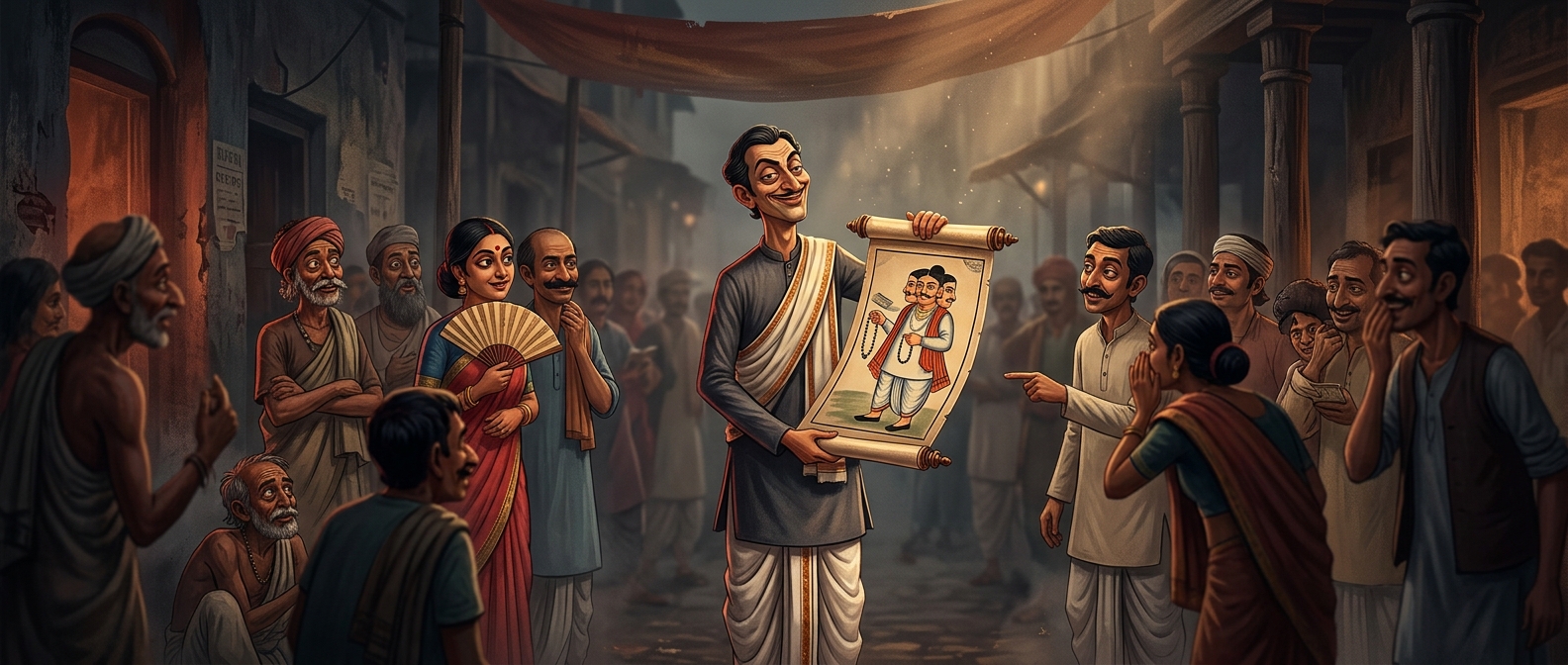
Gossip becomes a picture of hypocrisy
Some Kalighat artists turned their attention from religious subjects to everyday social life. They pictured fashionable urban men, domestic scenes, and changing ideas about respectability. A comic image could expose the gap between a person’s public claims and private conduct—making the joke legible at a glance, without a long written explanation.
The satire drew its force from familiarity. Viewers could recognize the manners being mocked, while the image’s humor made criticism easier to circulate than a direct accusation. In a city changing under colonial rule, these pictures offered a compact way to comment on social ambition and pretension.
Because the works were affordable and easy to take home, the punchline did not stay in the painter’s neighborhood: it could travel with the buyer, turning a moment of local gossip into a lasting, shareable image.