When a brush became part of the hand
Rheumatoid arthritis can inflame joints and gradually distort them, making the fine, firm grip used to hold a paintbrush painful or impossible. For Renoir, the practical problem was not simply that his hands hurt: the tool he needed for every stroke could slip from his grasp.
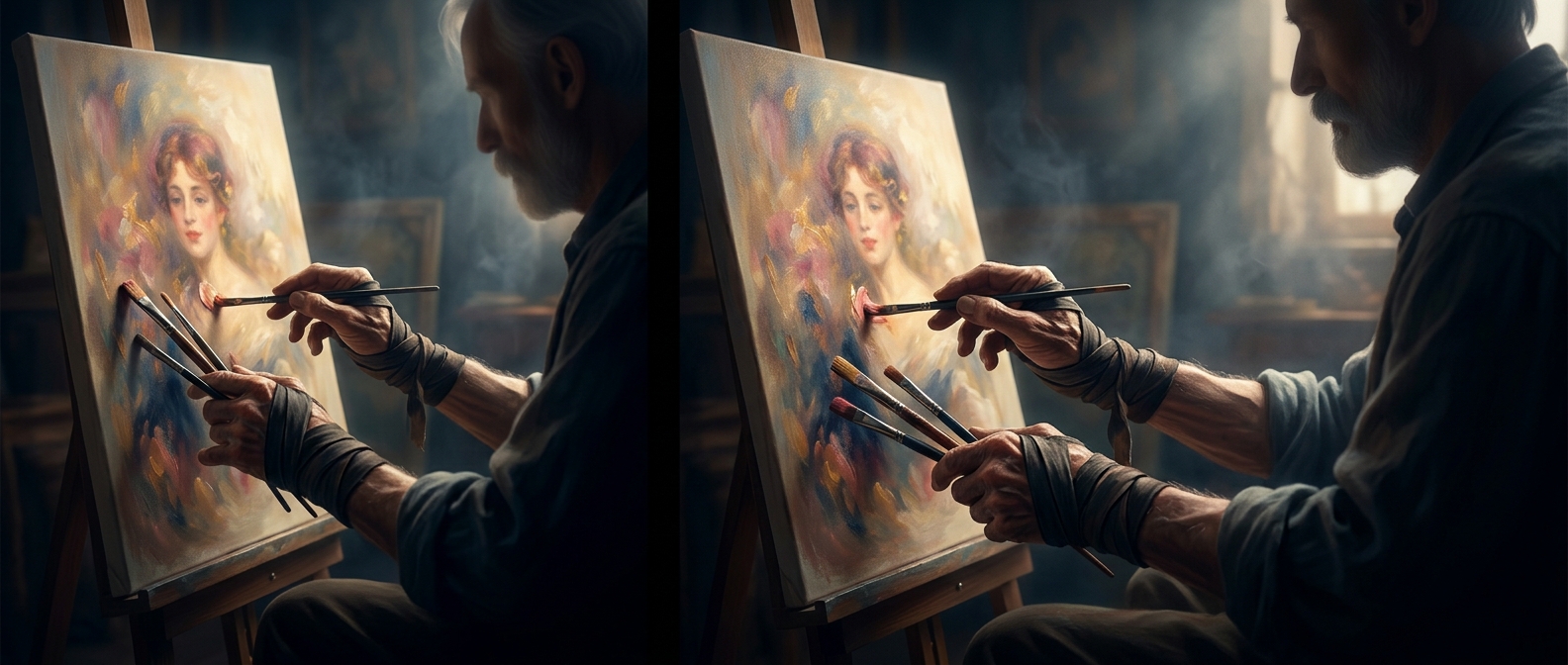
Strapping a brush to his wrist changed the connection between painter and tool. Instead of pinching the handle with his fingers, he could guide it through movements of his hand and arm. Assistants helped secure the brush, but the marks on the canvas still depended on Renoir’s decisions—where to place color, how to shape a figure, and when a stroke was finished.
Adapting the work, not abandoning it
The arrangement was a workaround, not a cure. It could not restore the dexterity arthritis had taken away, and it made painting a task that involved other people as well as the artist. But it preserved a route from intention to canvas: if his fingers could no longer hold the brush normally, the brush could be fastened to him instead.
That small change captures the practical persistence behind Renoir’s late work. The obstacle was built into the act of painting itself, so the answer was to redesign that act around the body he had—not to wait for his hands to work as they once had.