How Mongol Armies Made Distance a Weapon
A cavalry force could move quickly, but speed alone did not explain Mongol victories. The harder problem was making separate groups of riders act as parts of one army across enormous distances. Mongol commanders paired mobility with reconnaissance—scouting that gathered information about enemy positions, terrain, and routes—and used that knowledge to decide where and when to fight.
Mounted troops could travel with fewer supply wagons than armies dependent on slow-moving foot soldiers. That made it easier to approach from unexpected directions, withdraw before an enemy could force a battle, or regroup somewhere else. But long-range movement still required coordination: messengers and advance scouts helped commanders pass instructions and learn what was happening beyond their immediate view.
A Retreat Could Be Part of the Attack
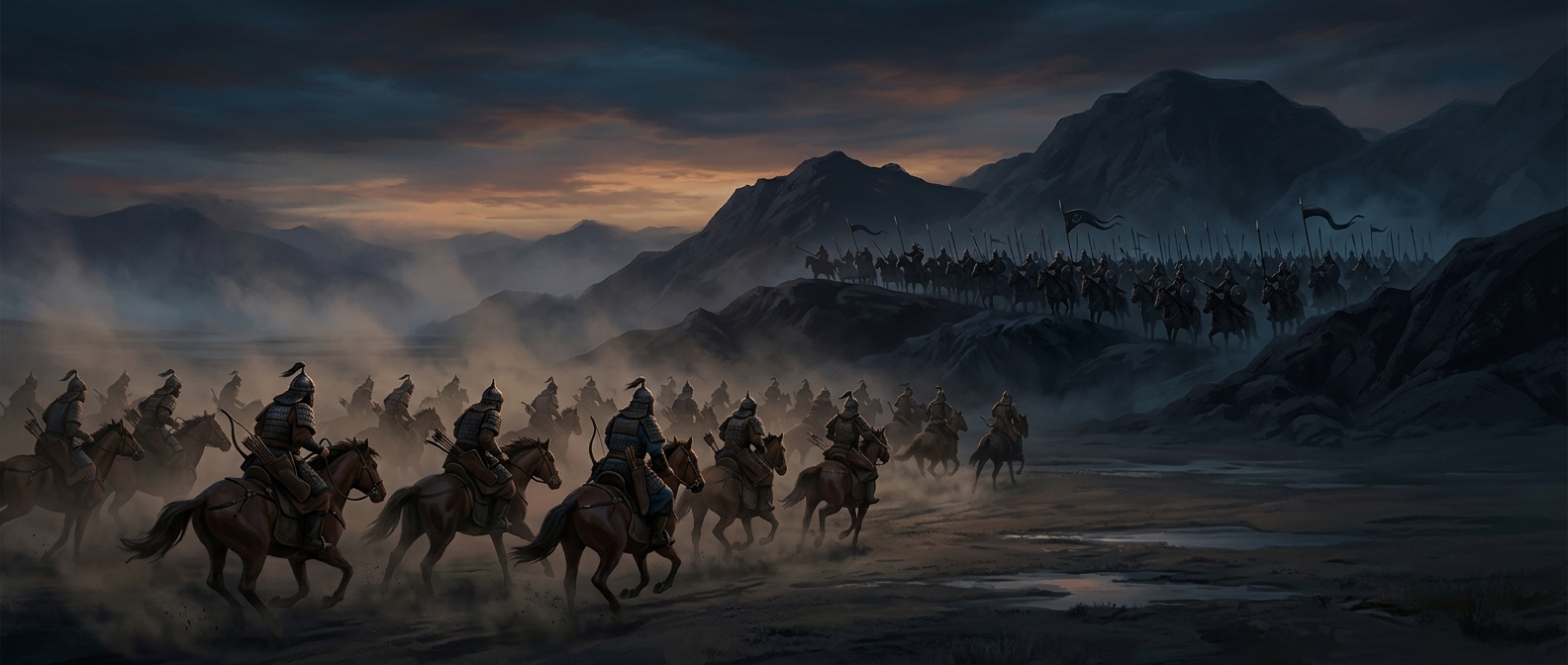
One tactic was the feigned retreat: riders appeared to flee, encouraging an opponent to chase. Pursuit could stretch an enemy formation, separate it from reserves, and carry it away from defensible ground. Mongol forces could then turn back against the disorganized pursuers or strike with other units waiting nearby.
The tactic worked only if the withdrawal was controlled. Riders had to keep their units together, maintain enough distance to draw the enemy onward, and communicate so that the counterattack came at the right moment. What looked like a rout could therefore be a carefully managed phase of battle—not a guarantee of victory, but a way to make an opponent’s own aggression dangerous.
Coordinating Armies Across a Continent
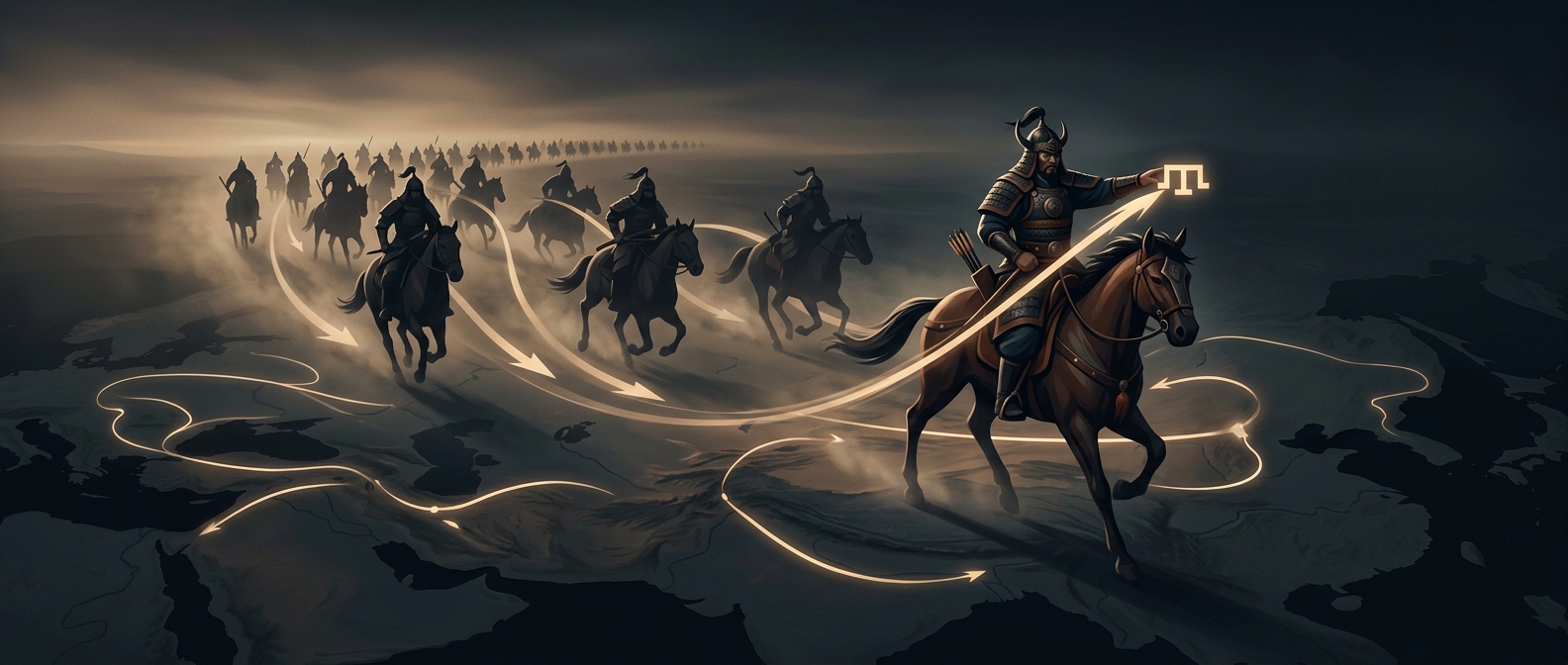
Subutai, one of the empire’s leading commanders, is associated with campaigns in which forces operated across vast regions. Such operations demanded more than battlefield improvisation. Armies had to follow plans that accounted for distance and timing, while scouts and messengers kept commanders informed enough to adjust when conditions changed.
That combination altered what cavalry could accomplish. The horse supplied speed; intelligence and coordination turned speed into strategic reach. An enemy might prepare for a single approaching force, only to discover that the Mongols could appear on multiple routes, avoid a direct clash, or draw defenders out of position before striking.