One rivalry, several connected wars
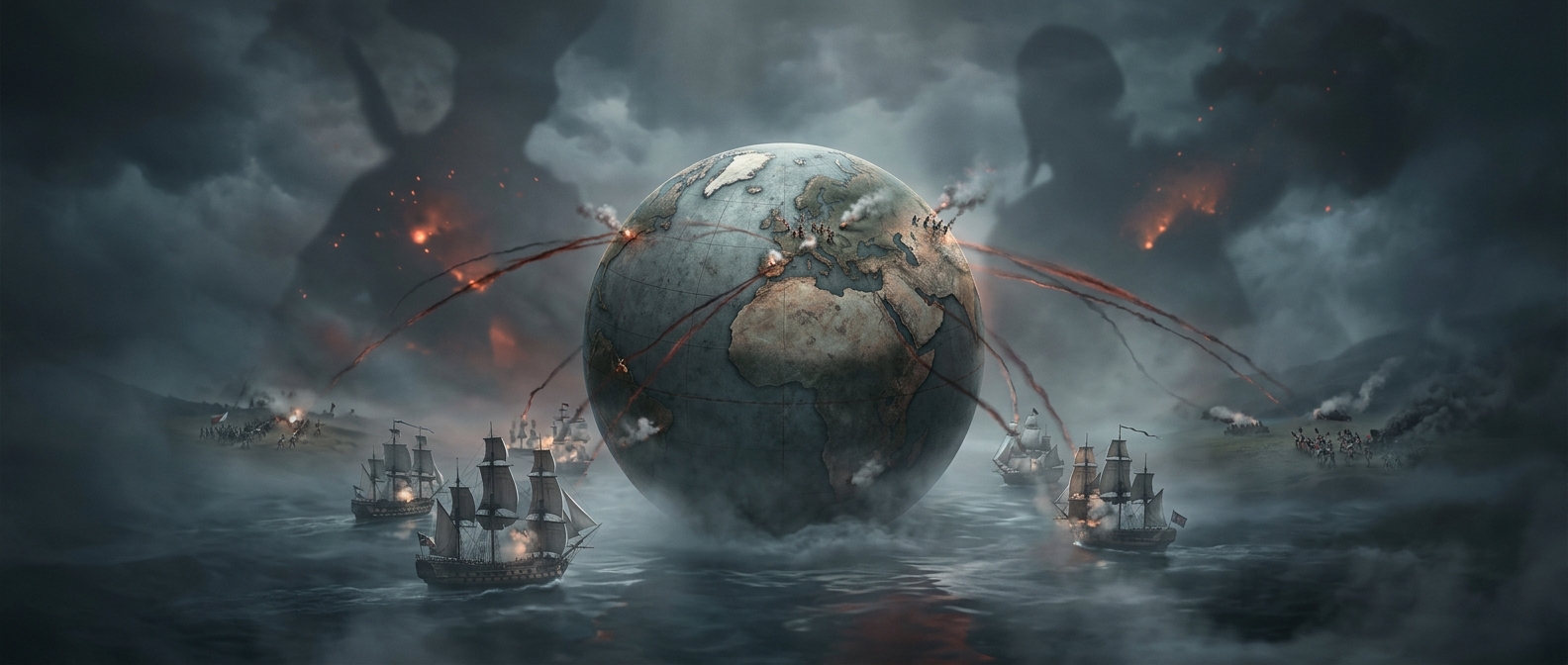
The Seven Years’ War was not a single campaign moving across one continuous battlefield. It was a set of linked conflicts shaped by overlapping rivalries. Britain and France competed for colonies, trade routes, and influence overseas, while in Europe Prussia and Austria fought over power and territory. Alliances tied these struggles together: Britain backed Prussia, while France allied with Austria.
The fighting in North America had already begun in 1754, before the conflict is conventionally dated from 1756 to 1763. There, British and French forces and their Indigenous allies contested control of the Ohio Valley and access to the interior. In India, the two empires’ commercial and political competition also became military conflict. Ships and resources could be redirected between theaters, so a setback in one region could affect a rival’s ability to fight elsewhere.
Why victories overseas changed the map
The war’s outcome reshaped empires. Under the 1763 peace settlement, France gave Britain Canada and transferred Florida to Britain, while Spain received Louisiana from France. Britain also gained territory and influence in India, though control there developed through further political and military struggles rather than an instant, complete takeover.
Those gains came at a cost. Britain emerged with a much larger empire and heavy war debts, sharpening disputes over who should pay for imperial defense. The taxes and policies Britain imposed on its American colonies in the following years helped fuel resistance. A conflict fought across distant regions thus changed not only borders, but also the political tensions that would soon unsettle Britain’s empire in North America.