A machine hidden inside an ordinary word
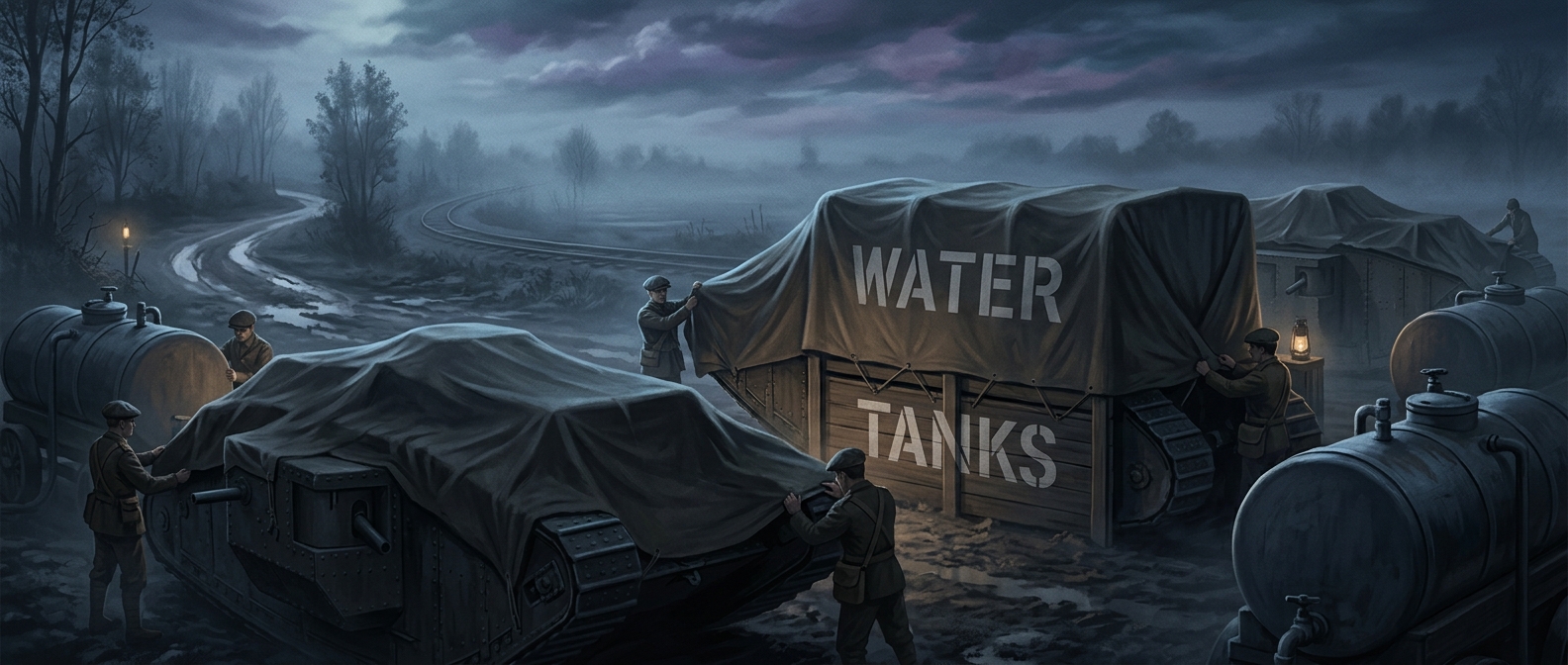
When Britain developed its first tanks during World War I, secrecy mattered: the new armored vehicles were intended to surprise the enemy, and their unusual shape could attract attention while they were being built and moved. British engineers used a mundane cover story, describing them as mobile water tanks destined for the desert. “Tank” was an unremarkable label for equipment that might plausibly be manufactured and shipped without revealing its real purpose.
The disguise worked partly because it turned a strange new weapon into something familiar. A tank was not yet a recognized kind of fighting vehicle; it was a metal box on tracks, built to cross rough ground and carry guns. Calling it a water tank gave people handling or hearing about the machinery a simple explanation that did not expose its design.
From cover name to common name
The label outlived the deception. Once the vehicles entered service, “tank” was shorter and easier to use than a technical description, and it stuck as the name for the entire class of armored fighting vehicles. The word’s original meaning faded, but its plainness remained: a term chosen to conceal a weapon became the everyday name for it.
That is the lasting twist in the story. The secrecy depended on making a revolutionary machine sound routine—and the routine-sounding cover name became one of the most familiar military terms in the world.