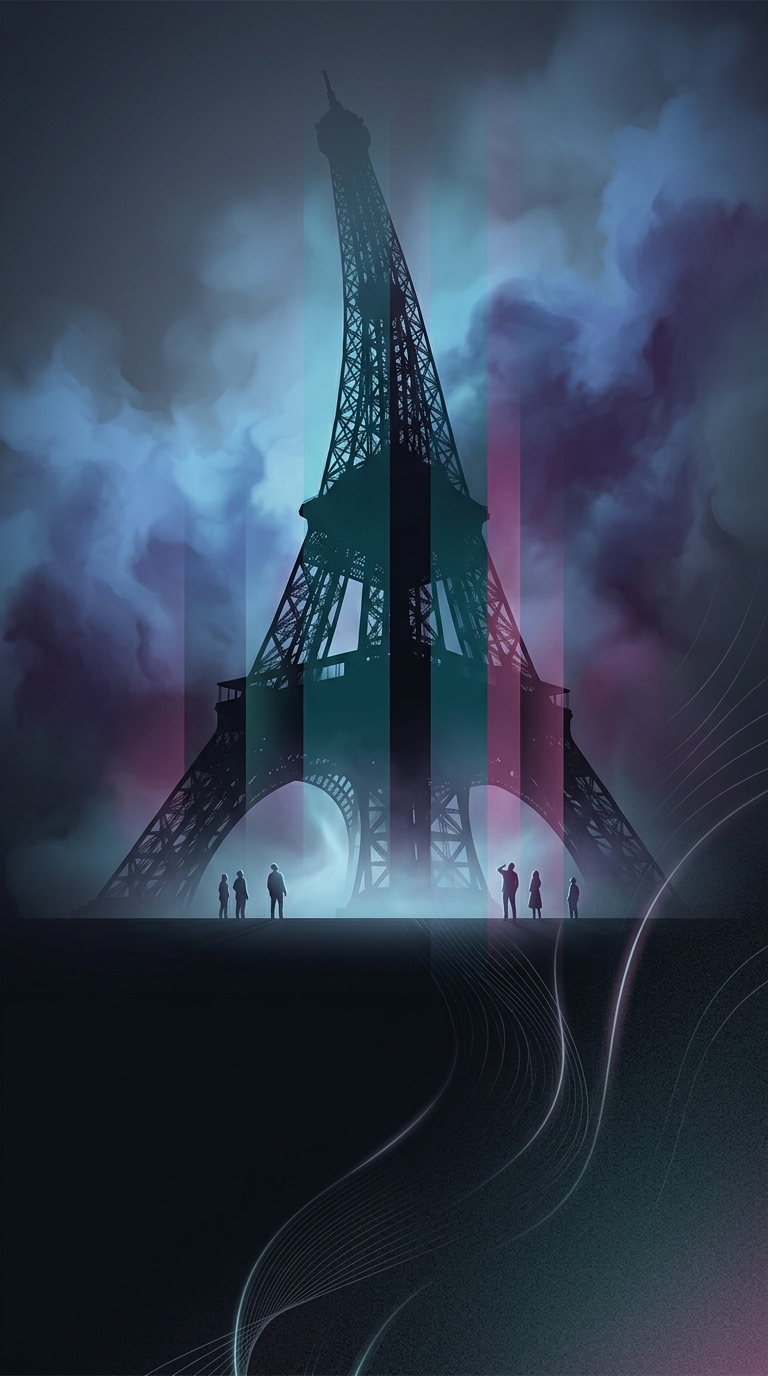
Barcelona turned down the tower before Paris embraced it
The proposed site was Barcelona, Spain, which was preparing to host the 1888 Universal Exposition. Gustave Eiffel’s engineering company offered a tower for the event, but the city rejected the idea. The structure was considered too strange and imposing for its planned setting—a reminder that a project can be technically possible yet still fail to fit a city’s vision for its public spaces.
A different fair gave the idea a home
The tower found its opportunity in Paris. For the 1889 Exposition Universelle, organizers wanted a major entrance landmark, and Eiffel’s proposal answered that need with a structure that could be assembled from iron parts. The Paris project was not simply Barcelona’s rejected plan dropped unchanged into another city; it was developed for a new site and purpose.
That purpose shaped how the tower was understood. Built as a temporary feature of a world’s fair, it was meant to demonstrate modern engineering, not to serve as a conventional monument. Its height and exposed iron framework made the engineering itself part of the spectacle.
The contrast is striking: Barcelona’s refusal helped leave the design without a host, while Paris’s fair gave it a setting where its scale could be presented as a bold attraction. What one city saw as an unwelcome intrusion became the centerpiece that visitors came to associate with Paris.