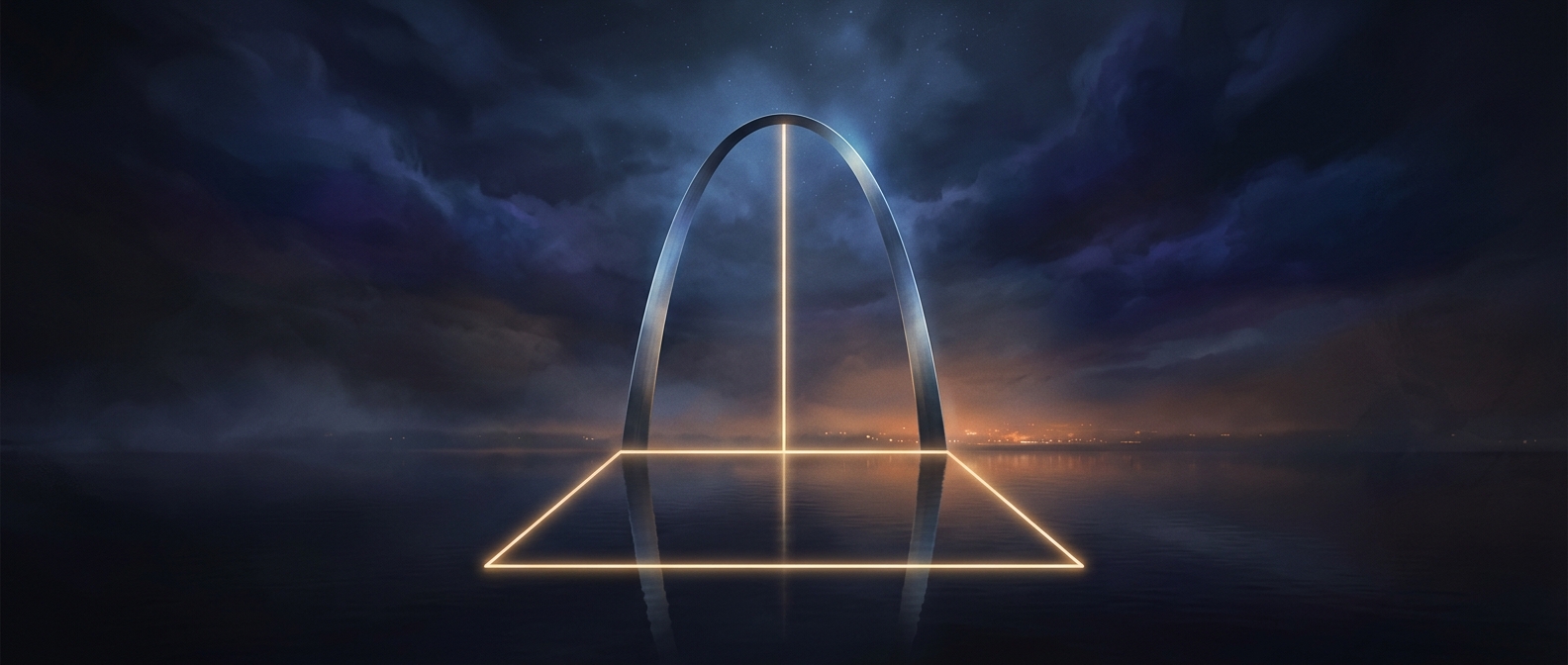
A curve shaped by gravity
The Gateway Arch is not a half-circle. Its profile follows an inverted catenary—the curve a hanging chain naturally forms when held at both ends, flipped upside down. That shape gave architect Eero Saarinen a way to make the monument rise in a smooth, continuous sweep rather than as a simple semicircle.
The distinction matters: “630 feet wide” describes the distance between the Arch’s two feet, while “630 feet tall” describes its height from the ground to its crown. Equal measurements do not make the structure circular; the curve’s changing slope is what gives it its characteristic outline.
Why it can look narrow
From the ground, a viewer sees the Arch at a steep angle. The legs overlap in perspective, and the opening between them appears compressed. Seen from farther away or from above, the width becomes easier to judge. The apparent narrowness is a trick of viewpoint, not a mismatch in the measurements.
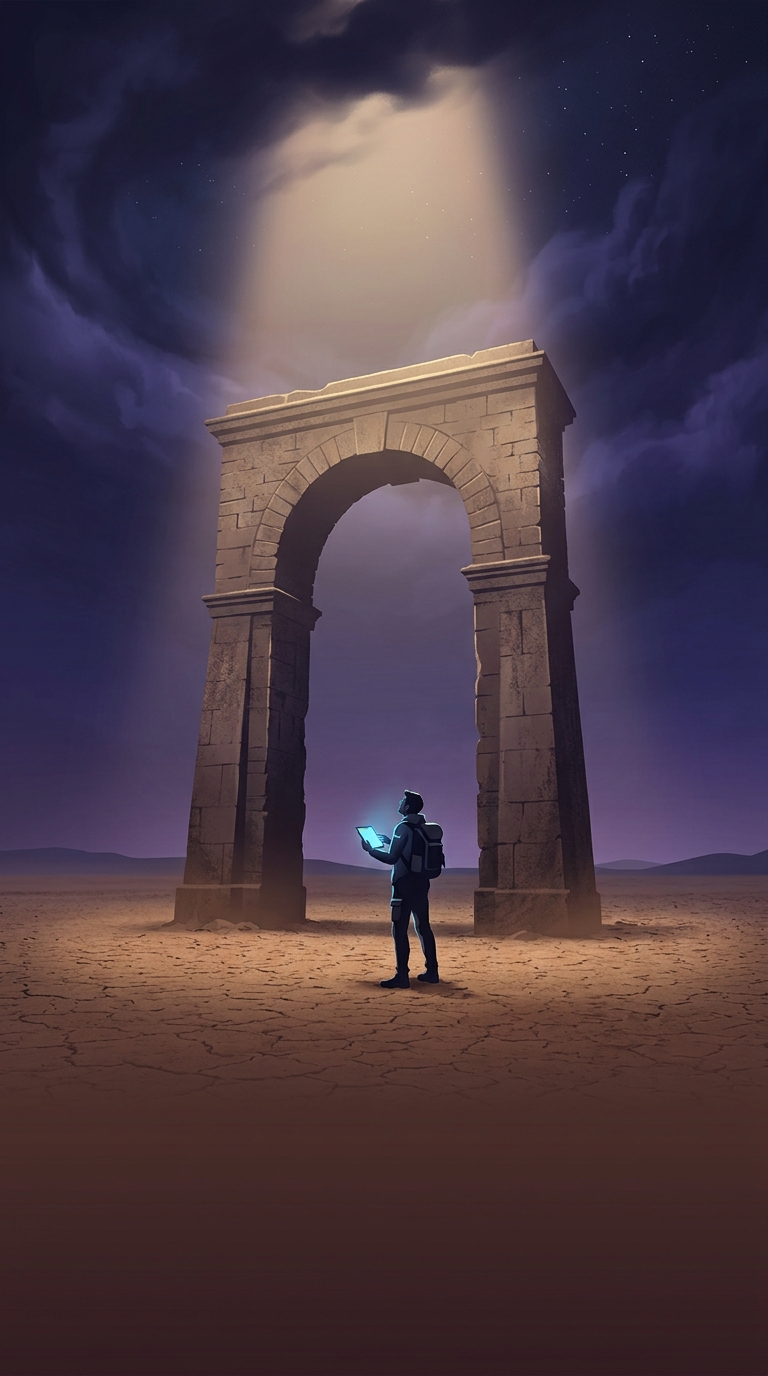
Saarinen’s design was selected in a 1947 competition for a monument in St. Louis honoring the country’s westward expansion. Its broad span and great height make the form read as both an opening and a landmark: a passage you can look through, and a structure visible across the riverfront. Stand beneath it, and the same curve that seems slender from below opens into a space 630 feet across.