A drawing made by subtraction
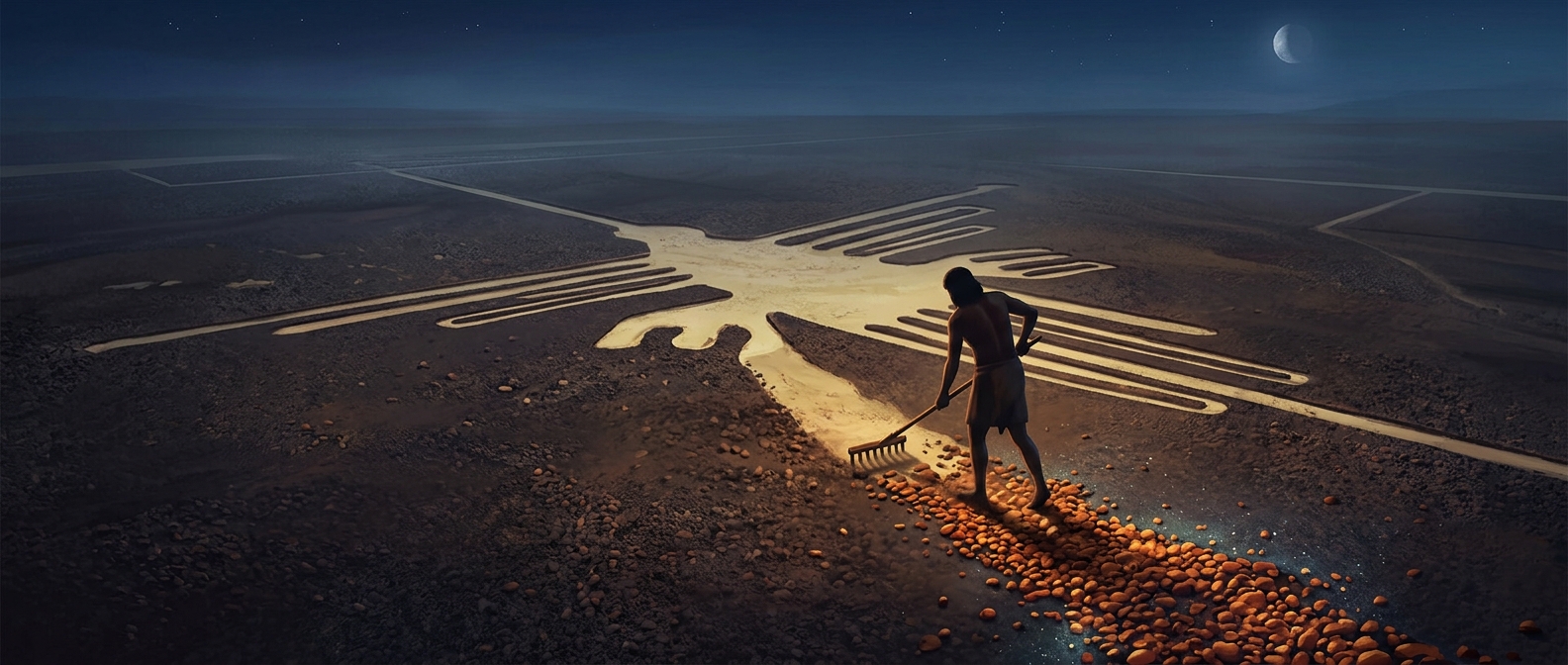
In Peru’s desert, the contrast was already in the ground. The surface was strewn with dark pebbles, while the earth beneath was lighter. To make a line, a person moved the darker stones aside, exposing a pale strip. Repeating that simple action could turn a small patch of ground into a shape visible across a much larger area.
This method is called negative drawing: the image takes form not through material added, but through material removed. It also meant the makers did not need to mix or transport paint. The desert itself supplied both colors.
Why the lines could last
The marks were shallow, but their setting helped preserve them. In the exceptionally dry, relatively calm desert, there is little rain to wash away the cleared strips or reshape the ground. The dark stones remain beside the exposed earth, keeping the design legible.
That durability made the landscape a kind of drawing surface. Instead of looking at a picture on a wall, people encountering these geoglyphs meet marks laid directly across the terrain—lines and forms whose scale becomes clearer from a distance or above. Their construction was straightforward; their survival depended on a place where a cleared line could remain visible for a very long time.