How a woven cloth could shed rain
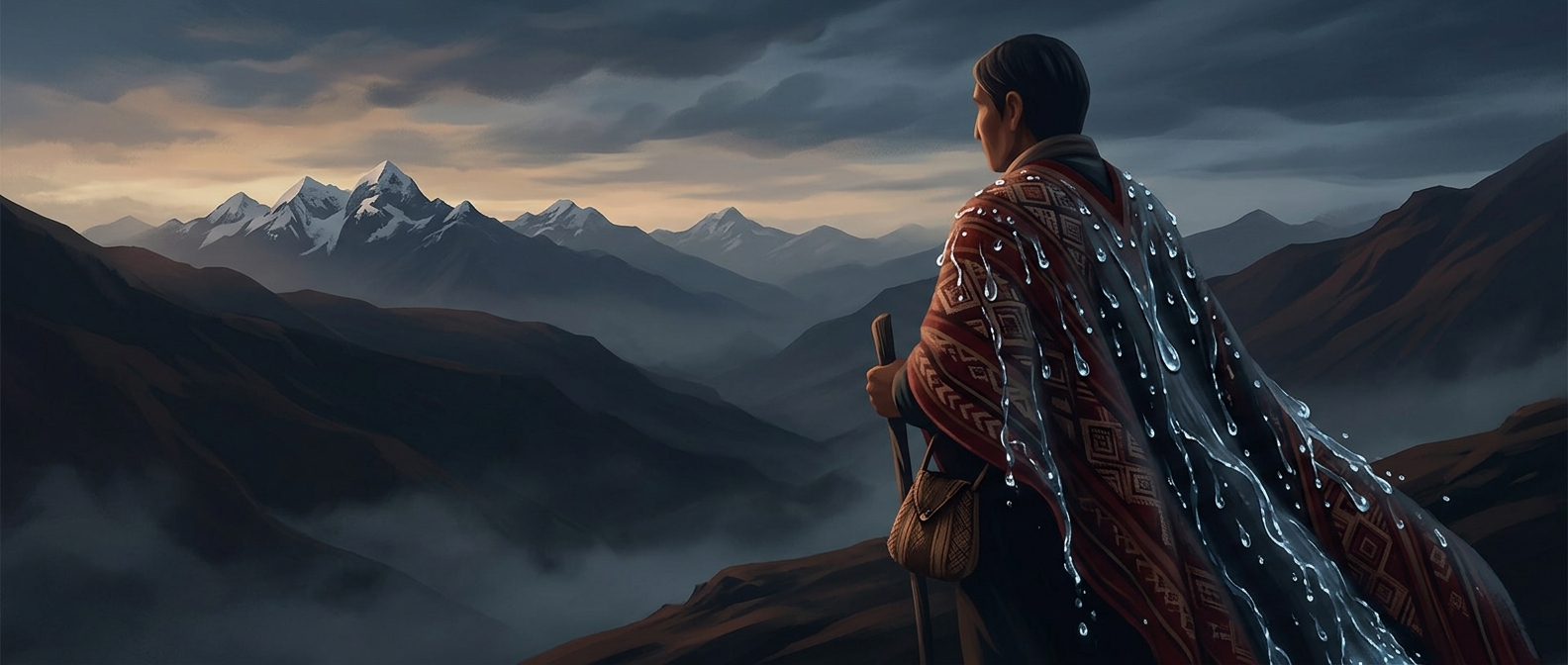
A poncho did not need a chemical coating to keep its wearer drier. When fibers are spun tightly and woven into a compact cloth, there are fewer open gaps for raindrops to pass through. Water can bead or run off the surface, especially during a brief shower, instead of immediately soaking through.
The effect depends on the whole fabric: the fiber, how it is spun, how closely the threads are set, and how the garment is handled. A dense weave slows water; it does not make cloth fully waterproof. In prolonged rain, moisture can eventually work its way through.
A practical use for skilled weaving
Andean communities had access to fibers from animals raised in the region, and weavers could turn those materials into substantial garments without relying on imported or synthetic waterproof fabrics. A poncho’s broad coverage also helped: worn over the shoulders, it protected the upper body while leaving room to move.
That performance came from construction choices rather than a hidden treatment. The same close structure that made the cloth useful in wet weather also made it a durable layer for everyday wear. The key was not that the fabric stopped every drop, but that its weave bought the wearer time and kept a passing shower from soaking through at once.