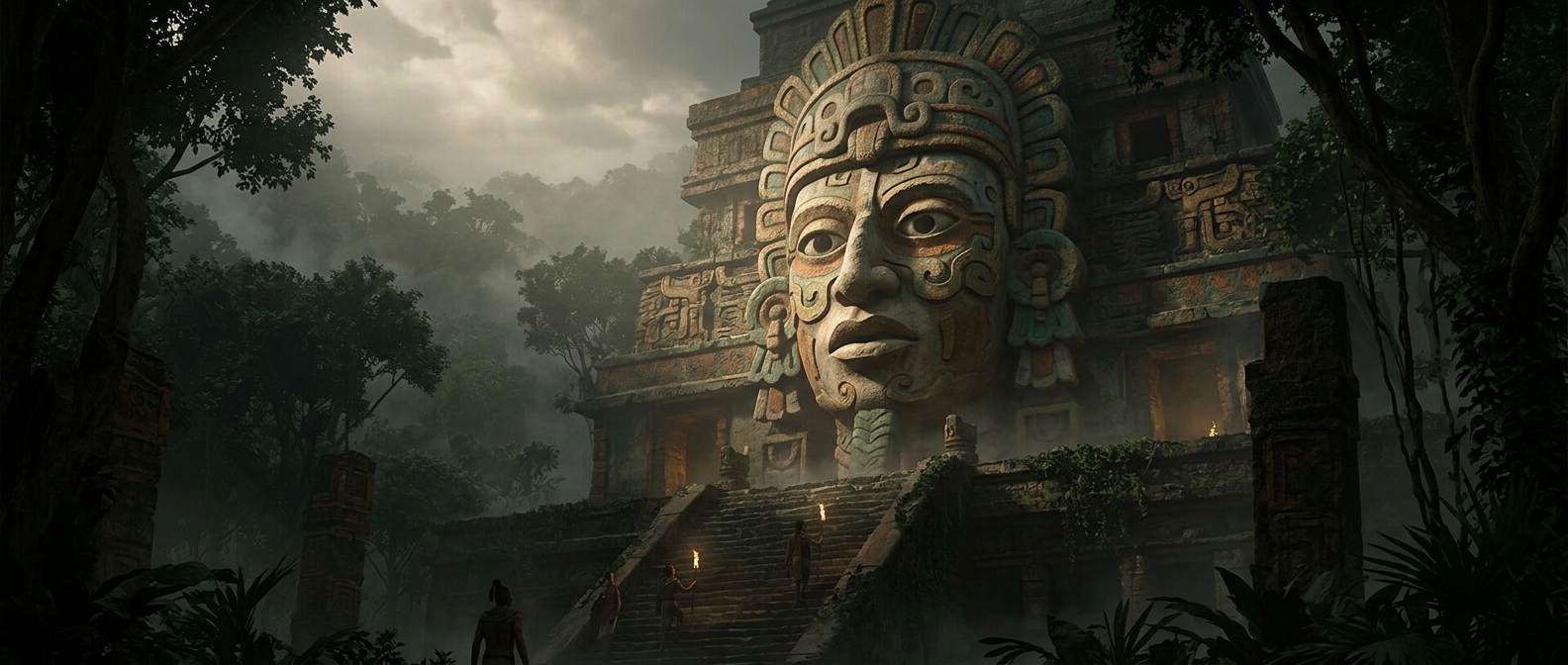
How a temple wall became a face
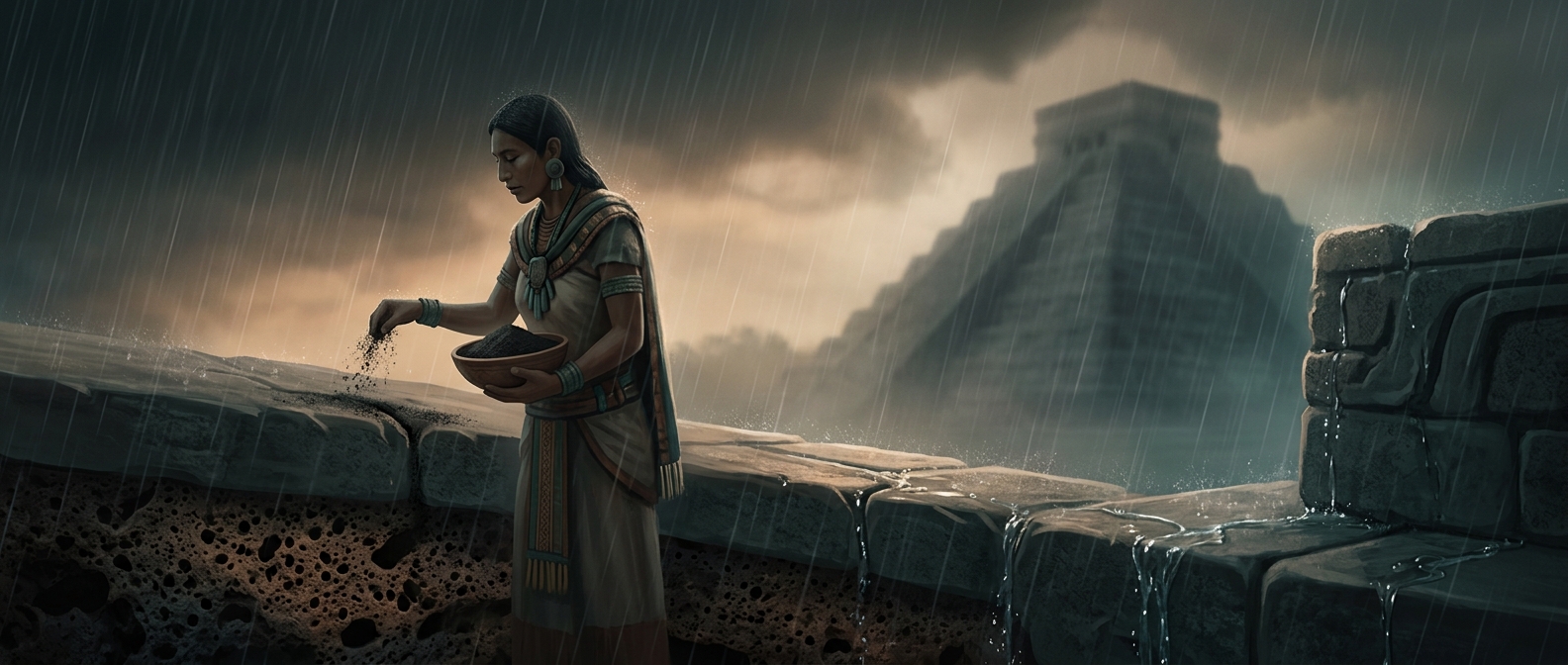
A stucco mask was not a separate stone sculpture hung on a pyramid. Builders shaped a face directly onto the building’s masonry, using plaster—a workable coating made from lime and other local materials. While it was still soft, they could build up features such as broad brows, projecting noses, and curling headdresses. Once hardened, the surface could be painted.
The result turned a vast, stepped structure into more than a backdrop. A face high above a plaza could be seen from below, where the scale made it feel larger than any person in the crowd. Repeated masks along a facade could make the building seem inhabited by a powerful presence.
Work, weather, and meaning
Making these images demanded skilled labor and careful planning. The plaster had to cling to a rough masonry surface, and projecting details needed support so they would not crack or break away. Rain and time wore at the finish, so the bright appearance visitors may imagine was not necessarily permanent; surviving surfaces often show only fragments of the original decoration.
The faces could refer to gods, sacred forces, rulers, or other important figures, but their meaning depended on the place and period. They were part of a building’s visual and ceremonial language, not simply decoration added after construction. Seen from the plaza, the masks connected the temple’s imposing height with the power its community associated with the structure.
That is why even a damaged facade can still change how a pyramid reads: its walls were designed not only to rise above the plaza, but to look back down into it.