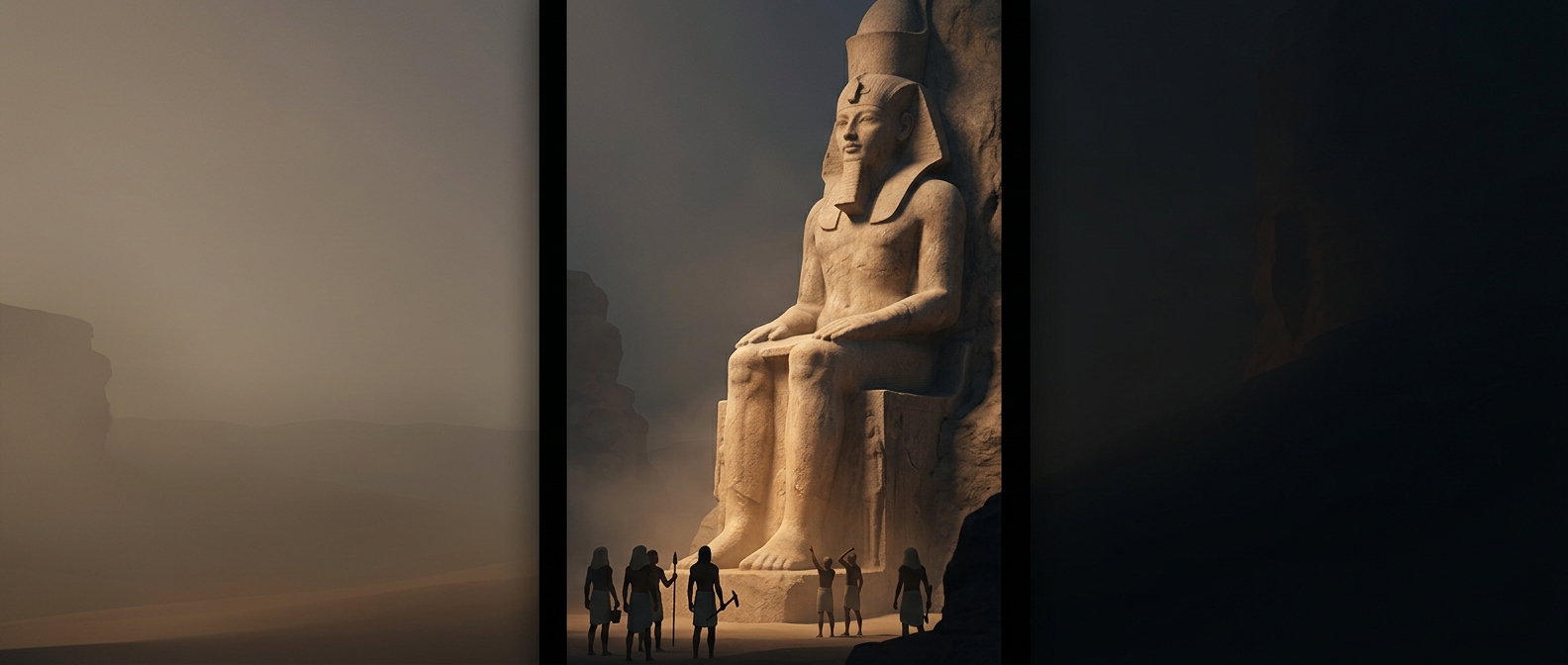
The Sphinx was revealed by cutting away its surroundings
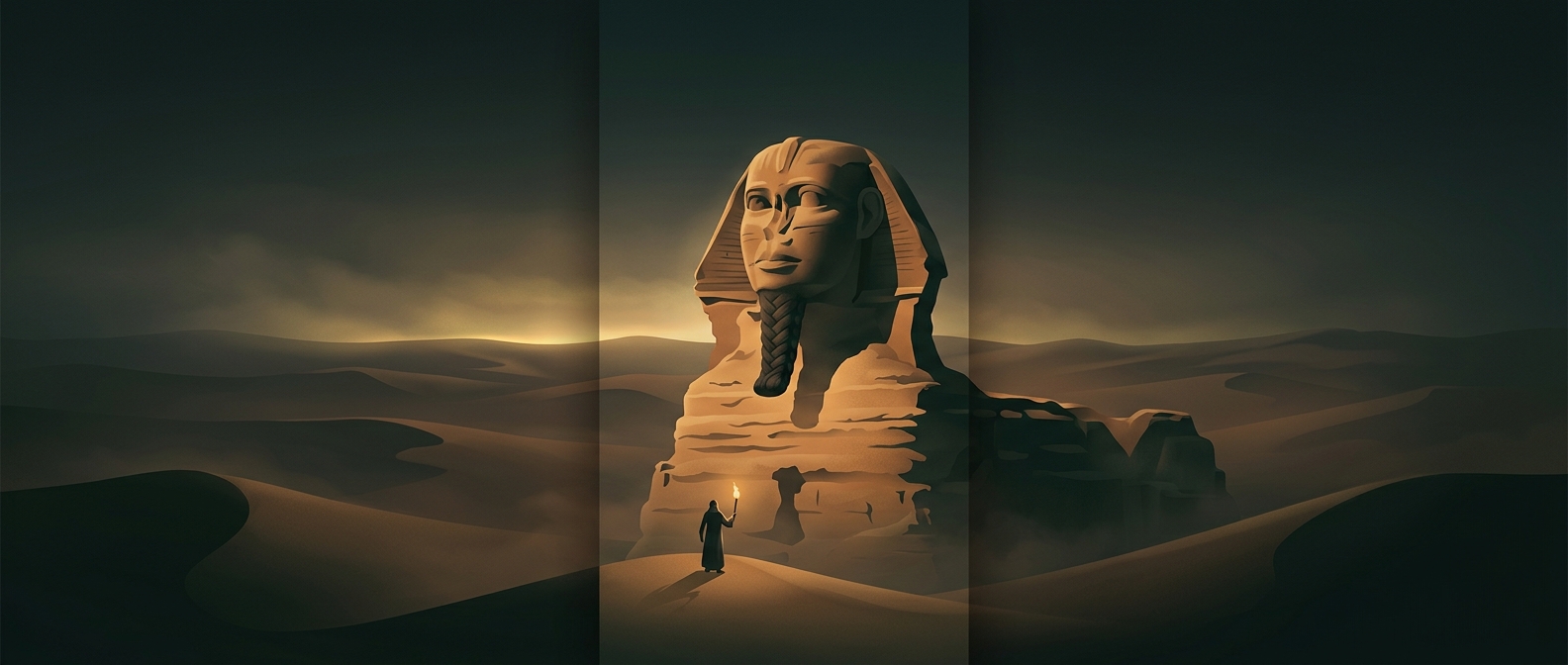
The Great Sphinx was made by removing the limestone around it, rather than assembling separate stones into a figure. Once workers cut trenches around the natural rock mass, they could shape the exposed stone into the monument. The depression left around it is therefore part of the construction story: it marks the space from which the Sphinx was separated from the plateau.
A quarry became a sculpture
This method turned quarrying and carving into one continuous job. Workers first had to open access around the rock, then remove stone in stages while preserving the mass that would become the statue. Unlike a statue built from blocks, the Sphinx could not be shifted or adjusted once carved; its form remained anchored to the bedrock beneath it.
The limestone itself also shaped the task. It formed in layers, and those layers did not all resist weathering equally. Over time, softer bands could wear away faster than harder ones, affecting the monument’s surface and the enclosure around it. The same geology that supplied the material also made the finished sculpture vulnerable to uneven erosion.
The excavation is part of the monument
Carving the Sphinx in place avoided moving an enormous finished statue, but it required clearing a large area of rock and working within the limits of the outcrop. The result is more than a figure cut from stone: it is a sculpture whose setting records the labor that brought it into view. Stand beside the Sphinx and the surrounding hollow is not merely open space—it is the negative shape left by the quarrying that made the monument possible.