Keeping a flame above the sea
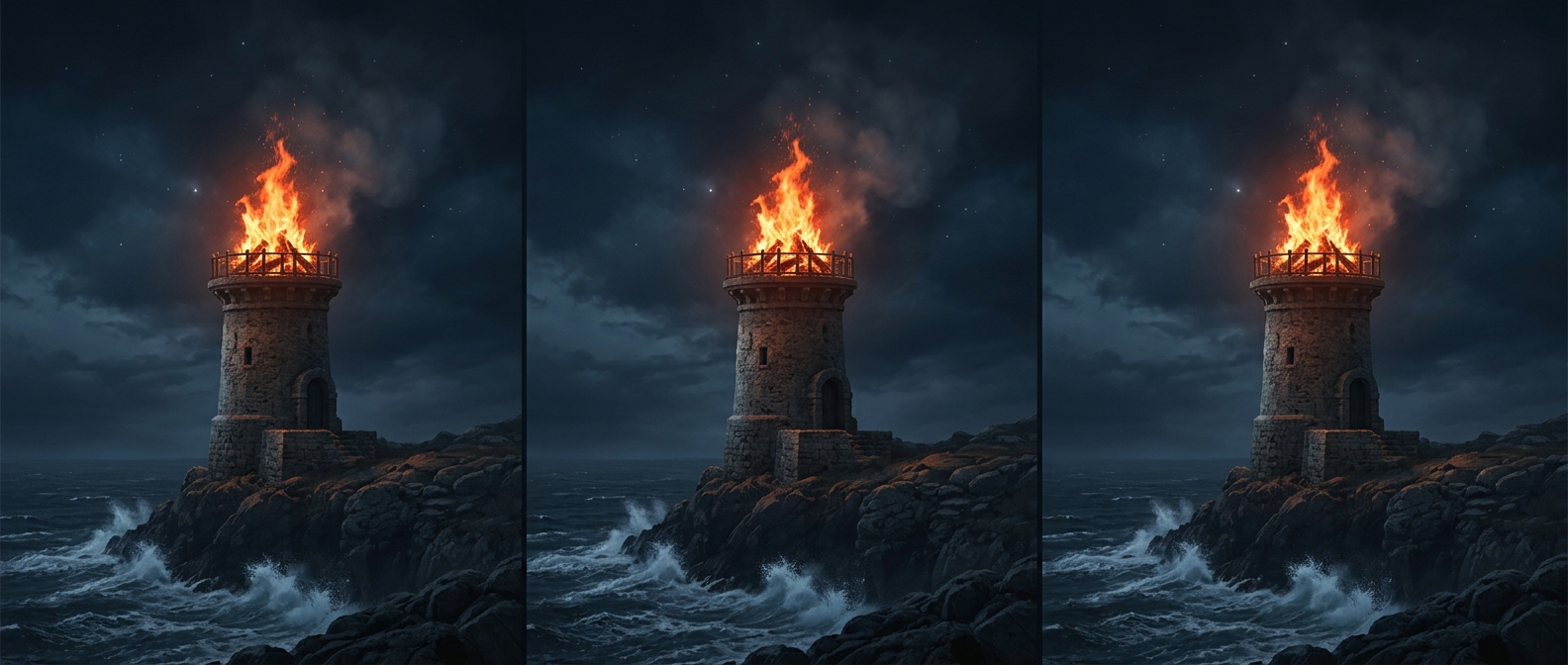
A lighthouse fire did more than make a bright spot in the dark. Set high on a tower, its flame could be seen farther than a fire at shoreline level because the tower lifted it above the curve of the Earth and many low obstacles. For sailors approaching a dangerous coast, that height helped distinguish a warning beacon from ordinary lights on land.
But an open fire was a demanding signal to maintain. Its brightness could vary as fuel caught or burned down, and wind and weather made tending it harder. The keeper had to feed the fire through the night, not simply light it at dusk. Every armful of wood or load of coal carried up the stairs became part of the lighthouse’s work.
From fire to controlled light
A flame also sent light in many directions, wasting much of it over the sea and sky. Later lighthouse systems used reflectors and, eventually, large glass lenses to gather and direct light into a stronger, more recognizable beam. Those devices improved the signal, but they did not remove the need for care: keepers still had to tend the light source and maintain its equipment.
The stairs made the beacon’s reliability tangible. A ship offshore might see only a steady point of light; behind it was someone repeatedly climbing to keep that point from going dark.