Building a court where water was scarce
Umayyad desert compounds were not simply forts placed far from the capital. They were planned estates in landscapes where a reliable supply of water could make settlement possible. Builders used wells, cisterns, channels, and, at some sites, dams to collect or redirect water. That infrastructure could support gardens and crops as well as the people, animals, and visitors housed at the compound.
The arrangement turned control of a difficult site into a practical advantage. A residence with dependable water and supplies could keep officials operating beyond the city and offer a stopping place for the ruler’s household and its retinue. The surrounding estate helped sustain that presence instead of requiring every provision to arrive from an urban center.
Architecture made authority visible
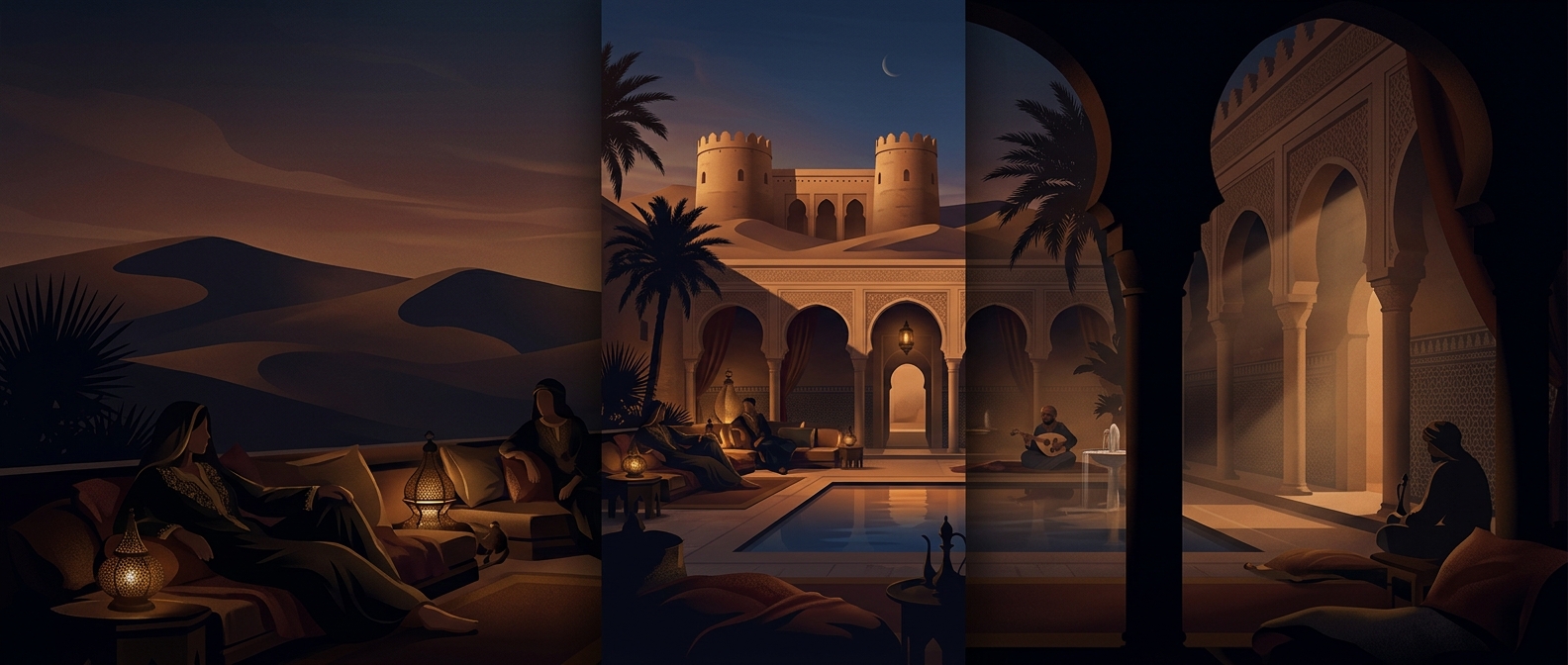
These compounds combined spaces for daily work and accommodation with reception rooms, courtyards, and bathing facilities. A bath was more than a comfort: it required water, fuel, and maintenance, and its presence signaled that the site could support the routines of an elite household. Painted walls, carved decoration, and mosaics made that message visible to people admitted inside.
The designs drew on architectural traditions already familiar across the eastern Mediterranean, adapting them to Umayyad settings. Their mixture of practical facilities and elaborate interiors shows how power could be expressed through both management and display: a ruler’s reach was embodied in the ability to supply a remote estate and host people there in a recognizably courtly setting.
Not every “castle” was a military stronghold
The modern label “desert castle” can make these varied sites sound more uniformly defensive than they were. Some had substantial enclosures, but their functions differed; residence, estate management, reception, and military use could overlap. Their importance lies in that combination. Even away from a major city, a compound could anchor people, resources, and administration—making a remote landscape part of the political world of the Umayyad court.