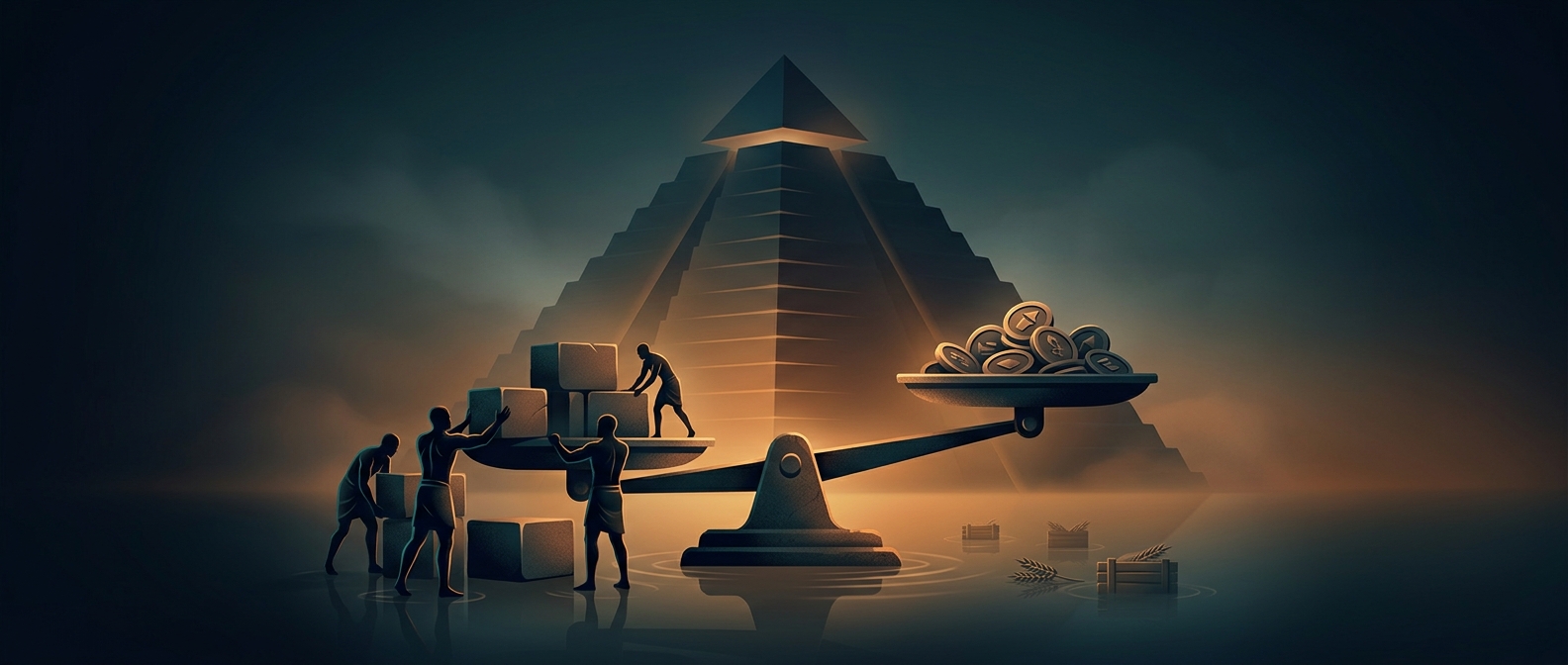
Bread and beer were practical wages
For pyramid builders, bread and beer were not treats added to a paycheck. They were everyday staples: bread supplied calories, while ancient beer was a nourishing, often cloudy drink made from grain. Issuing food let administrators support large work crews without paying everyone in coins—a system suited to an economy where grain was more useful than cash for feeding people.
The flood created a labor window—and a supply problem
When the Nile inundated farmland, many agricultural tasks had to wait. That seasonal pause made it possible to organize workers for major building projects. But gathering people was only half the challenge. They needed reliable meals, delivered day after day, along with places to sleep and teams to coordinate the work.
The food itself depended on another organized effort: grain had to be collected or allocated, stored, milled, baked, and brewed. Bread and beer were therefore both compensation and logistics. A ration could keep a worker going, while the system that produced it made sustained labor possible.
A workforce, not just a construction site
Pyramid building required administrators to connect fields, storehouses, kitchens, and work crews. The arrangement also complicates the familiar image of construction as simply a mass of enslaved people. Workers could be recruited or assigned for periods of labor and supported with provisions; the precise circumstances varied, and food payment alone does not tell us every worker’s status.
The striking detail is how ordinary the essentials were. Monumental stonework depended on grain turned into daily meals—and on the people who made sure those meals reached the builders.