How a Buried Statue Became a “Discovery”
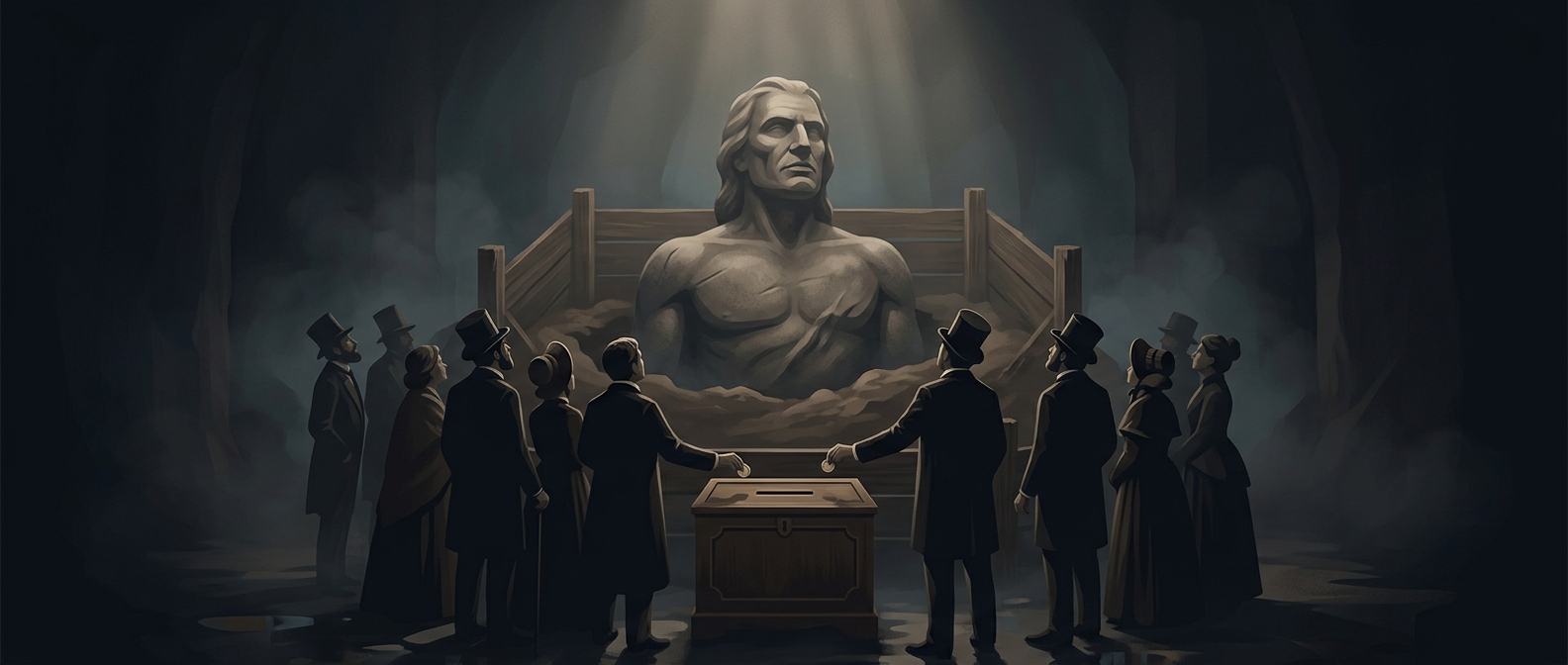
In 1869, workers digging a well on a farm near Cardiff, New York, uncovered what looked like the body of a gigantic human being. The find seemed to offer physical evidence for stories of ancient giants—and the landowner quickly turned that possibility into a public attraction.
But the figure had been made by George Hull, a tobacco dealer who arranged for a large block of gypsum to be carved into a human shape. Gypsum is soft enough to work with tools, yet the finished figure could look stone-like. Hull had it transported to the farm and buried, so that an ordinary excavation would appear to reveal something ancient.
The Ticket Was Part of the Trick
The hoax did not depend only on convincing people that the giant was real. It also depended on controlling access to the supposed discovery. Visitors paid admission to see it, turning uncertainty into a reason to come: if the figure might be genuine, it was worth seeing before anyone settled the question.
That arrangement helped the story spread. Newspapers could report the find, curious visitors could judge it for themselves, and the farm’s owners could collect money while the debate continued. The crowd was not simply fooled by a carved object; it was drawn into a staged event, with the excavation serving as the opening act and the ticket booth keeping the spectacle profitable.
The detail that makes the hoax especially memorable is how little it needed to resemble an archaeological expedition. A buried statue, a well-digging crew, and a paid viewing were enough to make a manufactured object feel like a discovery—and to turn doubt itself into a business.