Why Duchamp chose an ordinary urinal
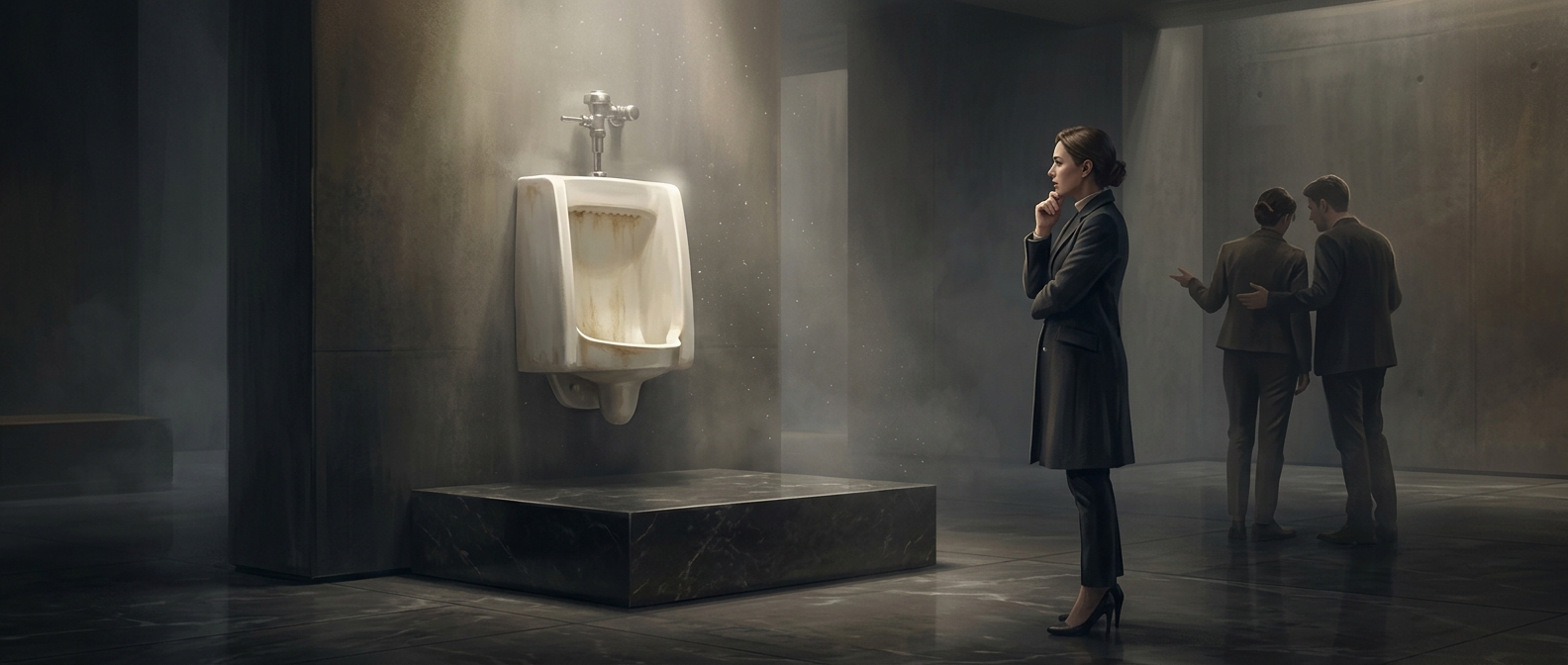
In 1917, artists and audiences still often understood art as something a person made by hand: a painting, sculpture, or carefully crafted object. Marcel Duchamp’s readymade—an everyday manufactured item presented as art—shifted attention from workmanship to choice. By selecting a urinal and submitting it under the name “R. Mutt,” Duchamp asked whether an artist’s decision and the setting around an object could change how people saw it.
That question made the submission difficult to dismiss as either simple craft or simple plumbing. The object had not been sculpted into a new shape, but choosing it, giving it a title, and sending it to an exhibition placed it in an argument about art’s boundaries.
A rejection became part of the work’s meaning
The exhibition’s promise to accept every entry collided with the organizers’ judgment that this one did not belong. That conflict exposed a problem the urinal posed: if art was defined by the institution that displayed it, the organizers could exclude the object; if the artist’s choice mattered, their refusal did not settle the question.
The episode helped make the work a lasting challenge to the idea that art must be handmade or conventionally beautiful. Its force came not just from the fixture, but from the chain of decisions around it—selection, submission, rejection, and debate. A plumbing object became consequential because people had to argue over who had the authority to call it art.